 Bill · S. 1336· Senate(119-S-1336)
Jobs in the Woods Act
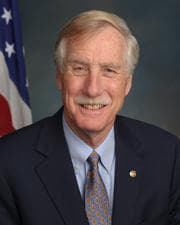
- Introduced
- 4/8/2025
- Last activity
- 4/8/2025 — Read twice and referred to the Committee on Agriculture, Nutrition, and Forestry.
- Sponsored by
- Angus King
- Cosponsors
- - 0 - 6
- Introduced
- In Committee
What this bill would do
The Jobs in the Woods Act requires the Secretary of Agriculture to create a competitive grant program focused on forestry workforce development. This program is designed to fund career pathway training programs related to forestry operations and products industries. Grants will be awarded to various eligible entities in specific nonmetropolitan areas. These areas must meet certain population and broadband access requirements. The program aims to address workforce needs through training and implementation plans.
Yes· 3 of 13
Would people in rural areas be better off under this?+7
The bill is specifically designed to benefit nonmetropolitan and rural populations through job training.
Does this invest in rural communities?+6
The bill provides targeted economic and training resources specifically for nonmetropolitan and rural areas.
Would people in their twenties and thirties be better off under this?+5
The bill prioritizes youth engagement through partnerships with educational institutions.
The opposite
No question was scored the opposite.
Who it would affect, and how
Potential Positive Impacts for People
-
Workforce Training and Career Pathways: The bill establishes a grant program to carry out career pathway training programs in forestry operations and products industries (Section 2(b)).
-
Support for Specific Communities: The program targets nonmetropolitan areas that are low-income communities with populations of 20,000 or fewer (Section 2(a)(2)).
-
Addressing Workforce Challenges: Priority is given to entities that propose to address the issues of an aging workforce and youth migration (Section 2(c)(2)(A)).
-
Educational Partnerships: The bill encourages partnerships with secondary schools, vocational or technical schools, or junior or community colleges to engage students (Section 2(c)(2)(B)).
-
Employment Assistance: Priority is given to those who can assist with forestry workforce placement and hiring (Section 2(c)(2)(C)).
Potential Negative Impacts for People
-
Grant Limitations: Grants are restricted to a period of not more than 4 years (Section 2(d)(1)).
-
Broadband Access Barriers: To be an eligible area, a community must have access to, or a plan to achieve, specific broadband service standards including at least 100 Mbps download speed and 20 Mbps upload speed (Section 2(a)(2)(B)).
Groups and Interests Ranking
Every group the model scored this bill for, from -10 to +10. Hover a score for the reason it gave.
- Demographic And Interest Groups
- Good For Rural Residents+7Good For Low Income Households+5Good For Students+5Good For Young Adults+5Good For Business Owners+2Good For Native Americans+2
- Economy And Finance
- Increases Job Creation+5Improves Economic Growth+3
- Environment Energy And Infrastructure
- Improves Rural Development+6Improves Public Land Management+2
- Social Issues And Justice
- Improves Poverty Reduction+4
- Education And Technology
- Improves Internet Access+1
- Governance And Ideology
- Increases Federal Power+1
- 3/2/2026
- 1 Cosponsor added.
- 10/23/2025
- 1 Cosponsor added.
- 4/8/2025
- Read twice and referred to the Committee on Agriculture, Nutrition, and Forestry.
- 7 Cosponsors added.
- Introduced in Senate
 Tammy Baldwin
Democrat · Wisconsin
 Mike Crapo
Republican · Idaho
 Susan Collins
Republican · Maine
 Amy Klobuchar
Democrat · Minnesota
 Jeff Merkley
Democrat · Oregon
 Jon Ossoff
Democrat · Georgia
 James Risch
Republican · Idaho
 Jeanne Shaheen
Democrat · New Hampshire
 Tina Smith
Democrat · Minnesota