Bill · S. 1247· Senate(119-S-1247)
Public Safety Free Speech Act
- Introduced
- 4/2/2025
- Last activity
- 4/2/2025 — Read twice and referred to the Committee on Health, Education, Labor, and Pensions.
- Sponsored by
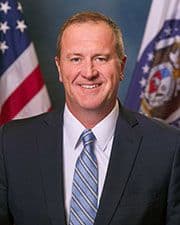
- Eric Schmitt
- Cosponsors
- - 4 - 0
- Introduced
- In Committee
What this bill would do
The Public Safety Free Speech Act is designed to protect the free speech rights of specific public safety workers. It targets covered employees such as law enforcement officers, firefighters, and emergency medical services workers. The bill allows these employees to sue their employers if they face termination or other adverse employment actions for expressing personal opinions. These opinions can cover topics like public safety services, compensation, working conditions, and political or religious views. The Act also outlines specific limitations where these protections do not apply.
Yes· 3 of 6
Does this protect what people are allowed to say in public life?+8
The act greatly expands free speech protections for a specific class of public safety workers.
Does this protect the individual right to speak freely?+7
The bill explicitly expands and protects the free speech rights of public safety workers.
Would union members be better off under this?+6
It provides a legal mechanism for public safety workers to advocate for their own benefits and conditions.
The opposite
Would business owners be better off under this?-3
The bill increases the liability and potential legal costs for public safety employers.
Who it would affect, and how
Potential Positive Impacts for People
-
Protection of Speech Rights: Covered employees, including law enforcement, firefighters, and EMS workers, can express personal opinions on matters like compensation, benefits, and working conditions without fear of losing their jobs (Section 3(a)).
-
Legal Recourse for Employees: If an employer takes adverse action against a worker for their protected speech, the employee can seek various forms of relief, such as actual damages, compensatory damages, punitive damages, or attorney's fees (Section 3(b)).
-
Freedom of Opinion: The bill explicitly protects the expression of political and religious opinions (Section 3(a)(6)).
Potential Negative Impacts for People
-
Restrictions on On-Duty Speech: The protections do not apply to comments made while a covered employee is on duty (Section 3(c)(1)).
-
Limitations on Job Actions: Employees cannot use these speech protections to suggest or advocate for withholding or delaying essential services as a form of protest (Section 3(c)(5)).
-
Prohibitions on Certain Content: Speech that encourages violence, illegal actions, or advocates for discrimination is not protected under this act (Section 3(c)(2) and (3)).
-
Privacy Restrictions: The act does not protect speech that intentionally discloses confidential or personally identifiable information regarding individuals the employee has interacted with during their work (Section 3(c)(4)).
Groups and Interests Ranking
Every group the model scored this bill for, from -10 to +10. Hover a score for the reason it gave.
- Social Issues And Justice
- Improves Freedom Of Speech+8Improves Religious Freedom+5
- Governance And Ideology
- Improves Freedom Of Speech+7Increases Federal Power+3
- Economy And Finance
- Improves Union Protections+5
- Demographic And Interest Groups
- Good For Union Workers+6Good For Business Owners-3
- 8/7/2026
- 1 Cosponsor added.
- 4/21/2026
- 1 Cosponsor added.
- 3/10/2026
- 1 Cosponsor added.
- 9/10/2025
- 1 Cosponsor added.
- 4/2/2025
- Read twice and referred to the Committee on Health, Education, Labor, and Pensions.
- Introduced in Senate
One bill Congress.gov lists as related to this one — companions in the other chamber, earlier versions, and bills this one absorbed or was folded into.
 Jim Banks
Republican · Indiana
 David McCormick
Republican · Pennsylvania
 Pete Ricketts
Republican · Nebraska
 Dan Sullivan
Republican · Alaska