Bill · S. 105· Senate(119-S-105)
Wounded Knee Massacre Memorial and Sacred Site Act
- Introduced
- 1/15/2025
- Last activity
- 10/2/2025 — Placed on Senate Legislative Calendar under General Orders. Calendar No. 176.
- Sponsored by
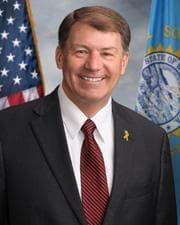
- Mike Rounds
- Cosponsors
- - 1 - 0
- Introduced
- On Calendar
What this bill would do
This bill, known as the ``Wounded Knee Massacre Memorial and Sacred Site Act'', directs the Secretary of the Interior to take specific actions regarding approximately 40 acres of land on the Pine Ridge Indian Reservation. The goal is to ensure this land is held in restricted fee status by the Oglala Sioux Tribe and the Cheyenne River Sioux Tribe. The Secretary must complete all necessary actions, including documentation and legal descriptions, within 365 days of the Act's enactment. Additionally, the Secretary is tasked with assigning applicable private and municipal utility and service rights. The land is a segment of the December 29, 1890, Wounded Knee Massacre site.
Yes· 3 of 4
Would Native Americans be better off under this?+9
The bill explicitly protects the land and jurisdictional authority of the Oglala Sioux and Cheyenne River Sioux Tribes.
Does this narrow racial gaps in how people are treated?+7
The bill protects sacred tribal lands and strengthens tribal sovereignty for Native American communities.
Does this better protect public land such as parks and forests?+5
The bill clarifies and stabilizes land status for a sacred site through specific federal action.
The opposite
No question was scored the opposite.
Who it would affect, and how
Potential Positive Impacts for People
-
Land Ownership and Protection: The bill ensures the Tribal land will continue to be owned by the Tribes and cannot be transferred without the consent of both Congress and the Tribes (Section 2, Subsection 1).
-
Jurisdictional Control: The land will be part of the Pine Ridge Indian Reservation and is expressly subject to the civil and criminal jurisdiction of the Oglala Sioux Tribe (Section 2, Subsection 1).
-
Tax Protection: The land will not be subject to taxation by a State or local government (Section 2, Subsection 1).
-
Tribal Autonomy in Land Use: The Tribes can use the land for purposes allowed by the ``Covenant Between the Oglala Sioux Tribe and the Cheyenne River Sioux Tribe'' without needing prior review or approval from the Secretary of the Interior (Section 2, Subsection 1).
Potential Negative Impacts for People
-
Restrictions on Land Use: The Tribal land cannot be used for gaming activity under the Indian Gaming Regulatory Act (Section 3, Subsection 2).
-
Existing Encumbrances: The land remains subject to any private or municipal encumbrance, right-of-way, restriction, easement of record, or utility service agreement that was in effect on the date the Act was enacted (Section 3, Subsection 3).
Groups and Interests Ranking
Every group the model scored this bill for, from -10 to +10. Hover a score for the reason it gave.
- Demographic And Interest Groups
- Good For Native Americans+9
- Social Issues And Justice
- Improves Racial Equity+7
- Environment Energy And Infrastructure
- Improves Public Land Management+5
- Governance And Ideology
- Increases Federal Power+3
- 10/2/2025
- Committee on Indian Affairs. Reported by Senator Murkowski without amendment. With written report No. 119-71.
- Placed on Senate Legislative Calendar under General Orders. Calendar No. 176.
- 3/5/2025
- Committee on Indian Affairs. Ordered to be reported without amendment favorably.
- 1/15/2025
- Read twice and referred to the Committee on Indian Affairs.
- 1 Cosponsor added.
- Introduced in Senate
One bill Congress.gov lists as related to this one — companions in the other chamber, earlier versions, and bills this one absorbed or was folded into.
 John Thune
Republican · South Dakota