Bill · S. 1020· Senate(119-S-1020)
A bill to require the Federal Energy Regulatory Commission to extend the time period during which licensees are required to commence construction of certain hydropower projects.
- Introduced
- 3/13/2025
- Last activity
- 5/11/2026 — Became Public Law No: 119-90.
- Sponsored by
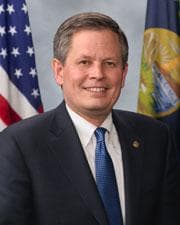
- Steve Daines
- Cosponsors
- - 6 - 1
- Introduced
- Passed Senate
- Passed House
- To President
- Became Law
What this bill would do
This bill directs the Federal Energy Regulatory Commission to extend the timeframe for starting construction on certain hydropower projects. These "covered projects" are those where a license was issued before March 13, 2020. Upon a licensee's request and for good cause, the Commission may grant an extension of up to 6 years beyond the standard 8 years. The extension can be broken into up to three consecutive 2-year periods. Additionally, the bill allows for the reinstatement of licenses that expired after December 31, 2023, but before the act was passed.
Yes· 3 of 6
Would business owners be better off under this?+5
The bill benefits energy company owners by providing more time to commence construction and a mechanism to reinstate expired licenses.
Is this likely to create jobs?+3
The extension of construction timelines provides more time for hydropower projects to proceed, which may eventually create construction and operational jobs.
Would people in rural areas be better off under this?+2
Ensuring the continuity of hydropower projects can support local energy infrastructure in rural communities.
The opposite
Does this better protect air, water and wildlife?-2
By extending construction timelines for older hydropower projects, the bill may delay the transition to newer environmental standards or mitigate the impact of older infrastructure.
What Congress actually voted on
One recorded vote has been taken on this bill.
- The House: a fast-track vote, needing two-thirds to passPassed 394–14
The House sets aside its normal procedure to move quickly: no amendments, little debate, and a two-thirds bar instead of a simple majority. It is used for measures expected to be uncontroversial, so a bill that fails here failed despite broad expectations that it would not.
04/21/2026 · Roll call 129 · recorded as “On Motion to Suspend the Rules and Pass”
Who it would affect, and how
Potential Positive Impacts for People
-
Flexibility for Hydropower Licensees: Licensees of covered projects can request more time to start construction, which could help projects that were delayed (Section 1, subsection b).
-
License Reinstatement: If a license expired after December 31, 2023, but before this act became law, the Federal Energy Regulatory Commission has the authority to reinstate it (Section 1, subsection d).
Potential Negative Impacts for People
- No specific negative impacts are explicitly stated in the text provided.
Groups and Interests Ranking
Every group the model scored this bill for, from -10 to +10. Hover a score for the reason it gave.
- Demographic And Interest Groups
- Good For Business Owners+5Good For Rural Residents+2
- Economy And Finance
- Increases Job Creation+3Improves Small Business Support+2
- Governance And Ideology
- Increases Federal Power+2
- Environment Energy And Infrastructure
- Improves Rural Development+2Improves Environmental Protections-2
- Public Law(5/12/2026)
The text as it became law
- Enrolled Bill
The final version, on its way to the President
- 5/11/2026
- Signed by President.
- Became Public Law No: 119-90.
- 4/30/2026
- Presented to President.
- 4/21/2026
- Motion to reconsider laid on the table Agreed to without objection.
- Passed/agreed to in House: On motion to suspend the rules and pass the bill Agreed to by the Yeas and Nays: (2/3 required): 394 - 14 (Roll no. 129). (text: CR H3024)
- On motion to suspend the rules and pass the bill Agreed to by the Yeas and Nays: (2/3 required): 394 - 14 (Roll no. 129). (text: CR H3024)
- Considered as unfinished business. (consideration: CR H3026-3027)
- At the conclusion of debate, the Yeas and Nays were demanded and ordered. Pursuant to the provisions of clause 8, rule XX, the Chair announced that further proceedings on the motion would be postponed.
- DEBATE - The House proceeded with forty minutes of debate on S. 1020.
- Considered under suspension of the rules. (consideration: CR H3024-3025)
- Mrs. Harshbarger moved to suspend the rules and pass the bill.
- 8/1/2025
- Message on Senate action sent to the House.
- Held at the desk.
- Received in the House.
- 7/31/2025
- 1 Cosponsor added.
- 7/29/2025
- Senate Committee on Energy and Natural Resources discharged by Unanimous Consent.
- Passed/agreed to in Senate: Passed Senate without amendment by Unanimous Consent. (consideration: CR S4797-4798; text: CR S4797-4798)
- Passed Senate without amendment by Unanimous Consent. (consideration: CR S4797-4798; text: CR S4797-4798)
- 3/24/2025
- 1 Cosponsor added.
- 3/13/2025
- Read twice and referred to the Committee on Energy and Natural Resources.
- 5 Cosponsors added.
- Introduced in Senate
2 bills Congress.gov lists as related to this one — companions in the other chamber, earlier versions, and bills this one absorbed or was folded into.
 Bill Cassidy
Republican · Louisiana
 John Fetterman
Democrat · Pennsylvania
 John Kennedy
Republican · Louisiana
 Lisa Murkowski
Republican · Alaska
 David McCormick
Republican · Pennsylvania
 Dan Sullivan
Republican · Alaska
 Tim Sheehy
Republican · Montana