Bill · H.Res. 926· House(119-HRES-926)
RESPECT Resolution
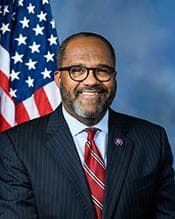
- Introduced
- 12/4/2025
- Last activity
- 12/4/2025 — Referred to the Committee on Energy and Commerce, and in addition to the Committees on the Judiciary, Education and Workforce, Foreign Affairs, and Transportation and Infrastructure, for a period to be subsequently determined by the Speaker, in each case for consideration of such provisions as fall within the jurisdiction of the committee concerned.
- Sponsored by
- Troy Carter
- Cosponsors
- - 10 - 0
- Introduced
- In Committee
A House resolution is the House speaking for itself: stating a position, honouring someone, or setting its own rules. Adopting it is the whole process. Once the House agrees to it, it is officially the House's word; it is not a law, so the Senate and the President have no part in it.
What this bill would do
This resolution, known as the "RESPECT Resolution," urges action to increase equity within cannabis policy and the legal marketplace. It encourages states and localities to adopt specific best practices to address disparities caused by the War on Drugs. These practices include eliminating criminal penalties for possession and providing for the expungement of criminal records. The bill also suggests ways to help local communities and people of color participate more effectively in the cannabis industry. Additionally, it encourages the President to seek the descheduling of cannabis from international drug control treaties.
Yes· 3 of 19
Does this narrow racial gaps in how people are treated?+8
The bill aims to address racial injustices and disparities caused by the War on Drugs through targeted reinvestment and licensing.
Would Black Americans be better off under this?+7
The bill specifically targets the repair of harms caused by the disproportionate sentencing of Black individuals.
Does this shorten or soften prison sentences?+7
The bill encourages the expungement of criminal records and the resentencing of persons serving sentences for cannabis convictions.
The opposite
Would white Americans be better off under this?-1
The bill seeks to reduce disparities that have historically favored white individuals in the legal system.
Does this protect the right to vote?-1
The bill does not directly address voting rights.
Does this do more about addiction and overdose deaths?-1
The bill focuses on cannabis rather than opioid-specific responses.
Who it would affect, and how
Potential Positive Impacts for People
-
Access to Public Benefits: The resolution encourages ensuring that public benefits cannot be denied to persons due to a cannabis conviction (Section 2(b)(1)).
-
Reduced Financial Barriers for Businesses: It suggests establishing reasonable licensing and application fees that only cover program implementation and necessary regulations (Section 2(b)(2)).
-
Localized Business Control: By allowing licensing at the city or county level, the bill aims to let communities determine the type and number of businesses, making the industry more representative of the local market (Section 2(b)(3)).
-
Support for Impacted Individuals: The resolution encourages prioritizing licenses for local citizens, including those with low income, former incarceration, or prior drug law violations (Section 2(b)(4)).
-
Improved Entry into the Market: It proposes eliminating broad felony restrictions for licensing and prohibiting previous cannabis convictions from being used to deny a license (Section 2(b)(6)).
-
Record Clearing: The bill suggests creating an automatic, no-cost process for the expungement or sealing of criminal records for cannabis offenses (Section 2(b)(7)).
-
Sentence Relief: It encourages establishing a process for the resentencing of persons serving sentences for cannabis convictions (Section 2(b)(8)).
-
Workplace Protections: The resolution suggests eliminating suspicion-less drug testing for non safety-sensitive employment positions (Section 2(b)(9)).
-
Community Reinvestment: It proposes setting aside a percentage of tax revenue to be reinvested in communities most affected by cannabis arrests for programs like job training and community centers (Section s 2(b)(13)).
-
Small Business Support: The bill suggests using a percentage of tax revenue to establish a special fund for small business investments to support people of color entering the legal cannabis industry (Section 2(b)(14)).
-
Inclusive Representation: It encourages establishing regulatory and oversight bodies that reflect the racial, ethnic, economic, and gender makeup of the community (Section 2(b)(15)).
-
Job Opportunities: The resolution suggests creating employment and subcontracting requirements to employ people of color through cannabis-related business activities (Section 2(b)(16)).
Potential Negative Impacts for People
- No negative impacts or burdens are explicitly stated in the provided text.
Groups and Interests Ranking
Every group the model scored this bill for, from -10 to +10. Hover a score for the reason it gave.
- Demographic And Interest Groups
- Good For African Americans+7Good For Business Owners+6Good For Low Income Households+6Good For Immigrants+5Good For Hispanic Americans+4Good For Young Adults+4Good For Union Workers+3Good For Middle Class Households+2Good For People With Disabilities+1Good For White Americans-1
- Social Issues And Justice
- Improves Racial Equity+8Improves Criminal Sentencing Reform+7Improves Poverty Reduction+5Improves Pathway To Citizenship+3Improves Voting Rights-1
- Economy And Finance
- Improves Small Business Support+7Reduces Small Business Taxes+5Improves Economic Growth+3
- Governance And Ideology
- Improves Privacy Rights+4Improves Government Transparency+3
- National Security And Foreign Policy
- Improves International Alliances+2
- Healthcare
- Improves Opioid Crisis Response-1
- 12/9/2025
- 3 Cosponsors added.
- 12/4/2025
- Submitted in House
- Referred to the Committee on Energy and Commerce, and in addition to the Committees on the Judiciary, Education and Workforce, Foreign Affairs, and Transportation and Infrastructure, for a period to be subsequently determined by the Speaker, in each case for consideration of such provisions as fall within the jurisdiction of the committee concerned.
- 7 Cosponsors added.
 Jared Huffman
Democrat · California
 Henry Johnson
Democrat · Georgia
 Pramila Jayapal
Democrat · Washington
 LaMonica McIver
Democrat · New Jersey
 Eleanor Norton
Democrat · District of Columbia
 Ilhan Omar
Democrat · Minnesota
 Mark Pocan
Democrat · Wisconsin
 Lateefah Simon
Democrat · California
 Dina Titus
Democrat · Nevada
 Bonnie Watson Coleman
Democrat · New Jersey