Bill · H.Res. 909· House(119-HRES-909)
Recognizing that immigrant justice and reproductive justice are inseparable and must be pursued together.
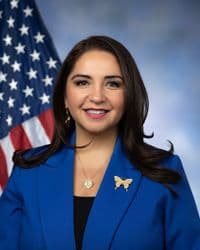
- Introduced
- 11/21/2025
- Last activity
- 11/21/2025 — Referred to the Committee on the Judiciary, and in addition to the Committees on Energy and Commerce, and Homeland Security, for a period to be subsequently determined by the Speaker, in each case for consideration of such provisions as fall within the jurisdiction of the committee concerned.
- Sponsored by
- Delia Ramirez
- Cosponsors
- - 33 - 0
- Introduced
- In Committee
A House resolution is the House speaking for itself: stating a position, honouring someone, or setting its own rules. Adopting it is the whole process. Once the House agrees to it, it is officially the House's word; it is not a law, so the Senate and the President have no part in it.
What this bill would do
House Resolution 909 recognizes that immigrant justice and reproductive justice are inseparable and must be pursued together through policies centered on lived experiences. The bill highlights systemic failures and abuses within Department of Homeland Security and Office of Refugee Resettlement facilities, including inadequate medical care and the denial of reproductive health care for detained individuals. It affirms Congress's role in conducting oversight regarding the treatment of detained vulnerable populations, particularly pregnant individuals. The text condemns practices like immigration detention, coerced or denied reproductive health care, and the denial of health care coverage for immigrants. Furthermore, the resolution calls on Congress to eliminate the 5-year bar and categorical exclusions on immigrant access to Federal health programs like Medicaid and the Affordable Care Act. Finally, it urges federal officials to reinstate protective statuses for pregnant individuals, ensure unaccompanied immigrant youth can access necessary health care without delay, and implement transparent oversight mechanisms.
Yes· 3 of 24
Would immigrants be better off under this?+9
The bill is entirely dedicated to advancing immigrant justice, dismantling harmful detention practices, and securing legal and healthcare rights.
Would women be better off under this?+8
The resolution strongly champions reproductive justice, bodily autonomy, and maternal healthcare protections for all women, including those in detention.
Does this make health care easier to get in general?+8
The bill strongly advocates for comprehensive, timely, and equitable reproductive and general healthcare access for all individuals regardless of immigration status.
The opposite
Does this give the government more power to monitor people inside the country?-5
The resolution condemns surveillance tools utilized for immigration enforcement that deter individuals from seeking necessary care.
Does this tighten control of the border?-4
The resolution critiques current border enforcement and detention practices, calling for significant rollbacks and increased restrictions on detention authorities.
Does this leave more decisions to the states?-3
The resolution explicitly calls for ensuring unaccompanied immigrant youth can access healthcare and abortion without delay no matter what state they are held in, overriding state-level restrictions.
Who it would affect, and how
Potential Positive Impacts for People
-
Section (6) calls on Congress to eliminate the 5-year bar and categorical exclusions on immigrant access to Federal health programs, including Medicaid, the Children's Health Insurance Plan, and Affordable Care Act coverage. This might be considered positive because it could expand health care access and coverage to immigrants who are currently excluded.
-
Section (7) calls on the Secretary of Homeland Security to permanently reinstate the protective status of pregnant individuals within U.S. Immigration and Customs Enforcement and U.S. Customs and Border Protection. This could be viewed as positive because it aims to protect the health and dignity of detained individuals by restoring previously established minimum standards of care.
-
Section (9) calls on the Secretary of Health and Human Services, including the Office of Refugee Resettlement, to ensure unaccompanied immigrant youth can access the health care that they need, including abortion, without delay, no matter what State they are held in. This could be considered positive because it seeks to remove state-level restrictions and delays for youths needing medical care.
Potential Negative Impacts for People
The provided text does not explicitly identify or list specific sections or provisions that create negative consequences, burdens, or penalties for individuals or groups of people in the United States.
Groups and Interests Ranking
Every group the model scored this bill for, from -10 to +10. Hover a score for the reason it gave.
- Demographic And Interest Groups
- Good For Immigrants+9Good For Women+8Good For Hispanic Americans+7Good For Children+6Good For Low Income Households+6Good For Young Adults+5Good For Asian Americans+4Good For L G B T Q Community+4Good For African Americans+3
- Healthcare
- Improves Healthcare Access+8Improves Abortion Access+7Increases Affordable Care Act Support+6Increases Medicaid Funding+6Improves Mental Health Access+5
- Social Issues And Justice
- Improves Gender Equality+7Improves Pathway To Citizenship+6Improves Racial Equity+5Improves Policing Reform+4Improves Poverty Reduction+4Improves L G B T Q Rights+3Improves Border Security-4
- Governance And Ideology
- Improves Due Process+6Improves Government Transparency+6Improves Privacy Rights+4Increases Federal Power+4Increase States Rights-3
- National Security And Foreign Policy
- Increases Domestic Surveillance-5
- 12/1/2025
- 1 Cosponsor added.
- 11/21/2025
- Submitted in House
- Referred to the Committee on the Judiciary, and in addition to the Committees on Energy and Commerce, and Homeland Security, for a period to be subsequently determined by the Speaker, in each case for consideration of such provisions as fall within the jurisdiction of the committee concerned.
- 32 Cosponsors added.
 Alma Adams
Democrat · North Carolina
 Joyce Beatty
Democrat · Ohio
 Becca Balint
Democrat · Vermont
 Yvette Clarke
Democrat · New York
 André Carson
Democrat · Indiana
 Gilbert Cisneros
Democrat · California
 Danny Davis
Democrat · Illinois
 Adriano Espaillat
Democrat · New York
 Jesús García
Democrat · Illinois
 Sylvia Garcia
Democrat · Texas
 Henry Johnson
Democrat · Georgia
 Sara Jacobs
Democrat · California
 Robin Kelly
Democrat · Illinois
 Raja Krishnamoorthi
Democrat · Illinois
 Sydney Kamlager-Dove
Democrat · California
 Summer Lee
Democrat · Pennsylvania
 Gwen Moore
Democrat · Wisconsin
 Kevin Mullin
Democrat · California
 Eleanor Norton
Democrat · District of Columbia
 Ayanna Pressley
Democrat · Massachusetts
 Deborah Ross
Democrat · North Carolina
 Luz Rivas
Democrat · California
 Emily Randall
Democrat · Washington
 Janice Schakowsky
Democrat · Illinois
 Melanie Stansbury
Democrat · New Mexico
 Lateefah Simon
Democrat · California
 Dina Titus
Democrat · Nevada
 Rashida Tlaib
Democrat · Michigan
 Jill Tokuda
Democrat · Hawaii
 Shri Thanedar
Democrat · Michigan
 Nydia Velázquez
Democrat · New York
 Debbie Wasserman Schultz
Democrat · Florida
 Frederica Wilson
Democrat · Florida