Bill · H.Res. 788· House(119-HRES-788)
Expressing support for the designation of October 8, 2025, as "National Hydrogen and Fuel Cell Day".
- Introduced
- 10/6/2025
- Last activity
- 10/6/2025 — Referred to the House Committee on Oversight and Government Reform.
- Sponsored by
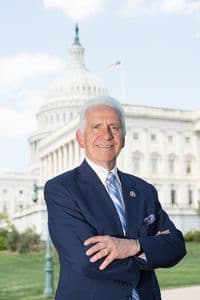
- Jim Costa
- Cosponsors
- - 4 - 4
- Introduced
- In Committee
A House resolution is the House speaking for itself: stating a position, honouring someone, or setting its own rules. Adopting it is the whole process. Once the House agrees to it, it is officially the House's word; it is not a law, so the Senate and the President have no part in it.
What this bill would do
This resolution expresses support for designating October 8, 2025, as ``National Hydrogen and Fuel Cell Day''. The text highlights the abundance of hydrogen and the United States' leadership in developing these technologies. It notes that fuel cells are used for stationary power and zero-emission transportation. The resolution also mentions the role of hydrogen in the space program and its potential to address energy and environmental issues. Finally, it calls for the recognition of this specific day.
Yes· 3 of 9
Does this cut the pollution that drives climate change?+5
The resolution emphasizes the use of hydrogen for zero-emission transportation and renewable energy integration.
Does this put more money into wind, solar and other renewable power?+4
Hydrogen is identified as a way to maximize opportunities to deploy renewable energy like solar and wind.
Does this improve buses, trains and other public transport?+3
The text notes that fuel cells provide zero-emission transportation for buses and trains.
The opposite
No question was scored the opposite.
Who it would affect, and how
Potential Positive Impacts for People
-
Reliable Power Generation: Stationary fuel cells can provide continuous and backup power, offering businesses and energy consumers reliability during grid outages. (Whereas clauses 1 and 6)
-
Zero-Emission Transportation: The technology allows for zero-emission travel across various sectors, including light-s-duty vehicles, industrial vehicles, buses, trucks, trains, military vehicles, marine applications, and aerial vehicles. (Whereas clause 2)
-
Environmental and Resource Benefits: Fuel cells can help reduce water use compared to traditional power generation and utilize various domestically available resources like solar, wind, and biogas. (Whereas clauses 5 and 10)
-
Enhanced Energy Grid: Hydrogen and fuel cells can store energy to help enhance the grid and maximize the deployment of renewable energy. (Whereas clause 11)
-
Consumer Experience: Fuel cell electric vehicles can replicate the experience of internal combustion vehicles by providing comparable range and refueling times. (Whereas clause 7)
Potential Negative Impacts for People
- No negative impacts are mentioned in the provided text.
Groups and Interests Ranking
Every group the model scored this bill for, from -10 to +10. Hover a score for the reason it gave.
- Environment Energy And Infrastructure
- Reduces Carbon Emissions+5Increases Renewable Energy Investment+4Improves Public Transit+3
- Demographic And Interest Groups
- Good For Business Owners+3Good For Urban Residents+2
- Economy And Finance
- Increases Job Creation+3Improves Small Business Support+2
- Education And Technology
- Increases Scientific Research Funding+2
- National Security And Foreign Policy
- Improves Veterans Benefits+1
- 10/8/2025
- 3 Cosponsors added.
- 10/6/2025
- Submitted in House
- Referred to the House Committee on Oversight and Government Reform.
- 5 Cosponsors added.
 Gus Bilirakis
Republican · Florida
 Suzan DelBene
Democrat · Washington
 Brian Fitzpatrick
Republican · Pennsylvania
 John Larson
Democrat · Connecticut
 Michael Lawler
Republican · New York
 Jimmy Panetta
Democrat · California
 Paul Tonko
Democrat · New York
 David Valadao
Republican · California