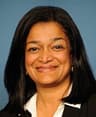
Pramila Jayapal (D-WA)
Acknowledging that in the aftermath of September 11, 2001, individuals experienced hate and were targeted by the government on account of their faith, race, national origin and immigration status, and suggesting various forms of relief to support those affected.
A Democratic resolution with 8 Democratic cosponsors · See all 8 cosponsors
Last activity — Referred to the Committee on the Judiciary, and in addition to the Committees on Energy and Commerce, and Science, Space, and Technology, for a period to be subsequently determined by the Speaker, in each case for consideration of such provisions as fall within the jurisdiction of the committee concerned.
In committee
Introduced and handed to a committee in the chamber it started in.
The committee holds it, and most bills are never heard from again. A hearing or a committee vote would be news; silence is the usual outcome, and it kills the bill without anyone voting against it.
Its path through Congress
- Introduced
- In Committee
A House resolution is the House speaking for itself: stating a position, honouring someone, or setting its own rules. Adopting it is the whole process. Once the House agrees to it, it is officially the House's word; it is not a law, so the Senate and the President have no part in it.
What this bill would do
This resolution acknowledges that after September 11, 2001, certain communities experienced hate and were targeted by the government based on their faith, race, national origin, and immigration status. It points out that groups like Arab, Muslim, Middle Eastern, South Asian, and Sikh Americans faced discrimination, surveillance, and wrongful detentions. The text condemns racism, xenophobia, and religious bigotry. It calls for an independent commission to review past and ongoing government profiling policies. Finally, the resolution suggests allocating resources for hate crime prevention, victim support, and scientific studies on the health impacts of hate and profiling.
Yes· 3 of 27
- Scored +8
Would Asian Americans be better off under this?
Specifically focuses on South Asian and Sikh communities.
- Scored +8
Would immigrants be better off under this?
Supports undocumented and immigrant communities and condemns deportation profiling.
- Scored +8
Does this narrow racial gaps in how people are treated?
Condemns racism and calls for dismantling policies that profile specific racial and ethnic groups.
The opposite
- Scored -8
Does this give the government more power to monitor people inside the country?
Condemns overreaching policing and surveillance policies.
- Scored -2
Does this tighten control of the border?
Criticizes border officials for discriminatory searches and seizures.
Who it would affect, and how
Potential Positive Impacts for People
-
Support for Hate Crime Victims: The resolution supports allocating resources to independent, community-based organizations to help victims of hate and state violence through language support, mental health services, crisis response, and recovery. This is found in resolved clause (6)(A).
-
Alternatives to Law Enforcement: It proposes creating culturally and linguistically accessible alternatives to law enforcement and transformative justice programs that focus on vulnerable populations like working-class people, undocumented immigrants, women, and LGBTQ communities. This is found in resolved clause (6)(B).
-
Investigation of Government Policies: It calls for creating an independent commission to review government policies that profiled and targeted these communities, investigate their impacts, and recommend ways to dismantle those ongoing policies. This is found in resolved clause (4).
-
Studying Health Impacts: The text calls on the National Institutes of Health and the National Science Foundation to study the physical and mental health impacts of hate, government targeting, political rhetoric, and profiling. This is found in resolved clause (7).
Potential Negative Impacts for People
Based on the provided text, there are no specific sections or provisions that outline negative consequences or burdens for individuals or groups of people in the United States.
Groups and Interests Ranking
Every group the model scored this bill for, from -10 to +10. Tap or hover a score for the reason it gave.
- Demographic And Interest Groups
- Would Asian Americans be better off under this? — Specifically focuses on South Asian and Sikh communities. Would immigrants be better off under this? — Supports undocumented and immigrant communities and condemns deportation profiling. Would Black Americans be better off under this? — Explicitly mentions Black and African communities as being targeted by profiling policies. Would LGBTQ people be better off under this? — Specifically mentions providing accessible justice programs for nonbinary and LGBTQ communities. Would households on low incomes be better off under this? — Provides resources to community organizations for support of working class people. Would women be better off under this? — Specifically mentions providing accessible justice programs for women. Would men be better off under this? — Addresses the specific targeting of men and boys in the NSEERS program. Would people in middle age be better off under this? — Provides support and recognition for adults affected by post-9/11 profiling. Would people over 65 be better off under this? — Provides support and recognition for seniors affected by post-9/11 profiling. Would people in their twenties and thirties be better off under this? — Addresses systemic targeting of young men and adults in specific communities. Would children be better off under this? — Acknowledges targeting of boys as young as 16 and seeks to end such practices. Would middle-income households be better off under this? — Protects civil rights for targeted middle-class individuals. Would students be better off under this? — Acknowledges hate and bullying in schools targeting these communities. Would business owners be better off under this? — Acknowledges the climate of hate that impacted businesses in targeted communities.
- Social Issues And Justice
- Does this narrow racial gaps in how people are treated? — Condemns racism and calls for dismantling policies that profile specific racial and ethnic groups. Does this protect the freedom to practise a religion? — Condemns religious bigotry and acknowledges targeting based on faith. Does this change how police departments operate? — Calls for an independent commission to dismantle government profiling and supports alternatives to law enforcement. Does this narrow the gap between how men and women are treated? — Specifically mentions creating justice programs accessible to women. Does this expand the rights of LGBTQ people? — Specifically mentions creating justice programs accessible to LGBTQ communities. Does this make it easier for immigrants already here to become citizens? — Acknowledges harms of deportation policies and supports undocumented immigrant communities. Does this tighten control of the border? — Criticizes border officials for discriminatory searches and seizures.
- Governance And Ideology
- Does this protect the right to fair treatment by the courts? — Explicitly condemns the replacement of due process with mob mentality and guilt by association. Does this protect people from being watched or searched? — Opposes overreaching surveillance and discriminatory searches. Does this make what the government does easier for the public to see? — Calls for an independent commission to investigate and document government profiling policies.
- Healthcare
- Does this make mental health care easier to get? — Supports resources for mental health and recovery for victims of hate and state violence. Does this put more money into medical research? — Calls on NIH and NSF to study the impact of hate and profiling on health. Does this make health care easier to get in general? — Supports culturally and linguistically accessible support services for vulnerable communities.
- National Security And Foreign Policy
- Does this give the government more power to monitor people inside the country? — Condemns overreaching policing and surveillance policies.
- Education And Technology
- Does this put more money into scientific research? — Calls for research via NIH and NSF on the health impacts of profiling.
- 9/21/2026
- 1 Cosponsor added.
- 9/18/2025
- Submitted in House
- Referred to the Committee on the Judiciary, and in addition to the Committees on Energy and Commerce, and Science, Space, and Technology, for a period to be subsequently determined by the Speaker, in each case for consideration of such provisions as fall within the jurisdiction of the committee concerned.
- 7 Cosponsors added.
 Jim Costa
Democrat · California
 André Carson
Democrat · Indiana
 Judy Chu
Democrat · California
 Henry Johnson
Democrat · Georgia
 Raja Krishnamoorthi
Democrat · Illinois
 Ilhan Omar
Democrat · Minnesota
 Lateefah Simon
Democrat · California
 Rashida Tlaib
Democrat · Michigan