Bill · H.Res. 672· House(119-HRES-672)
Providing for consideration of the bill (H.R. 4553) making appropriations for energy and water development and related agencies for the fiscal year ending September 30, 2026, and for other purposes; providing for consideration of the joint resolution (H.J. Res. 104) providing for congressional disapproval under chapter 8 of title 5, United States Code, of the rule submitted by the Bureau of Land Management relating to ‘‘Miles City Field Office Record of Decision and Approved Resource Management Plan Amendment’’; providing for consideration of the joint resolution (H.J. Res. 105) providing for congressional disapproval under chapter 8 of title 5, United States Code, of the rule submitted by the Bureau of Land Management relating to ‘‘North Dakota Field Office Record of Decision and Approved Resource Management Plan’’; providing for consideration of the joint resolution (H.J. Res. 106) providing for congressional disapproval under chapter 8 of title 5, United States Code, of the rule submitted by the Bureau of Land Management relating to ‘‘Central Yukon Record of Decision and Approved Resource Management Plan’’; and for other purposes.
- Introduced
- 9/3/2025
- Last activity
- 9/3/2025 — Motion to reconsider laid on the table Agreed to without objection.
- Sponsored by
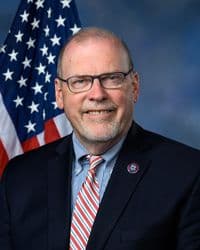
- H. Griffith
- Cosponsors
- None
- Introduced
- Adopted by the House
A House resolution is the House speaking for itself: stating a position, honouring someone, or setting its own rules. Adopting it is the whole process. Once the House agrees to it, it is officially the House's word; it is not a law, so the Senate and the President have no part in it.
What this bill would do
This resolution establishes the rules for considering H.R. 4553, which involves appropriations for energy and water development agencies for the 2026 fiscal year. It allows the Speaker to resolve the House into the Committee of the Whole and sets specific guidelines for debate and amendments. The resolution also provides for the consideration of several joint resolutions aimed at the congressional disapproval of specific Bureau of Land Management rules. These rules involve field offices in Miles City, North Dakota, and Central Yukon. Finally, the resolution notes the adoption of certain House Resolutions and the laying on the table of another.
Yes
Does this reduce what the federal government spends?+1
The bill facilitates appropriations for energy and water development agencies for the 2026 fiscal year.
Does this make what the government does easier for the public to see?+1
The resolution establishes structured rules for the debate and amendment of energy and water appropriations.
The opposite
Does this better protect air, water and wildlife?-2
The bill allows for the consideration of joint resolutions to disapprove Bureau of Land Management resource management plans.
Does this better protect public land such as parks and forests?-2
The bill facilitates the disapproval of Bureau of Land Management resource management plans through specific joint resolutions.
Would people in rural areas be better off under this?-1
The bill includes provisions to disapprove Bureau of Land Management resource management plans that affect specific regional field offices.
What Congress actually voted on
2 recorded votes have been taken on this bill. One of them decided something; the rest moved it along.
- The House: the vote on whether to adopt the resolutionPassed 212–208
A resolution is one chamber speaking for itself — setting its own rules, taking a position, honouring someone — and it never goes to the President. Agreeing to it is the whole decision.
09/03/2025 · Roll call 222 · recorded as “On Agreeing to the Resolution”
Who it would affect, and how
Potential Positive Impacts for People
-
Streamlined Legislative Process: The resolution provides specific rules for how H.R. 4553 will be debated and amended, including provisions for amendments en bloc and pro forma amendments (Sec. 2, Sec. 3, and Sec. 4). This establishes a clear structure for the legislative proceedings.
-
Congressional Oversight of Agency Rules: The resolution allows for the consideration of joint resolutions (H.J. Res. 104, H.J. Res. 105, and H.J. Res. 106) intended to provide congressional disapproval of specific Bureau of Land Management rules (Sec. 7). This provides a mechanism for Congress to review and potentially overturn agency decisions regarding resource management plans and records of decision.
Potential Negative Impacts for People
-
Restrictions on Amendment Process: The resolution limits which amendments can be offered to H.R. 4553, stating that no amendment is in order except those printed in the report, specific amendments en bloc, or pro forma amendments (Sec. 2). This restricts the ability of members to propose new changes to the bill during consideration.
-
Limited Debate Opportunities: The resolution sets specific time limits on debate, such as one hour for the general debate of the bill (Introductory text) and 20 minutes for amendments en bloc (Sec. 3), which may limit the depth of discussion available for various provisions.
Groups and Interests Ranking
Every group the model scored this bill for, from -10 to +10. Hover a score for the reason it gave.
- Environment Energy And Infrastructure
- Improves Environmental Protections-2Improves Public Land Management-2
- Demographic And Interest Groups
- Good For Rural Residents-1
- Economy And Finance
- Reduces Government Spending+1
- Governance And Ideology
- Improves Government Transparency+1
- 9/3/2025
- The House Committee on Rules reported an original measure, H. Rept. 119-232, by Mr. Griffith.
- Placed on the House Calendar, Calendar No. 42.
- Motion to reconsider laid on the table Agreed to without objection.
- Passed/agreed to in House: On agreeing to the resolution Agreed to by recorded vote: 212 - 208, 1 Present (Roll no. 222). (text: CR H3771-3772: 1)
- On agreeing to the resolution Agreed to by recorded vote: 212 - 208, 1 Present (Roll no. 222). (text: CR H3771)
- On ordering the previous question Agreed to by the Yeas and Nays: 212 - 209 (Roll no. 221).
- DEBATE - The House proceeded with one hour of debate on H. Res. 672.
- Considered as privileged matter. (consideration: CR H3771-3779)
- The resolution provides for consideration of H.R. 4553 under a structured rule, and H.J. Res. 104, H.J. Res. 105, and H.J. Res. 106 under a closed rule. The resolution provides for one hour of general debate and a motion to recommit on each measure. The resolution further provides that H. Res. 668 and H. Res. 605 are adopted, and H. Res. 598 is laid on the table.
- Bill introduced.
7 bills Congress.gov lists as related to this one — companions in the other chamber, earlier versions, and bills this one absorbed or was folded into.
- 119-HR-4553: Energy and Water Development and Related Agencies Appropriations Act, 2026
- 119-HJRES-104: Providing for congressional disapproval under chapter 8 of title 5, United States Code, of the rule submitted by the Bureau of Land Management relating to "Miles City Field Office Record of Decision and Approved Resource Management Plan Amendment".
- 119-HJRES-105: Providing for congressional disapproval under chapter 8 of title 5, United States Code, of the rule submitted by the Bureau of Land Management relating to "North Dakota Field Office Record of Decision and Approved Resource Management Plan".
- 119-HJRES-106: Providing for congressional disapproval under chapter 8 of title 5, United States Code, of the rule submitted by the Bureau of Land Management relating to "Central Yukon Record of Decision and Approved Resource Management Plan".
- 119-HRES-598: Providing for the adoption of the resolution (H. Res. 589) providing for the public release of certain documents, records, and communications related to the investigation of Jeffrey Epstein.
- 119-HRES-605: Establishing the Select Subcommittee to Investigate the Remaining Questions Surrounding January 6, 2021.
- 119-HRES-668: Directing the Committee on Oversight and Government Reform to continue its ongoing investigation into the possible mismanagement of the Federal government’s investigation of Mr. Jeffrey Epstein and Ms. Ghislaine Maxwell, and for other purposes.