Bill · H.Res. 585· House(119-HRES-585)
Recognizing the threat of extreme weather to children's health and well-being, and expressing the sense of Congress that solutions must be rapidly and equitably developed and deployed to address the unique vulnerabilities and needs of children.
- Introduced
- 7/16/2025
- Last activity
- 7/16/2025 — Referred to the House Committee on Energy and Commerce.
- Sponsored by
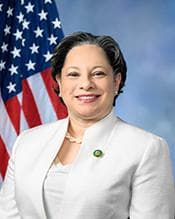
- Jennifer McClellan
- Cosponsors
- - 33 - 0
- Introduced
- In Committee
A House resolution is the House speaking for itself: stating a position, honouring someone, or setting its own rules. Adopting it is the whole process. Once the House agrees to it, it is officially the House's word; it is not a law, so the Senate and the President have no part in it.
What this bill would do
This resolution recognizes that extreme weather poses a significant threat to the health and well-being of children. It notes that the summer of 2024 was the hottest on record and highlights increasing risks from wildfires and air pollution. The bill expresses the sense of Congress that protections must be developed and deployed rapidly and equitably. It specifically addresses the unique vulnerabilities of babies, children, and adolescents. Finally, it suggests various adaptive measures to protect young people and their families from environmental disruptions.
Yes· 3 of 13
Would children be better off under this?+8
The entire resolution is dedicated to addressing the unique vulnerabilities of children and adolescents.
Would students be better off under this?+6
The bill addresses school infrastructure, learning disruptions, and student safety during weather events.
Does this better protect air, water and wildlife?+6
The bill calls for adaptive measures to protect against the impacts of extreme weather and air pollution.
The opposite
No question was scored the opposite.
Who it would affect, and how
Potential Positive Impacts for People
-
Rapid and Equitable Protections: The resolution expresses the sense that adaptations and protections from extreme weather should be developed and deployed quickly and fairly to protect current and future generations (Section 1).
-
Tailored Solutions for Families: It suggests that legislation and funding should include solutions specifically designed for the unique physical and mental health needs of babies, children, adolescents, and their families (Section 2).
-
Improved Information and Alerts: The text suggests providing accurate and timely public alerts regarding weather events like wildfires, extreme heat, or flooding (Section 3, A). It also mentions language-accessible information campaigns for disaster preparedness (Section 3, C).
-
Education and Training: The resolution proposes incorporating education about the vulnerabilities of children and pregnant people into the training of healthcare professionals, educators, and childcare providers (Section 3, D). It also suggests education regarding heat exposure and first-aid for hyperthermia (Section 3, F).
-
Community and School Support: It suggests incorporating the perspectives of parents and caregivers into disaster planning (Section 3, E) and providing improved guidance for schools and childcare providers regarding extreme weather and air pollution (Section 3, G).
-
Infrastructure and Environmental Improvements: The bill lists several infrastructure benefits, including improved air filtration in homes and schools (Section 3, H), updated physical infrastructure for schools and healthcare systems (Section 3, I), and expanded access to public shaded green spaces (Section 3, J).
-
Safe Spaces and Supplies: It mentions providing access to safe places like indoor play spaces and child-friendly cooling centers (Section 3, K). It also lists providing critical supplies for babies, such as diapers, bottles, formula, and infant feeding kits (Section 3, L and M), as well as child-sized masks for poor air quality (Section 3, O) and hydration stations (Section 3, P).
Potential Negative Impacts for People
- No negative impacts or burdens are explicitly mentioned in the provided text.
Groups and Interests Ranking
Every group the model scored this bill for, from -10 to +10. Hover a score for the reason it gave.
- Demographic And Interest Groups
- Good For Children+8Good For Students+6Good For Women+5Good For Low Income Households+4Good For Urban Residents+4Good For Young Adults+4Good For Farmers+3
- Environment Energy And Infrastructure
- Improves Environmental Protections+6Improves Disaster Relief And F E M A+5
- Healthcare
- Improves Healthcare Access+5Improves Mental Health Access+5
- Social Issues And Justice
- Improves Childcare Affordability+5
- Education And Technology
- Increases Public School Funding+3
- 8/22/2025
- 1 Cosponsor added.
- 7/16/2025
- Submitted in House
- Referred to the House Committee on Energy and Commerce.
- 32 Cosponsors added.
 Alma Adams
Democrat · North Carolina
 Suzanne Bonamici
Democrat · Oregon
 Nanette Barragán
Democrat · California
 Emanuel Cleaver
Democrat · Missouri
 Kathy Castor
Democrat · Florida
 Steve Cohen
Democrat · Tennessee
 André Carson
Democrat · Indiana
 Troy Carter
Democrat · Louisiana
 Sheila Cherfilus-McCormick
Democrat · Florida
 Danny Davis
Democrat · Illinois
 Mark DeSaulnier
Democrat · California
 Maxine Dexter
Democrat · Oregon
 Dwight Evans
Democrat · Pennsylvania
 Valerie Foushee
Democrat · North Carolina
 Sylvia Garcia
Democrat · Texas
 Steven Horsford
Democrat · Nevada
 Jared Huffman
Democrat · California
 Henry Johnson
Democrat · Georgia
 Summer Lee
Democrat · Pennsylvania
 Betty McCollum
Democrat · Minnesota
 Kevin Mullin
Democrat · California
 Eleanor Norton
Democrat · District of Columbia
 Scott Peters
Democrat · California
 Darren Soto
Democrat · Florida
 Mary Gay Scanlon
Democrat · Pennsylvania
 Melanie Stansbury
Democrat · New Mexico
 Dina Titus
Democrat · Nevada
 Paul Tonko
Democrat · New York
 Mark Takano
Democrat · California
 Rashida Tlaib
Democrat · Michigan
 Shri Thanedar
Democrat · Michigan
 Nikema Williams
Democrat · Georgia
 Bonnie Watson Coleman
Democrat · New Jersey