Bill · H.Res. 569· House(119-HRES-569)
Affirming that diversity, equity, inclusion, and accessibility are fundamental values of the United States and emphasizing the ongoing need to address discrimination and inequality in the workplace, elementary, secondary, and higher education systems, government programs, the military, and our society.
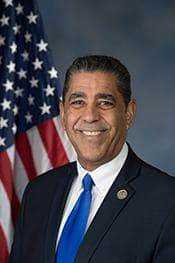
- Introduced
- 7/10/2025
- Last activity
- 7/10/2025 — Referred to the House Committee on Oversight and Government Reform.
- Sponsored by
- Adriano Espaillat
- Cosponsors
- - 25 - 0
- Introduced
- In Committee
A House resolution is the House speaking for itself: stating a position, honouring someone, or setting its own rules. Adopting it is the whole process. Once the House agrees to it, it is officially the House's word; it is not a law, so the Senate and the President have no part in it.
What this bill would do
This resolution affirms that diversity, equity, inclusion, and accessibility are fundamental values of the United States. It emphasizes the need to address ongoing discrimination and inequality across various sectors, including the workplace, education, and government programs. The text highlights systemic disparities in housing, healthcare, and employment that affect numerous groups of people. It asserts that these initiatives are not unlawful quotas but are tools to ensure equal opportunity and the American Dream. Ultimately, the resolution encourages all levels of policymakers and organizations to promote inclusivity and remove barriers to success.
Yes· 3 of 28
Does this narrow racial gaps in how people are treated?+8
The text focuses heavily on rectifying racial disparities in wealth, housing, and employment.
Would Black Americans be better off under this?+7
The resolution specifically calls out disparities facing Black communities in wealth, employment, and education.
Would Hispanic Americans be better off under this?+7
The text addresses the unique economic and social challenges faced by Latino households.
The opposite
No question was scored the opposite.
Who it would affect, and how
Potential Positive Impacts for People
-
Addressing Discriminatory Barriers: The resolution states that these initiatives address discriminatory barriers to opportunity and ongoing discrimination (Whereas clause).
-
Improving Economic Mobility: By addressing disparities, the initiative aims to prevent the decrease in economic mobility rates in the United States (Whereas clause).
-
Enhancing Workplace Productivity: The text notes that companies with diverse workforces can be more innovative, productive, and profitable (Whereas clause).
-
Reducing Economic Costs: Diversity, equity, inclusion, and accessibility initiatives can bring down costs by reducing turnover and hiring costs (Whereas clause).
-
Improving Healthcare Outcomes: These efforts in healthcare can ensure culturally competent and bias-free care, addressing social determinants of health (Whereas clause).
-
Providing Access to Essential Resources: Using an equity lens helps prevent systemic barriers like cost or transportation from preventing groups from accessing essential resources (Whereas clause).
-
Supporting Small Businesses: These initiatives can support small minority- and women-owned businesses through funding and procurement goals (Whereas clause).
Potential Negative Impacts for People
-
Loss of Educational and Career Opportunities: Qualified students and workers who benefit from scholarships, internships, training, and mentorships supported by these initiatives could lose those opportunities (Whereas clause).
-
Impact on Business Recruitment: Companies and organizations may struggle to recruit and retain skilled, diverse workforces if these initiatives are altered (Whereas clause).
Groups and Interests Ranking
Every group the model scored this bill for, from -10 to +10. Hover a score for the reason it gave.
- Demographic And Interest Groups
- Good For African Americans+7Good For Hispanic Americans+7Good For L G B T Q Community+7Good For Native Americans+7Good For People With Disabilities+7Good For Women+7Good For Asian Americans+6Good For Low Income Households+5Good For Students+5Good For Business Owners+4Good For Young Adults+4Good For Children+3
- Social Issues And Justice
- Improves Racial Equity+8Improves Disability Rights+7Improves Gender Equality+7Improves L G B T Q Rights+7Improves Affordable Housing+5Improves Poverty Reduction+4
- Economy And Finance
- Improves Small Business Support+6Improves Economic Growth+5Increases Job Creation+3
- Healthcare
- Improves Healthcare Access+6Improves Mental Health Access+4Increases Medicaid Funding+3
- Education And Technology
- Improves College Affordability+4Increases Public School Funding+3
- Environment Energy And Infrastructure
- Improves Public Transit+4Improves Environmental Protections+3
- 8/1/2025
- 20 Cosponsors added.
- 7/10/2025
- Submitted in House
- Referred to the House Committee on Oversight and Government Reform.
- 5 Cosponsors added.
One bill Congress.gov lists as related to this one — companions in the other chamber, earlier versions, and bills this one absorbed or was folded into.
 Yassamin Ansari
Democrat · Arizona
 Yvette Clarke
Democrat · New York
 Judy Chu
Democrat · California
 Danny Davis
Democrat · Illinois
 Madeleine Dean
Democrat · Pennsylvania
 Cleo Fields
Democrat · Louisiana
 Henry Johnson
Democrat · Georgia
 Jonathan Jackson
Democrat · Illinois
 Robin Kelly
Democrat · Illinois
 Teresa Leger Fernandez
Democrat · New Mexico
 James McGovern
Democrat · Massachusetts
 Grace Meng
Democrat · New York
 Eleanor Norton
Democrat · District of Columbia
 Ayanna Pressley
Democrat · Massachusetts
 Delia Ramirez
Democrat · Illinois
 Eric Swalwell
Democrat · California
 Lateefah Simon
Democrat · California
 Dina Titus
Democrat · Nevada
 Mark Takano
Democrat · California
 Rashida Tlaib
Democrat · Michigan
 Shri Thanedar
Democrat · Michigan
 Lauren Underwood
Democrat · Illinois
 Nydia Velázquez
Democrat · New York
 Nikema Williams
Democrat · Georgia
 Bonnie Watson Coleman
Democrat · New Jersey