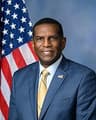
Burgess Owens (R-UT)
Expressing the sense of the House of Representatives that fatherhood is essential to the development of all children, and that the increased involvement of fathers in the home will lead to economic prosperity, educational excellence, and improved social mobility for children across all racial and ethnic groups.
A Republican resolution with 2 Republican cosponsors · See all 2 cosponsors
Last activity — Referred to the Committee on Education and Workforce, and in addition to the Committees on the Judiciary, and Ways and Means, for a period to be subsequently determined by the Speaker, in each case for consideration of such provisions as fall within the jurisdiction of the committee concerned.
In committee
Introduced and handed to a committee in the chamber it started in.
The committee holds it, and most bills are never heard from again. A hearing or a committee vote would be news; silence is the usual outcome, and it kills the bill without anyone voting against it.
Its path through Congress
- Introduced
- In Committee
A House resolution is the House speaking for itself: stating a position, honouring someone, or setting its own rules. Adopting it is the whole process. Once the House agrees to it, it is officially the House's word; it is not a law, so the Senate and the President have no part in it.
What this bill would do
This resolution expresses the sense of the House of Representatives regarding the essential role of fatherhood in child development. It asserts that increased involvement from fathers can lead to economic prosperity, educational excellence, and improved social mobility. The text highlights that fatherlessness is a root cause of various social issues, including violence and unrest. It also notes that many children currently live in homes without a father. The resolution calls for policies that incentivize two-parent households and address barriers created by the current welfare system. Finally, it suggests various ways to promote and support engaged fatherhood across all communities.
Yes· 3 of 9
- Scored +5
Would children be better off under this?
The resolution focuses on the essential role of fatherhood in child development.
- Scored +4
Would Black Americans be better off under this?
The text specifically mentions supporting educational and economic development in minority communities.
- Scored +4
Would men be better off under this?
The resolution promotes the engagement and role of fathers in the family.
The opposite
No question was scored the opposite.
Who it would affect, and how
Potential Positive Impacts for People
-
Support for child development: The resolution affirms that fatherhood is important for caring, nurturing, and supporting children throughout their lives (Section 1).
-
Community and leadership engagement: It supports efforts by public officials, community leaders, faith leaders, and citizens to promote engaged fatherhood (Section 2).
-
Employment opportunities for the formerly incarcerated: The resolution supports programs that provide incarcerated individuals with tools and skills to find meaningful employment after release (Section 6).
-
Economic and educational support for minority communities: It reaffirms support for educational and economic development initiatives such as Opportunity Zones and historically Black colleges and universities (Section 7).
-
Potential for new parental opportunities: The text suggests exploring tax incentives and programs for fathers serving as foster parents or participating in mentoring programs (Section 10).
Potential Negative Impacts for People
-
Impact of the criminal justice system: The resolution recognizes that incarceration and the criminal justice system have contributed to the creation of single-parent homes (Section 4).
-
Issues with welfare and family reunification: The text notes that current federal welfare program structures may have misaligned incentives that create barriers for fathers trying to return home to their families (Section 5).
-
Difficulties in family law: The resolution points to existing difficulties regarding child custody as it relates to alimony and child support (Section 9).
Groups and Interests Ranking
Every group the model scored this bill for, from -10 to +10. Tap or hover a score for the reason it gave.
- Demographic And Interest Groups
- Would children be better off under this? — The resolution focuses on the essential role of fatherhood in child development. Would Black Americans be better off under this? — The text specifically mentions supporting educational and economic development in minority communities. Would men be better off under this? — The resolution promotes the engagement and role of fathers in the family. Would households on low incomes be better off under this? — It addresses barriers in welfare and promotes economic development in underserved areas. Would students be better off under this? — It emphasizes the role of fatherhood in educational excellence and development.
- Social Issues And Justice
- Does this narrow racial gaps in how people are treated? — The resolution emphasizes supporting educational and economic development in minority communities. Is this likely to lift people out of poverty? — The resolution links father involvement to improved social mobility and economic stability. Does this shorten or soften prison sentences? — It supports providing incarcerated individuals with tools for employment upon release.
- Economy And Finance
- Is this likely to grow the economy? — The resolution posits that increased father involvement can lead to economic prosperity.
- 6/9/2025
- 1 Cosponsor added.
- 6/6/2025
- Submitted in House
- Sponsor introductory remarks on measure. (CR H2515)
- Referred to the Committee on Education and Workforce, and in addition to the Committees on the Judiciary, and Ways and Means, for a period to be subsequently determined by the Speaker, in each case for consideration of such provisions as fall within the jurisdiction of the committee concerned.
- 1 Cosponsor added.
 Byron Donalds
Republican · Florida
 Mark Harris
Republican · North Carolina