Bill · H.Res. 248· House(119-HRES-248)
Emphasizing the importance and power of distributed ledger technologies (DLT) to support democratic governance, human rights, internet freedom, and transparency.
- Introduced
- 3/25/2025
- Last activity
- 3/25/2025 — Referred to the House Committee on Foreign Affairs.
- Sponsored by
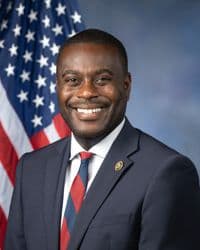
- Gabe Amo
- Cosponsors
- - 0 - 1
- Introduced
- In Committee
A House resolution is the House speaking for itself: stating a position, honouring someone, or setting its own rules. Adopting it is the whole process. Once the House agrees to it, it is officially the House's word; it is not a law, so the Senate and the President have no part in it.
What this bill would do
This resolution emphasizes the power of distributed ledger technologies (DLT) to support democratic governance, human rights, and transparency. It highlights how these technologies can improve government accountability, combat misinformation, and secure digital documents. The resolution suggests that DLT can enhance the resilience of essential systems and aid in the distribution of humanitarian relief. It urges various United States government agencies to explore and support the application of these technologies. Additionally, it calls for leadership in creating regulatory frameworks to ensure ethical use and sustainability.
Yes· 3 of 10
Does this make what the government does easier for the public to see?+7
The resolution explicitly highlights DLT's potential to improve government accountability and transparency.
Does this better protect the country from computer attacks?+6
DLT is highlighted for increasing system resilience against targeted attacks and disruptions.
Does this make elections run better?+5
DLT is seen as a tool to ensure the integrity and verification of democratic processes.
The opposite
No question was scored the opposite.
Who it would affect, and how
Potential Positive Impacts for People
-
Strengthening democratic governance and transparency: DLT can ensure the integrity, authentication, and verification of shared information, which is critical for delivering services to citizens. (Whereas clauses)
-
Improving accountability and combating misinformation: The technology has potential to improve government accountability and combat misinformation by providing a tamper-resistant platform for recording data. (Whereas clauses)
-
Empowering free expression and combating censorship: DLT provides an innovative solution to combat censorship by enabling decentralized platforms that safeguard free expression and access to information. (Whereas clauses and Resolution section 2)
-
Improving humanitarian aid delivery: DLT can enhance the efficiency of distributing aid through methods like direct cash transfers, which reduces intermediaries, lowers costs, and speeds up delivery. (Whereas clauses and Resolution section 1)
-
Increasing system resilience: The decentralized design of DLT spreads data across multiple nodes to avoid single points of failure, ensuring continuous service during targeted attacks or local disruptions. (Whereas clauses)
-
Securing personal and legal records: The technology can be used for securing digitized government documents and land registration. (Whereas clauses)
Potential Negative Impacts for People
- Risk of misuse by malign actors: There is a recognized concern regarding the risk of misuse of distributed ledger technologies by malign actors. (Resolution section 4)
Groups and Interests Ranking
Every group the model scored this bill for, from -10 to +10. Hover a score for the reason it gave.
- Governance And Ideology
- Improves Government Transparency+7Improves Electoral Process+5Improves Freedom Of Speech+5
- National Security And Foreign Policy
- Improves Cybersecurity Defense+6Increases Foreign Aid+5
- Education And Technology
- Improves Data Privacy+3Increases Scientific Research Funding+3
- Social Issues And Justice
- Improves Freedom Of Speech+5
- Demographic And Interest Groups
- Good For Low Income Households+4
- Environment Energy And Infrastructure
- Improves Disaster Relief And F E M A+4
- 3/25/2025
- Submitted in House
- Referred to the House Committee on Foreign Affairs.
- 1 Cosponsor added.
 Young Kim
Republican · California