Bill · H.Res. 239· House(119-HRES-239)
Raising awareness of the racial disparities in the impact of colorectal cancer on the Black community.
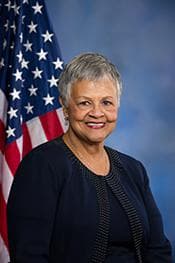
- Introduced
- 3/21/2025
- Last activity
- 3/21/2025 — Referred to the House Committee on Energy and Commerce.
- Sponsored by
- Bonnie Watson Coleman
- Cosponsors
- - 10 - 0
- Introduced
- In Committee
A House resolution is the House speaking for itself: stating a position, honouring someone, or setting its own rules. Adopting it is the whole process. Once the House agrees to it, it is officially the House's word; it is not a law, so the Senate and the President have no part in it.
What this bill would do
This resolution addresses the significant impact of colorectal cancer on the American people. It highlights racial disparities, noting that Black men and women face higher rates of cancer and death compared to non-Hispanic Whites. The resolution recognizes that Black Americans have the lowest 5-year survival rate for this disease. To address these issues, it calls for action regarding screening and research. Specifically, it urges the CDC and NIH to investigate various contributing factors. Finally, it calls on State health plans to update coverage for screenings.
Yes· 3 of 9
Would Black Americans be better off under this?+8
The resolution focuses on mitigating racial disparities in colorectal cancer deaths affecting the Black community.
Does this narrow racial gaps in how people are treated?+7
The resolution specifically targets racial disparities in cancer outcomes and screening rates affecting the Black community.
Does this make health care easier to get in general?+6
The resolution encourages state health plans to expand coverage for earlier colorectal cancer screenings.
The opposite
No question was scored the opposite.
Who it would affect, and how
Potential Positive Impacts for People
-
Increased Research into Risk Factors: The resolution encourages the CDC to identify factors causing screening disparities and the NIH to research physiological factors that increase risk in young adults. This could help people understand why they are at risk (Section 3 and Section 5).
-
Improved Screening Access: By urging State health plans to adopt measures covering screenings at a lower age, the resolution aims to help individuals at higher risk, specifically mentioning the Black community (Section 6).
-
Preventative Health Advocacy: The resolution encourages everyone to get screenings when recommended by the United States Preventive Services Task Force, which is important because the disease has a 90-percent survival rate when caught at the earliest stage (Section 4).
Potential Negative Impacts for People
- No negative impacts or burdens are explicitly mentioned in the text of this resolution.
Groups and Interests Ranking
Every group the model scored this bill for, from -10 to +10. Hover a score for the reason it gave.
- Demographic And Interest Groups
- Good For African Americans+8Good For Young Adults+5Good For Men+3Good For Middle Aged+3Good For Women+3
- Healthcare
- Improves Healthcare Access+6Increases Research Funding+5
- Social Issues And Justice
- Improves Racial Equity+7
- Education And Technology
- Increases Scientific Research Funding+5
- 3/21/2025
- Submitted in House
- Referred to the House Committee on Energy and Commerce.
- 10 Cosponsors added.
 Joyce Beatty
Democrat · Ohio
 Yvette Clarke
Democrat · New York
 Steve Cohen
Democrat · Tennessee
 Jahana Hayes
Democrat · Connecticut
 Sydney Kamlager-Dove
Democrat · California
 Gregory Meeks
Democrat · New York
 Eleanor Norton
Democrat · District of Columbia
 Ayanna Pressley
Democrat · Massachusetts
 Terri Sewell
Democrat · Alabama
 Bennie Thompson
Democrat · Mississippi