Bill · H.Res. 1627· House(119-HRES-1627)
Reaffirming the commitment of the House of Representatives to preserve and expand pathways to citizenship.
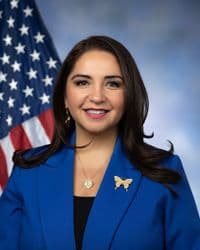
- Introduced
- 10/15/2026
- Last activity
- 10/15/2026 — Referred to the House Committee on the Judiciary.
- Sponsored by
- Delia Ramirez
- Cosponsors
- - 19 - 0
- Introduced
- In Committee
A House resolution is the House speaking for itself: stating a position, honouring someone, or setting its own rules. Adopting it is the whole process. Once the House agrees to it, it is officially the House's word; it is not a law, so the Senate and the President have no part in it.
What this bill would do
This resolution reaffirms the commitment of the House of Representatives to preserve and expand pathways to citizenship. It states that a fair immigration system must include pathways to citizenship for undocumented long-term residents, humanitarian protection pathways, and expanded legal pathways for family and employment immigration. The text also states that the system must address issues like the militarized enforcement system, barriers to family unity, and arbitrary visa caps. Furthermore, it highlights that barriers to protections for working people and access to services and benefits must be addressed. Finally, it expresses the sense of the House that Congress must act swiftly to overhaul the immigration system to uphold human rights and constitutional protections.
Yes· 3 of 10
Would immigrants be better off under this?+9
The primary focus of the resolution is to expand pathways to citizenship and protect the rights and well-being of immigrants.
Does this make it easier for immigrants already here to become citizens?+9
The resolution reaffirms the commitment of the House of Representatives to preserve and expand pathways to citizenship for undocumented long-term residents.
Would Hispanic Americans be better off under this?+7
Efforts to reform the immigration system and provide pathways to citizenship heavily impact Hispanic immigrant communities.
The opposite
No question was scored the opposite.
Who it would affect, and how
Potential Positive Impacts for People
-
Pathways to Citizenship: This could benefit undocumented long-term residents by providing pathways to citizenship, as noted in section (1)(A).
-
Humanitarian Protection: This could benefit individuals seeking safety by providing broad and meaningful access to asylum and refuge, as outlined in section (1)(B).
-
Family and Employment Immigration: This could benefit communities by expanding legal pathways for family and employment immigration to support family unity and worker protections, as stated in section (1)(C).
-
Addressing Enforcement and Barriers: This could benefit families and workers by addressing a militarized enforcement system, removing barriers to family unity such as arbitrary 3- and 10-year bars, and addressing visa caps and exploitative temporary visas, according to sections (2)(A), (2)(B), (2)(D), and (2)(E).
-
Access to Services and Protection: This could benefit residents, children, people of color, people with disabilities, and people fleeing violence by addressing bars on access to services and benefits and removing barriers for underserved communities, as detailed in sections (2)(F) and (2)(G).
Potential Negative Impacts for People
- Lack of Negative Impacts: Based strictly on the provided text, there are no specific sections or provisions that identify negative consequences, burdens, or negative impacts for individuals or groups of people in the United States.
Groups and Interests Ranking
Every group the model scored this bill for, from -10 to +10. Hover a score for the reason it gave.
- Demographic And Interest Groups
- Good For Immigrants+9Good For Hispanic Americans+7Good For Children+6Good For Low Income Households+6Good For People With Disabilities+6
- Social Issues And Justice
- Improves Pathway To Citizenship+9Improves Racial Equity+7Improves Disability Rights+6Improves Poverty Reduction+5
- Governance And Ideology
- Improves Due Process+7
- 10/15/2026
- Submitted in House
- Referred to the House Committee on the Judiciary.
- 19 Cosponsors added.
 Yassamin Ansari
Democrat · Arizona
 Yvette Clarke
Democrat · New York
 Judy Chu
Democrat · California
 Jasmine Crockett
Democrat · Texas
 Maxine Dexter
Democrat · Oregon
 Maxwell Frost
Democrat · Florida
 Al Green
Democrat · Texas
 Jesús García
Democrat · Illinois
 Sylvia Garcia
Democrat · Texas
 Adelita Grijalva
Democrat · Arizona
 Jonathan Jackson
Democrat · Illinois
 Analilia Mejia
Democrat · New Jersey
 Eleanor Norton
Democrat · District of Columbia
 Emily Randall
Democrat · Washington
 Janice Schakowsky
Democrat · Illinois
 Melanie Stansbury
Democrat · New Mexico
 Lateefah Simon
Democrat · California
 Rashida Tlaib
Democrat · Michigan
 Frederica Wilson
Democrat · Florida