Bill · H.Res. 1542· House(119-HRES-1542)
Designating September 2026 as "National Voting Rights Month".
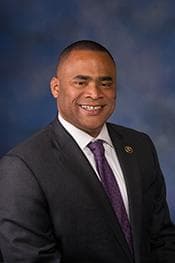
- Introduced
- 9/15/2026
- Last activity
- 9/15/2026 — Referred to the Committee on the Judiciary, and in addition to the Committees on House Administration, Oversight and Government Reform, and Education and Workforce, for a period to be subsequently determined by the Speaker, in each case for consideration of such provisions as fall within the jurisdiction of the committee concerned.
- Sponsored by
- Marc Veasey
- Cosponsors
- - 33 - 0
- Introduced
- In Committee
A House resolution is the House speaking for itself: stating a position, honouring someone, or setting its own rules. Adopting it is the whole process. Once the House agrees to it, it is officially the House's word; it is not a law, so the Senate and the President have no part in it.
What this bill would do
This resolution officially designates September 2026 as National Voting Rights Month. It highlights historical and modern challenges to voting, such as voter suppression, gerrymandering, and recent Supreme Court decisions. The text encourages Congress to pass specific voting rights legislation while opposing other designated bills. Additionally, it recommends that schools develop curricula on voting history and current restrictions. Finally, the measure suggests funding public service announcements to remind citizens about elections and registration deadlines.
Yes· 3 of 15
Would Black Americans be better off under this?+7
The resolution specifically advocates for protections against historical and current racial injustices in voting.
Would Native Americans be better off under this?+7
The resolution notes the history of voter suppression against Native Americans and seeks to prevent future barriers.
Does this protect the right to vote?+7
The resolution encourages passing the John R. Lewis Voting Rights Advancement Act to strengthen and modernize protections for voters.
The opposite
No question was scored the opposite.
Who it would affect, and how
Potential Positive Impacts for People
-
Educational Benefits: Public schools and universities are recommended to develop an academic curriculum that teaches students about voting importance, registration, and the history of voter suppression as outlined in Resolved paragraph (5). This could benefit students and future voters by increasing civic awareness and knowledge.
-
Informed Voters: Congress is invited to allocate funds for public service announcements across various media platforms to share registration deadlines and remind people when elections happen, according to Resolved paragraph (7). This provision helps ensure individuals stay informed and prepared to participate in elections.
Potential Negative Impacts for People
Based strictly on the provided text, there are no explicit sections or provisions identified that create negative outcomes, consequences, or burdens for individuals or groups of people in the United States.
Groups and Interests Ranking
Every group the model scored this bill for, from -10 to +10. Hover a score for the reason it gave.
- Demographic And Interest Groups
- Good For African Americans+7Good For Native Americans+7Good For Asian Americans+6Good For Hispanic Americans+6Good For Students+6Good For Low Income Households+5Good For People With Disabilities+5Good For Young Adults+5Good For Seniors+4Good For Women+1
- Social Issues And Justice
- Improves Voting Rights+7Improves Voting Access+6Improves Poverty Reduction+1
- Governance And Ideology
- Improves Electoral Process+7
- Education And Technology
- Improves School Choice+1
- 10/5/2026
- 1 Cosponsor added.
- 9/16/2026
- 1 Cosponsor added.
- 9/15/2026
- Submitted in House
- Referred to the Committee on the Judiciary, and in addition to the Committees on House Administration, Oversight and Government Reform, and Education and Workforce, for a period to be subsequently determined by the Speaker, in each case for consideration of such provisions as fall within the jurisdiction of the committee concerned.
- 31 Cosponsors added.
2 bills Congress.gov lists as related to this one — companions in the other chamber, earlier versions, and bills this one absorbed or was folded into.
 Alma Adams
Democrat · North Carolina
 Jim Costa
Democrat · California
 Kathy Castor
Democrat · Florida
 Yvette Clarke
Democrat · New York
 André Carson
Democrat · Indiana
 Judy Chu
Democrat · California
 J. Correa
Democrat · California
 Angie Craig
Democrat · Minnesota
 Lloyd Doggett
Democrat · Texas
 Suzan DelBene
Democrat · Washington
 Debbie Dingell
Democrat · Michigan
 Sharice Davids
Democrat · Kansas
 Sarah Elfreth
Democrat · Maryland
 Adelita Grijalva
Democrat · Arizona
 Steven Horsford
Democrat · Nevada
 Jonathan Jackson
Democrat · Illinois
 Julie Johnson
Democrat · Texas
 Sydney Kamlager-Dove
Democrat · California
 Rick Larsen
Democrat · Washington
 James McGovern
Democrat · Massachusetts
 Gwen Moore
Democrat · Wisconsin
 Grace Meng
Democrat · New York
 Seth Moulton
Democrat · Massachusetts
 Kevin Mullin
Democrat · California
 Eleanor Norton
Democrat · District of Columbia
 Johnny Olszewski
Democrat · Maryland
 Brittany Pettersen
Democrat · Colorado
 Nellie Pou
Democrat · New Jersey
 Robert Scott
Democrat · Virginia
 Hillary Scholten
Democrat · Michigan
 Lateefah Simon
Democrat · California
 Paul Tonko
Democrat · New York
 Rashida Tlaib
Democrat · Michigan