Bill · H.Res. 1365· House(119-HRES-1365)
Recognizing Avoidant/Restrictive Food Intake Disorder (ARFID) as a serious feeding and eating disorder and acknowledging the urgent need to advance awareness, early identification, research, and equitable access to care.
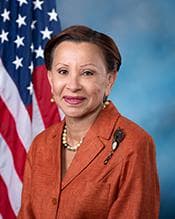
- Introduced
- 6/11/2026
- Last activity
- 6/11/2026 — Referred to the Committee on Energy and Commerce, and in addition to the Committee on Education and Workforce, for a period to be subsequently determined by the Speaker, in each case for consideration of such provisions as fall within the jurisdiction of the committee concerned.
- Sponsored by
- Nydia Velázquez
- Cosponsors
- - 2 - 0
- Introduced
- In Committee
A House resolution is the House speaking for itself: stating a position, honouring someone, or setting its own rules. Adopting it is the whole process. Once the House agrees to it, it is officially the House's word; it is not a law, so the Senate and the President have no part in it.
What this bill would do
H. Res. 1365 recognizes Avoidant/Restrictive Food Intake Disorder (ARFID) as a serious feeding and eating disorder. The resolution highlights the need for better awareness, early identification, and research into the disorder's biological and genetic roots. It calls for improved screening and referral pathways in primary care and pediatric settings. Additionally, it urges schools to provide support and accommodations for students with ARFID. Finally, it supports expanding multidisciplinary community-based services to ensure equitable access to care.
Yes· 3 of 21
Would children be better off under this?+8
Strongly supports early detection, pediatric screening, and school accommodations for children with ARFID.
Would students be better off under this?+8
Urges schools to implement supports and accommodations, particularly in school meal environments.
Would people with disabilities be better off under this?+7
Explicitly addresses the link between ARFID and autism and supports specialized multidisciplinary care.
The opposite
No question was scored the opposite.
Who it would affect, and how
Potential Positive Impacts for People
- Increased Support in Schools: Educational institutions are urged to implement supports and accommodations for students with ARFID, specifically within school meal environments.
- Improved Medical Detection: The resolution calls for stronger early screening and clinical training in pediatric and primary care systems to help alleviate long-term medical and developmental harm.
- Better Access to Specialized Care: It supports expanding community-based services such as feeding therapy, nutrition services, speech therapy, occupational therapy, and behavioral health care.
- Advancement of Treatment: The resolution supports research to better understand the genetic and biological underpinnings of ARFID to develop effective, evidence-based interventions.
Potential Negative Impacts for People
- No negative impacts for individuals or groups are explicitly mentioned in the provided text.
Groups and Interests Ranking
Every group the model scored this bill for, from -10 to +10. Hover a score for the reason it gave.
- Demographic And Interest Groups
- Good For Children+8Good For Students+8Good For People With Disabilities+7Good For Young Adults+5Good For High Income Households+4Good For Low Income Households+4Good For Middle Class Households+4Good For African Americans+3Good For Asian Americans+3Good For Hispanic Americans+3Good For L G B T Q Community+3Good For Men+3Good For Middle Aged+3Good For Native Americans+3Good For White Americans+3Good For Women+3
- Healthcare
- Improves Healthcare Access+7Improves Mental Health Access+6Increases Research Funding+5
- Education And Technology
- Increases Scientific Research Funding+5
- Social Issues And Justice
- Improves Disability Rights+5
- 6/11/2026
- Submitted in House
- Referred to the Committee on Energy and Commerce, and in addition to the Committee on Education and Workforce, for a period to be subsequently determined by the Speaker, in each case for consideration of such provisions as fall within the jurisdiction of the committee concerned.
- 2 Cosponsors added.
 Eleanor Norton
Democrat · District of Columbia
 Paul Tonko
Democrat · New York