Bill · H.Res. 1249· House(119-HRES-1249)
Unhoused Persons Bill of Rights
- Introduced
- 4/30/2026
- Last activity
- 4/30/2026 — Referred to the Committee on Financial Services, and in addition to the Committees on Energy and Commerce, Education and Workforce, the Judiciary, Agriculture, and Ways and Means, for a period to be subsequently determined by the Speaker, in each case for consideration of such provisions as fall within the jurisdiction of the committee concerned.
- Sponsored by
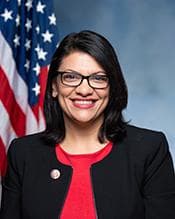
- Rashida Tlaib
- Cosponsors
- - 9 - 0
- Introduced
- In Committee
A House resolution is the House speaking for itself: stating a position, honouring someone, or setting its own rules. Adopting it is the whole process. Once the House agrees to it, it is officially the House's word; it is not a law, so the Senate and the President have no part in it.
What this bill would do
This resolution, titled the "Unhoused Persons Bill of Rights," expresses the sense of the House that the United States is obligated to permanently end the unhoused crisis by 2029. It seeks to protect the civil and human rights of unhoused individuals, including rights to housing, healthcare, and food. The bill outlines various protections against discrimination, harassment, and criminalization. It also directs the House to strive for significant funding of public housing, rental assistance, and social services. Additionally, it calls for specific actions from federal agencies to address the root causes of homelessness.
Yes· 3 of 26
Would households on low incomes be better off under this?+9
The bill provides massive funding for rental assistance, food security, and low-income housing.
Does this make housing cost less?+9
The bill calls for massive funding for public housing, rental assistance, and the construction of permanent units.
Would children be better off under this?+8
The bill advocates for universal school meals and protections for unhoused children.
The opposite
Does this reduce what is spent on the military?-5
The bill proposes reallocating $168 billion from the defense budget to end the unhoused crisis.
Does this put more money into Medicare, the health coverage for people over 65?-1
The bill focuses on universal health care as a human right rather than specific Medicare funding increases.
Who it would affect, and how
Potential Positive Impacts for People
-
Protection of Fundamental Rights: The resolution aims to protect rights such as access to decent housing, livable wages, universal healthcare, and education without discrimination (Section 2(a)).
-
Increased Access to Basic Necessities: It seeks to ensure unhoused individuals have access to clean restrooms, drinking water, handwashing facilities, and electricity (Section 2(a)(5)).
-
Support for Reentry: The bill includes provisions to allow people reentering the community from the criminal justice system to access public housing, employment, and education without discrimination based on criminal records (Section 2(a)(2)).
-
Expanded Food Security: It strives to provide universal school meals for K-12 students and expand eligibility for programs like SNAP, TANF, and WIC (Section 3(a)(3)).
-
Legal Protections: The resolution seeks to establish protections for unhoused people against mistreatment and harassment by law enforcement, private businesses, and property owners (Section 2(b)).
-
Housing Availability: It aims to increase low-income housing through the construction of permanent units and the funding of subsidies (Section 3(b)).
Potential Negative Impacts for People
- No specific negative impacts are explicitly detailed within the text provided.
Groups and Interests Ranking
Every group the model scored this bill for, from -10 to +10. Hover a score for the reason it gave.
- Demographic And Interest Groups
- Good For Low Income Households+9Good For African Americans+8Good For Children+8Good For L G B T Q Community+7Good For Veterans+7Good For Women+7Good For Seniors+6Good For Hispanic Americans+5Good For Immigrants+5
- Social Issues And Justice
- Improves Affordable Housing+9Improves Poverty Reduction+8Improves Racial Equity+8Improves Disability Rights+7Improves Policing Reform+7Improves L G B T Q Rights+6Improves Voting Rights+6Improves Pathway To Citizenship+2
- Healthcare
- Improves Healthcare Access+8Improves Mental Health Access+7Improves Pandemic Preparedness+2Increases Medicare Funding-1
- Education And Technology
- Improves Internet Access+6Improves College Affordability+5
- Economy And Finance
- Increases Minimum Wage+5Improves Economic Growth+3
- National Security And Foreign Policy
- Reduces Military Spending-5
- Governance And Ideology
- Improves Government Transparency+4
- Environment Energy And Infrastructure
- Improves Public Transit+3
- 4/30/2026
- Submitted in House
- Referred to the Committee on Financial Services, and in addition to the Committees on Energy and Commerce, Education and Workforce, the Judiciary, Agriculture, and Ways and Means, for a period to be subsequently determined by the Speaker, in each case for consideration of such provisions as fall within the jurisdiction of the committee concerned.
- 9 Cosponsors added.
 Jahana Hayes
Democrat · Connecticut
 Jonathan Jackson
Democrat · Illinois
 James McGovern
Democrat · Massachusetts
 LaMonica McIver
Democrat · New Jersey
 Eleanor Norton
Democrat · District of Columbia
 Lateefah Simon
Democrat · California
 Ritchie Torres
Democrat · New York
 Jill Tokuda
Democrat · Hawaii
 Bonnie Watson Coleman
Democrat · New Jersey