Bill · H.Res. 1244· House(119-HRES-1244)
Recognizing the disenfranchisement of District of Columbia residents, calling for statehood for the District of Columbia through the enactment of the Washington, D.C. Admission Act, and expressing support for the designation of May 1, 2026, as "D.C. Statehood Day".
- Introduced
- 4/30/2026
- Last activity
- 4/30/2026 — Referred to the Committee on Oversight and Government Reform, and in addition to the Committees on Rules, Armed Services, the Judiciary, and Energy and Commerce, for a period to be subsequently determined by the Speaker, in each case for consideration of such provisions as fall within the jurisdiction of the committee concerned.
- Sponsored by
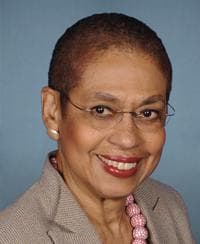
- Eleanor Norton
- Cosponsors
- None
- Introduced
- In Committee
A House resolution is the House speaking for itself: stating a position, honouring someone, or setting its own rules. Adopting it is the whole process. Once the House agrees to it, it is officially the House's word; it is not a law, so the Senate and the President have no part in it.
What this bill would do
This resolution recognizes that District of Columbia residents are currently disenfranchised. It calls for the enactment of the Washington, D.C. Admission Act to establish statehood for the District of Columbia. The resolution notes that statehood would provide residents with voting representation in Congress and full local self-government. Additionally, it expresses support for designating May 1, 2026, as "D.C. Statehood Day."
Yes· 3 of 8
Does this protect the right to vote?+10
The bill calls for statehood to provide District of Columbia residents with voting representation in Congress.
Does this make casting a ballot easier in practice?+10
Statehood would grant residents the right to participate in federal elections through voting representation in Congress.
Would people in cities be better off under this?+9
The bill would grant residents of the District of Columbia full local self-government and congressional representation.
The opposite
No question was scored the opposite.
Who it would affect, and how
Potential Positive Impacts for People
-
Voting Representation and Local Governance: The bill states that statehood would provide District of Columbia residents with voting representation in Congress and full local self-government.
-
Recognition of Statehood Day: The resolution supports the designation of May 1, 2026, as "D.C. Statehood Day."
Potential Negative Impacts for People
- No negative impacts or burdens are explicitly mentioned in the provided text.
Groups and Interests Ranking
Every group the model scored this bill for, from -10 to +10. Hover a score for the reason it gave.
- Demographic And Interest Groups
- Good For Urban Residents+9Good For African Americans+7Good For High Income Households+5Good For Low Income Households+5Good For Middle Class Households+5
- Social Issues And Justice
- Improves Voting Access+10Improves Voting Rights+10
- Governance And Ideology
- Increase States Rights+8
- 4/30/2026
- Submitted in House
- Referred to the Committee on Oversight and Government Reform, and in addition to the Committees on Rules, Armed Services, the Judiciary, and Energy and Commerce, for a period to be subsequently determined by the Speaker, in each case for consideration of such provisions as fall within the jurisdiction of the committee concerned.
One bill Congress.gov lists as related to this one — companions in the other chamber, earlier versions, and bills this one absorbed or was folded into.