Bill · H.Res. 106· House(119-HRES-106)
Expressing the sense of the House of Representatives that the United Nations Security Council should immediately impose an arms embargo against the military of Burma.
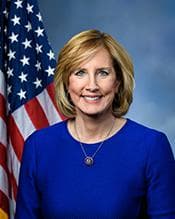
- Introduced
- 2/4/2025
- Last activity
- 2/4/2025 — Referred to the House Committee on Foreign Affairs.
- Sponsored by
- Claudia Tenney
- Cosponsors
- - 4 - 12
- Introduced
- In Committee
A House resolution is the House speaking for itself: stating a position, honouring someone, or setting its own rules. Adopting it is the whole process. Once the House agrees to it, it is officially the House's word; it is not a law, so the Senate and the President have no part in it.
What this bill would do
This text is a resolution from the House of Representatives regarding the military of Burma. It expresses the view that the United Nations Security Council should immediately place an arms embargo against the military of Burma. The resolution highlights the military coup that occurred on February 1, 2021, and the subsequent detention of elected leaders. It details human rights violations, restrictions on communication, and the use of force against peaceful protestors by the military. The text outlines specific conditions that the military must meet before any United Nations arms embargo could be lifted. Finally, it encourages the international community to continue supporting civilians affected by the coup and to promote peace.
Yes· 3 of 7
Does this narrow racial gaps in how people are treated?+7
The resolution calls for protecting ethnic minority groups like the Rohingya, Karen, Rakhine, and Kachin from abuses.
Does this get reliable internet to more people?+7
The resolution demands the full restoration of internet and telecommunications access in Burma.
Would students be better off under this?+6
The resolution calls for the release of detained students.
The opposite
No question was scored the opposite.
Who it would affect, and how
Potential Positive Impacts for People
-
Holding the military accountable: Under section (1), the United Nations Security Council is urged to impose an arms embargo to hold the Tatmadaw accountable for ongoing human rights violations, obstructing humanitarian access, using lethal force against peaceful demonstrators, and arbitrarily detaining officials and activists. This is positive because it seeks to address grave abuses against peaceful protestors and ethnic minority groups.
-
Demanding the release of leaders: Under section (2)(B), the lifting of the arms embargo is contingent upon the Tatmadaw releasing the democratically elected government leaders from imprisonment. This is considered positive as it pushes for the freedom of unjustly detained elected officials.
-
Restoring essential services: Under section (2)(D) and section (2)(E), the lifting of the embargo requires allowing unimpeded humanitarian access to vulnerable civilians and fully restoring internet and telecommunications access within Burma. This is beneficial because it helps deliver critical aid to people in dire need and restores vital communication lines.
-
Transitioning back to democracy: Under section (2)(F), the military must establish a clear and verifiable process to immediately transition power back to a democratically elected civilian-led government. This is a positive outcome for citizens seeking to restore their democratic governance.
-
Supporting affected civilians: Under section (3), the international community is encouraged to continue supporting civilians, particularly ethnic minorities, who have been adversely affected by the coup, and to promote peace and reconciliation. This is beneficial for individuals suffering the consequences of the political crisis.
Potential Negative Impacts for People
- No negative impacts found: Based strictly on the provided text, there are no specific sections or provisions identified that outline negative consequences or burdens for individuals or groups of people in the United States.
Groups and Interests Ranking
Every group the model scored this bill for, from -10 to +10. Hover a score for the reason it gave.
- Social Issues And Justice
- Improves Racial Equity+7Improves Poverty Reduction+5
- Demographic And Interest Groups
- Good For Students+6Good For Low Income Households+5
- Education And Technology
- Improves Internet Access+7
- Governance And Ideology
- Improves Privacy Rights+5
- National Security And Foreign Policy
- Improves International Alliances+4
- 4/28/2025
- 1 Cosponsor added.
- 4/7/2025
- 1 Cosponsor added.
- 3/21/2025
- 1 Cosponsor added.
- 3/5/2025
- 1 Cosponsor added.
- 3/4/2025
- 1 Cosponsor added.
- 3/3/2025
- 2 Cosponsors added.
- 2/26/2025
- 1 Cosponsor added.
- 2/25/2025
- 1 Cosponsor added.
- 2/5/2025
- 1 Cosponsor added.
- 2/4/2025
- Submitted in House
- Referred to the House Committee on Foreign Affairs.
- 6 Cosponsors added.
 James Baird
Republican · Indiana
 Steve Cohen
Democrat · Tennessee
 Joaquin Castro
Democrat · Texas
 Lloyd Doggett
Democrat · Texas
 Bill Huizenga
Republican · Michigan
 Jahana Hayes
Democrat · Connecticut
 Timothy Kennedy
Democrat · New York
 James McGovern
Democrat · Massachusetts
 Seth Moulton
Democrat · Massachusetts
 Blake Moore
Republican · Utah
 Jerrold Nadler
Democrat · New York
 Eleanor Norton
Democrat · District of Columbia
 Ilhan Omar
Democrat · Minnesota
 Mike Quigley
Democrat · Illinois
 Brad Sherman
Democrat · California
 Joe Wilson
Republican · South Carolina