Bill · H.Res. 100· House(119-HRES-100)
Expressing support for the continued value of arms control agreements and negotiated constraints on Russian and Chinese strategic nuclear forces.
- Introduced
- 2/4/2025
- Last activity
- 2/4/2025 — Referred to the House Committee on Foreign Affairs.
- Sponsored by
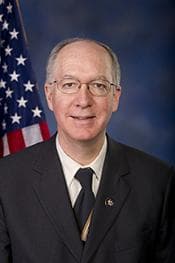
- Bill Foster
- Cosponsors
- - 31 - 0
- Introduced
- In Committee
A House resolution is the House speaking for itself: stating a position, honouring someone, or setting its own rules. Adopting it is the whole process. Once the House agrees to it, it is officially the House's word; it is not a law, so the Senate and the President have no part in it.
What this bill would do
H. Res. 100 expresses support for the continued value of arms control agreements and negotiated constraints on Russian and Chinese strategic nuclear forces. The text condemns the Russian Federation's nuclear escalatory rhetoric, veiled threats, and its purported suspension of the New START Treaty. It emphasizes the importance of transparency, verification measures, and onsite inspections that have provided insight into Russia's nuclear arsenal. The resolution calls for an immediate cessation of nuclear saber rattling and urges the Russian Federation to return to full implementation of the New START Treaty. Additionally, it calls on the administration to pursue a dialogue with Russia on a new post-2026 nuclear arms control framework and to continue engaging the People's Republic of China in bilateral talks on nuclear risk reduction and arms control.
Yes· 3 of 7
Does this favour talking over confrontation abroad?+7
The resolution calls for active dialogue with Russia and China regarding nuclear risk reduction and new arms control frameworks.
Does this reduce what is spent on the military?+5
By pursuing arms control frameworks, the resolution seeks to avoid the high costs of a new nuclear arms race.
Does this reduce what the federal government spends?+5
The resolution aims to prevent a costly and unrestrained nuclear arms race through continued arms control agreements.
The opposite
No question was scored the opposite.
Who it would affect, and how
Potential Positive Impacts for People
-
Encouraging Nuclear Risk Reduction and Stability: The resolution calls on the administration to continue active dialogue with the Russian Federation on a new nuclear arms control framework and risk reduction, which aims to maintain strategic stability and avoid an unrestrained nuclear arms race following the expiration of the New START Treaty as noted in Resolved (6).
-
Maintaining Numerical Limits on Nuclear Forces: The text calls upon both the United States and the Russian Federation to continue to respect the numerical constraints on strategic deployed nuclear forces established by the New START Treaty until a new framework is established, helping to limit nuclear arsenals as mentioned in Resolved (7).
-
Promoting Communication with China: The resolution calls on the administration to continue engaging the People's Republic of China in further bilateral talks on nuclear risk reduction and arms control, and to pursue new multilateral arms control efforts as stated in Resolved (8).
Potential Negative Impacts for People
- The provided text does not contain any specific sections or provisions that outline negative consequences, burdens, or adverse impacts for individuals or groups of people in the United States.
Groups and Interests Ranking
Every group the model scored this bill for, from -10 to +10. Hover a score for the reason it gave.
- National Security And Foreign Policy
- Improves Diplomatic Engagement+7Reduces Military Spending+5Improves International Alliances+4
- Economy And Finance
- Reduces Government Spending+5
- Demographic And Interest Groups
- Good For Low Income Households+2Good For Urban Residents+2
- Social Issues And Justice
- Improves Poverty Reduction+1
- 8/10/2026
- 1 Cosponsor added.
- 7/22/2026
- 1 Cosponsor added.
- 5/14/2026
- 1 Cosponsor added.
- 3/5/2026
- 1 Cosponsor added.
- 2/4/2026
- 1 Cosponsor added.
- 2/3/2026
- 1 Cosponsor added.
- 1/15/2026
- 1 Cosponsor added.
- 12/9/2025
- 1 Cosponsor added.
- 11/19/2025
- 1 Cosponsor added.
- 11/10/2025
- 1 Cosponsor added.
- 9/30/2025
- 1 Cosponsor added.
- 9/15/2025
- 1 Cosponsor added.
- 7/10/2025
- 1 Cosponsor added.
- 6/2/2025
- 1 Cosponsor added.
- 4/29/2025
- 1 Cosponsor added.
- 3/24/2025
- 1 Cosponsor added.
- 2/25/2025
- 1 Cosponsor added.
- 2/5/2025
- 1 Cosponsor added.
- 2/4/2025
- Submitted in House
- Referred to the House Committee on Foreign Affairs.
- 13 Cosponsors added.
One bill Congress.gov lists as related to this one — companions in the other chamber, earlier versions, and bills this one absorbed or was folded into.
 Donald Beyer
Democrat · Virginia
 Joe Courtney
Democrat · Connecticut
 Sean Casten
Democrat · Illinois
 Gilbert Cisneros
Democrat · California
 Madeleine Dean
Democrat · Pennsylvania
 John Garamendi
Democrat · California
 Sylvia Garcia
Democrat · Texas
 Val Hoyle
Democrat · Oregon
 Pramila Jayapal
Democrat · Washington
 Ro Khanna
Democrat · California
 Teresa Leger Fernandez
Democrat · New Mexico
 Zoe Lofgren
Democrat · California
 Rick Larsen
Democrat · Washington
 Mike Levin
Democrat · California
 James McGovern
Democrat · Massachusetts
 Gregory Meeks
Democrat · New York
 Seth Moulton
Democrat · Massachusetts
 Sarah McBride
Democrat · Delaware
 Jerrold Nadler
Democrat · New York
 Eleanor Norton
Democrat · District of Columbia
 Donald Norcross
Democrat · New Jersey
 Ilhan Omar
Democrat · Minnesota
 Scott Peters
Democrat · California
 Mike Quigley
Democrat · Illinois
 Adam Smith
Democrat · Washington
 Eric Swalwell
Democrat · California
 Emilia Sykes
Democrat · Ohio
 Dina Titus
Democrat · Nevada
 Rashida Tlaib
Democrat · Michigan
 Jill Tokuda
Democrat · Hawaii
 Juan Vargas
Democrat · California