Bill · H.R. 9962· House(119-HR-9962)
Green New Deal for Health Act
- Introduced
- 7/27/2026
- Last activity
- 7/27/2026 — Referred to the Committee on Energy and Commerce, and in addition to the Committees on Ways and Means, and Science, Space, and Technology, for a period to be subsequently determined by the Speaker, in each case for consideration of such provisions as fall within the jurisdiction of the committee concerned.
- Sponsored by
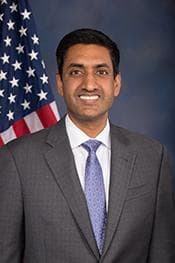
- Ro Khanna
- Cosponsors
- - 8 - 0
- Introduced
- In Committee
What this bill would do
-
This legislation establishes the Green New Deal for Health Act to prepare and protect the health care sector and communities against the climate crisis.
-
It creates a new Office of Climate Change and Health Equity and an interagency framework to address the health impacts of climate change.
-
The bill mandates that hospitals provide advanced notice before closing or reducing essential services and requires the creation of mitigation plans.
-
It authorizes funding for green infrastructure upgrades in medical facilities, community health centers, and programs focused on environmental justice communities.
-
It supports the health workforce and medical supply chains through training programs, hazardous duty compensation, and decarbonization strategies.
-
It funds research, mental wellness programs, and Medicare coverage for home resiliency services to protect vulnerable individuals during climate disasters.
Yes· 3 of 32
Does this put more money into medical research?+10
The bill authorizes $5 billion annually for research and innovation related to climate change and health impacts through 2036.
Does this put more money into scientific research?+10
The bill authorizes $5 billion per year to support scientific research and innovation regarding health and climate.
Would Native Americans be better off under this?+7
The bill specifically includes representation from Indian tribes and tribal organizations on the Advisory Council.
The opposite
No question was scored the opposite.
Who it would affect, and how
Potential Positive Impacts for People
-
Strengthened Hospital Closure Rules (Section 201): Requires hospitals to give a 90-day notice before closing or cutting essential services, which protects everyday folks from suddenly losing access to vital medical care in their neighborhoods.
-
Support for Community Health (Section 202): Directs at least 50 percent of expanded community health center funding to environmental justice communities, ensuring lower-income areas and communities of color receive better medical resources.
-
Green Facility Upgrades (Section 301): Provides massive funding to modernize medical facilities with climate-ready infrastructure, like backup renewable energy and improved air filtration, which keeps hospitals running and safe during power outages or extreme weather.
-
Home Resiliency Services (Section 621): Adds Medicare coverage for necessary home items like heat pumps and solar backup batteries for patients who are medically at risk during climate disasters, helping folks stay safe right at home.
-
Worker Protections and Training (Sections 501 and 503): Funds job training and career pathways for community health workers and provides up to $13 per hour in hazardous duty compensation for essential health care workers during emergencies.
Potential Negative Impacts for People
-
Regulatory Burdens and Hospital Costs (Section 201): Hospitals face strict new bureaucratic requirements, mandatory waiting periods, and potential enrollment bans from Medicare for up to three years if they violate closure rules, which could add heavy administrative and financial stress to struggling medical facilities.
-
Compliance Costs for Manufacturers (Section 402): Imposes mandatory climate risk disclosure policies and reporting requirements on drug and medical device manufacturers, which could potentially drive up the operational costs of producing essential medications and supplies.
Groups and Interests Ranking
Every group the model scored this bill for, from -10 to +10. Hover a score for the reason it gave.
- Demographic And Interest Groups
- Good For Native Americans+7Good For Low Income Households+6Good For People With Disabilities+6Good For Seniors+6Good For African Americans+5Good For Hispanic Americans+5Good For Union Workers+5Good For Urban Residents+5Good For Children+4Good For Business Owners+3Good For Immigrants+3Good For Women+3Good For Veterans+1
- Healthcare
- Increases Research Funding+10Improves Healthcare Access+7Improves Mental Health Access+7Increases Medicare Funding+5
- Environment Energy And Infrastructure
- Increases Renewable Energy Investment+7Improves Environmental Protections+6Reduces Carbon Emissions+6Improves Roads And Bridges+4
- Economy And Finance
- Increases Job Creation+6Improves Union Protections+5Improves Economic Growth+3Improves Fiscal Responsibility+3
- Education And Technology
- Increases Scientific Research Funding+10Improves College Affordability+2
- Social Issues And Justice
- Improves Racial Equity+7Improves Poverty Reduction+3Improves Affordable Housing+2
- Governance And Ideology
- Improves Government Transparency+4
- National Security And Foreign Policy
- Improves Veterans Benefits+1
- 9/24/2026
- 1 Cosponsor added.
- 7/30/2026
- 1 Cosponsor added.
- 7/27/2026
- Referred to the Committee on Energy and Commerce, and in addition to the Committees on Ways and Means, and Science, Space, and Technology, for a period to be subsequently determined by the Speaker, in each case for consideration of such provisions as fall within the jurisdiction of the committee concerned.
- 6 Cosponsors added.
- Introduced in House
7 bills Congress.gov lists as related to this one — companions in the other chamber, earlier versions, and bills this one absorbed or was folded into.
 Yvette Clarke
Democrat · New York
 Maxwell Frost
Democrat · Florida
 Eleanor Norton
Democrat · District of Columbia
 Alexandria Ocasio-Cortez
Democrat · New York
 Ilhan Omar
Democrat · Minnesota
 Ayanna Pressley
Democrat · Massachusetts
 Rashida Tlaib
Democrat · Michigan
 Shri Thanedar
Democrat · Michigan