Bill · H.R. 9925· House(119-HR-9925)
FRONTIER Act
- Introduced
- 7/23/2026
- Last activity
- 7/23/2026 — Referred to the Committee on Energy and Commerce, and in addition to the Committee on Science, Space, and Technology, for a period to be subsequently determined by the Speaker, in each case for consideration of such provisions as fall within the jurisdiction of the committee concerned.
- Sponsored by
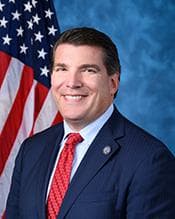
- Jay Obernolte
- Cosponsors
- - 5 - 6
- Introduced
- In Committee
What this bill would do
This bill, known as the FRONTIER Act, sets up a system for federal oversight of the development and deployment of powerful artificial intelligence models. It requires large AI developers to publish safety frameworks, report critical safety incidents, and undergo regular third-party audits and independent verification. The legislation gives the Department of Commerce the power to issue emergency orders if an AI model presents an imminent catastrophic risk to the public. It also establishes civil and criminal penalties for companies that break these rules and prevents states from passing conflicting local laws on these specific safety areas.
Yes· 3 of 5
Does this better protect the country from computer attacks?+8
The bill directly addresses the mitigation of catastrophic cyber risks associated with frontier AI models.
Does this put more rules on large technology companies?+7
The bill significantly increases regulation for large frontier AI developers through frameworks and audits.
Does this give the federal government more power?+6
The bill expands federal authority through a new oversight regime and emergency order powers over AI development.
The opposite
Does this leave more decisions to the states?-5
The bill includes preemption provisions that limit the ability of states to regulate frontier AI developers.
Would business owners be better off under this?-4
The bill imposes new compliance costs, civil penalties, and regulatory burdens on large AI developers.
Does this give the government more power to monitor people inside the country?-2
The bill establishes federal oversight and reporting that could be viewed as a form of domestic technical surveillance.
Who it would affect, and how
Potential Positive Impacts for People
-
Public Safety Protections: Under Section 4 and Section 8, the government can step in and stop companies from deploying dangerous AI models that could cause mass casualties, severe injuries, or massive property damage. This protects everyday citizens from extreme, foreseeable risks like rogue cyberattacks or the assistance of dangerous weapons.
-
Transparency and Accountability: Section 4 requires large developers to clearly publish their safety frameworks and transparency reports before releasing new models. This ensures that the public and elected officials can hold these major tech companies accountable for their actions and safety practices.
-
Independent Safety Checks: Section 5 requires very large AI developers to use licensed independent verification organizations to continuously monitor and assess their risk practices. This brings in outside experts to double-check that developers are actually keeping their systems safe rather than just grading their own homework.
Potential Negative Impacts for People
-
Higher Costs and Reduced Competition: The heavy regulations, registration fees, and mandatory independent audits required under Section 4 and Section 5 could create massive financial burdens for companies. This might make it very hard for smaller startups to compete against massive tech corporations, potentially reducing choices for the public.
-
Limited State-Level Protections: Section 9 blocks states from passing their own laws regarding AI risk transparency, third-party auditing, and incident reporting. This means local communities and state elected officials cannot enact stricter rules to protect their residents if they feel the federal government's approach is not enough.
Groups and Interests Ranking
Every group the model scored this bill for, from -10 to +10. Hover a score for the reason it gave.
- Education And Technology
- Increases Big Tech Regulation+7
- National Security And Foreign Policy
- Improves Cybersecurity Defense+8Increases Domestic Surveillance-2
- Economy And Finance
- Improves Consumer Protection+5
- Governance And Ideology
- Increases Federal Power+6Improves Government Transparency+4Increase States Rights-5
- Demographic And Interest Groups
- Good For Business Owners-4
- 10/1/2026
- 2 Cosponsors added.
- 9/21/2026
- 2 Cosponsors added.
- 9/16/2026
- 2 Cosponsors added.
- 7/23/2026
- Referred to the Committee on Energy and Commerce, and in addition to the Committee on Science, Space, and Technology, for a period to be subsequently determined by the Speaker, in each case for consideration of such provisions as fall within the jurisdiction of the committee concerned.
- 5 Cosponsors added.
- Introduced in House
 J. Correa
Democrat · California
 Scott Franklin
Republican · Florida
 James Gallagher
Republican · California
 Erin Houchin
Republican · Indiana
 Nicole Malliotakis
Republican · New York
 Scott Peters
Democrat · California
 Mike Quigley
Democrat · Illinois
 Suhas Subramanyam
Democrat · Virginia
 Lori Trahan
Democrat · Massachusetts
 Gabe Vasquez
Democrat · New Mexico
 Joe Wilson
Republican · South Carolina