Bill · H.R. 9873· House(119-HR-9873)
Inclusive Democracy Act of 2026
- Introduced
- 7/22/2026
- Last activity
- 7/22/2026 — Referred to the Committee on the Judiciary, and in addition to the Committee on House Administration, for a period to be subsequently determined by the Speaker, in each case for consideration of such provisions as fall within the jurisdiction of the committee concerned.
- Sponsored by
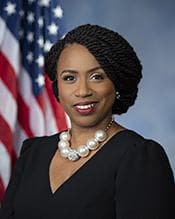
- Ayanna Pressley
- Cosponsors
- - 13 - 0
- Introduced
- In Committee
What this bill would do
The Inclusive Democracy Act of 2026 aims to guarantee the right to vote for all citizens regardless of criminal convictions. It mandates that states and federal courts notify individuals of their voting rights upon conviction. The bill establishes specific procedures for voter registration and absentee voting within carceral settings. It also requires the provision of internet access for political research and permits nonpartisan registration services in these settings. Finally, it includes enforcement mechanisms through the Attorney General and private rights of action.
Yes· 3 of 5
Does this protect the right to vote?+10
The bill establishes a fundamental right to vote for all citizens regardless of criminal conviction.
Does this make casting a ballot easier in practice?+10
The bill expands access to registration, internet research, and absentee voting for incarcerated individuals.
Does this make elections run better?+8
The bill improves electoral processes by ensuring incarcerated individuals can register and vote.
The opposite
Does this leave more decisions to the states?-5
The bill imposes mandatory notification and registration requirements on the states.
Who it would affect, and how
Potential Positive Impacts for People
-
Guaranteed Voting Rights: The bill ensures that a criminal conviction does not deny a citizen the right to vote in Federal elections (Section 2).
-
Mandatory Notification: Individuals are notified in writing by the State or Federal court about their continued eligibility to vote despite a conviction (Section s 3(a)(1)-3(a)(2)).
-
Proactive Outreach for Parolees: Heads of probation or parole offices must provide written notification regarding changes to voter eligibility within 90 days of the Act's enactment (Section 3(a)(3)).
-
Expanded Access in Carceral Settings: Incarcerated individuals are provided opportunities to register to vote via mail-in forms and can use their last known address or the carceral setting's address (Section 3(b)(1)-3(b)(4)).
-
Streamlined Absentee Voting: The bill provides for the provision of absentee ballot applications and ensures that ballots are transmitted promptly by carceral officials (Section 3(c)(2)-3(c)(3)).
-
Ballot Integrity Protection: Election officials must make a good faith effort to notify incarcerated individuals of missing signatures or defects so they can cure them (Section 3(c)(3)(F)).
-
Access to Information: If available, incarcerated individuals are granted free access to internet-connected devices to research candidates and elections (Section 3(d)(1)).
-
Support for Third-Party Registration: Nonpartisan entities are permitted to enter carceral settings to provide voter registration services (Section 3(e)(1)).
Potential Negative Impacts for People
- No specific negative impacts are explicitly detailed in the text provided.
Groups and Interests Ranking
Every group the model scored this bill for, from -10 to +10. Hover a score for the reason it gave.
- Social Issues And Justice
- Improves Voting Access+10Improves Voting Rights+10
- Governance And Ideology
- Improves Electoral Process+8Increases Federal Power+5Increase States Rights-5
- Education And Technology
- Improves Internet Access+5
- 7/22/2026
- Referred to the Committee on the Judiciary, and in addition to the Committee on House Administration, for a period to be subsequently determined by the Speaker, in each case for consideration of such provisions as fall within the jurisdiction of the committee concerned.
- 13 Cosponsors added.
- Introduced in House
3 bills Congress.gov lists as related to this one — companions in the other chamber, earlier versions, and bills this one absorbed or was folded into.
 Emanuel Cleaver
Democrat · Missouri
 Greg Casar
Democrat · Texas
 Henry Johnson
Democrat · Georgia
 Summer Lee
Democrat · Pennsylvania
 Kweisi Mfume
Democrat · Maryland
 Eleanor Norton
Democrat · District of Columbia
 Ilhan Omar
Democrat · Minnesota
 Delia Ramirez
Democrat · Illinois
 Terri Sewell
Democrat · Alabama
 Lateefah Simon
Democrat · California
 Paul Tonko
Democrat · New York
 Rashida Tlaib
Democrat · Michigan
 Shri Thanedar
Democrat · Michigan