Bill · H.R. 9842· House(119-HR-9842)
State Offices of Women’s Health Support and Expansion Act
- Introduced
- 7/22/2026
- Last activity
- 7/22/2026 — Referred to the House Committee on Energy and Commerce.
- Sponsored by
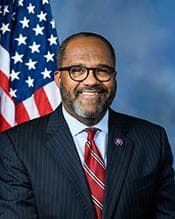
- Troy Carter
- Cosponsors
- - 5 - 0
- Introduced
- In Committee
What this bill would do
H.R. 9842, known as the State Offices of Women's Health Support and Expansion Act, amends the Public Health Service Act to authorize grants for establishing and maintaining State offices of women's health. The bill is administered by the Secretary through the Deputy Assistant Secretary for Women's Health. Grant funds can be used for public education, addressing social determinants of health, and establishing community stakeholder advisory panels. The legislation explicitly prohibits using grant funds to discourage individuals from seeking reproductive health services or to withhold medically accurate information. Additionally, the bill includes strict privacy protections for collected data and requires participating States to submit annual reports.
Yes· 3 of 12
Would women be better off under this?+8
The bill creates a robust framework for supporting women's health across their entire lifespan.
Does this narrow the gap between how men and women are treated?+7
The bill establishes dedicated State offices and resources specifically to support and expand women's health.
Does this make health care easier to get in general?+6
The bill funds State offices to address health disparities and improve access to services through public education and resource clearinghouses.
The opposite
No question was scored the opposite.
Who it would affect, and how
Potential Positive Impacts for People
-
Public Education and Outreach: Under Section 229A(c)(2), States can use funds to educate the public on preventive health, early detection, chronic disease management, reproductive health, and maternal health. This provision is beneficial because it raises awareness and provides critical health resources across a woman's lifespan.
-
Addressing Non-Clinical Factors: According to Section 229A(c)(3), grants can support initiatives targeting housing instability, transportation barriers, food insecurity, workforce participation, and access to childcare. This is a positive step for individuals because it addresses the social determinants that directly impact overall health outcomes.
-
Community Involvement: Under Section 229A(c)(4), States must establish and convene an annual community stakeholder advisory panel. This inclusion ensures that community-based organizations, healthcare providers, and impacted populations have a direct voice in developing strategic priorities and funding recommendations.
-
Strong Privacy Protections: Section 229A(f) protects personal data by prohibiting its use in civil actions, criminal prosecutions, investigations, or proceedings, and prevents it from being sold or shared with external platforms. This provision provides security and confidentiality for individuals accessing state health services.
Potential Negative Impacts for People
- Financial and Administrative Oversight Burdens: Under Section 229A(h), States receiving the grant must require their state office of women's health to annually submit detailed reports to the Secretary, identifying measurable improvements, remaining gaps, and summarizing outreach efforts. While useful for accountability, the administrative burden and reporting requirements could stretch state resources thin.
Groups and Interests Ranking
Every group the model scored this bill for, from -10 to +10. Hover a score for the reason it gave.
- Demographic And Interest Groups
- Good For Women+8Good For Rural Residents+5Good For Low Income Households+4
- Healthcare
- Improves Healthcare Access+6Improves Abortion Access+5Increases Medicaid Funding+2
- Social Issues And Justice
- Improves Gender Equality+7Improves Racial Equity+5Improves Social Security+1
- Education And Technology
- Improves Data Privacy+6
- Environment Energy And Infrastructure
- Improves Rural Development+4
- Governance And Ideology
- Improves Government Transparency+3
- 9/28/2026
- 5 Cosponsors added.
- 7/22/2026
- Referred to the House Committee on Energy and Commerce.
- Introduced in House
 Julia Brownley
Democrat · California
 Yvette Clarke
Democrat · New York
 Henry Johnson
Democrat · Georgia
 Eleanor Norton
Democrat · District of Columbia
 Emily Randall
Democrat · Washington