Bill · H.R. 9783· House(119-HR-9783)
CANADA FIRE Act
- Introduced
- 7/20/2026
- Last activity
- 7/20/2026 — Referred to the Committee on Foreign Affairs, and in addition to the Committees on the Judiciary, Financial Services, Ways and Means, Oversight and Government Reform, and Energy and Commerce, for a period to be subsequently determined by the Speaker, in each case for consideration of such provisions as fall within the jurisdiction of the committee concerned.
- Sponsored by
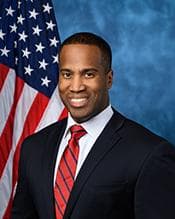
- John James
- Cosponsors
- None
- Introduced
- In Committee
What this bill would do
This bill, titled the "CANADA FIRE Act," seeks to impose sanctions on the Government of Canada and specific Canadian officials. These actions are in response to transboundary wildfire smoke that has repeatedly crossed into the United States, causing health risks and economic disruption. The legislation establishes a process for the President to determine if Canada has failed to take reasonable measures to mitigate these smoke events. If such a determination is made, the bill mandates various economic, diplomatic, and visa-related sanctions. These measures are intended to hold Canadian officials accountable and encourage better wildfire management and information sharing. Sanctions can be terminated once the Government of Canada takes verifiable corrective actions.
Yes· 3 of 7
Does this better protect air, water and wildlife?+7
The bill seeks to enforce better forest management and wildfire prevention to protect air quality.
Does this better protect public land such as parks and forests?+6
The bill pressures Canada to improve its forest and land management to mitigate wildfire risks.
Would children be better off under this?+5
The bill explicitly identifies protecting children from smoke-related health risks as a finding.
The opposite
Does this strengthen ties with allied countries?-5
The bill imposes sanctions and diplomatic pressures that could damage the U.S.-Canada relationship.
Does this favour talking over confrontation abroad?-3
The bill uses punitive measures like persona non grata declarations which can strain diplomatic engagement.
Does this make trade with other countries easier?-2
The bill introduces potential trade barriers and sanctions on Canadian entities.
Who it would affect, and how
Potential Positive Impacts for People
-
Protection of Public Health and Safety: The bill aims to protect the health, safety, and environmental well-being of people in the United States from air pollution caused by wildfire smoke (Section 2).
-
Economic and Environmental Security: By targeting the causes of smoke incursions, the act seeks to protect the economic security and environmental well-being of U.S. communities (Section 2).
-
Accountability for Environmental Negligence: The policy intends to hold foreign government officials accountable when their failure to address preventable environmental conditions causes substantial harm in the U.S. (Section 3).
-
Encouraging Better Wildfire Management: The act encourages the Government of Canada to adopt effective prevention policies and devote adequate resources to wildfire detection and suppression (Section 3).
-
Improved Information Sharing: The bill pushes for the timely and accurate sharing of air-quality and wildfire information with the United States (Section 3).
-
Humanitarian Protections: The bill includes exceptions to ensure that sanctions do not prevent the provision of goods and services necessary for food, medicine, and the protection of human life (Section 10).
Potential Negative Impacts for People
-
Economic Impact on Canadian Entities: The bill mandates sanctions that could include prohibiting U.S. government procurement from Canadian entities and restricting new investments (Section 7).
-
Restrictions on Financial Transactions: The President may prohibit U.S. financial institutions from making loans or providing credits to the Government of Canada (Section 7).
-
Impact on International Financial Support: The U.S. may use its voice to oppose loans or grants at international financial institutions that would benefit the Government of Canada (Section 7).
-
Visa and Entry Restrictions: Certain Canadian officials identified under the act would be rendered inadmissible to the United States and ineligible for visas (Section 8).
-
Diplomatic Friction: The bill includes a sense of Congress that the Secretary of State should consider declaring various Canadian diplomatic personnel as persona non grata (Section 9).
Groups and Interests Ranking
Every group the model scored this bill for, from -10 to +10. Hover a score for the reason it gave.
- Demographic And Interest Groups
- Good For Children+5Good For Seniors+5Good For Urban Residents+5
- Environment Energy And Infrastructure
- Improves Environmental Protections+7Improves Public Land Management+6
- National Security And Foreign Policy
- Improves International Alliances-5Improves Diplomatic Engagement-3Improves International Trade-2
- Economy And Finance
- Improves Consumer Protection+5
- Governance And Ideology
- Increases Federal Power+3
- 7/20/2026
- Referred to the Committee on Foreign Affairs, and in addition to the Committees on the Judiciary, Financial Services, Ways and Means, Oversight and Government Reform, and Energy and Commerce, for a period to be subsequently determined by the Speaker, in each case for consideration of such provisions as fall within the jurisdiction of the committee concerned.
- Introduced in House