Bill · H.R. 9759· House(119-HR-9759)
Turn the Tide Act
- Introduced
- 7/16/2026
- Last activity
- 7/16/2026 — Referred to the Committee on Energy and Commerce, and in addition to the Committees on Ways and Means, the Judiciary, Oversight and Government Reform, Education and Workforce, and Financial Services, for a period to be subsequently determined by the Speaker, in each case for consideration of such provisions as fall within the jurisdiction of the committee concerned.
- Sponsored by
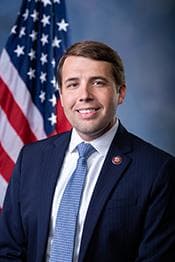
- Chris Pappas
- Cosponsors
- - 1 - 0
- Introduced
- In Committee
What this bill would do
The Turn the Tide Act provides substantial funding for programs and activities under the SUPPORT for Patients and Communities Act. It allocates money for controlled substance provisions, including substance use disorder treatment and drug disposal. The bill also funds public health initiatives such as first responder training, residential treatment for pregnant and postpartum women, and mental health education. Additionally, it provides resources for housing recovery programs and drug-free community support. The legislation includes provisions for law enforcement wellness and programs to address adverse childhood experiences.
Yes· 3 of 19
Does this put more money into Medicaid, the health coverage for people on low incomes?+10
The bill provides massive appropriations for State Opioid Response Grants and increased FMAP for mental health services.
Does this make mental health care easier to get?+9
The bill allocates significant funding for mental health education, training, and trauma support services.
Would children be better off under this?+8
The bill funds youth prevention, recovery, and adverse childhood experiences response teams.
The opposite
No question was scored the opposite.
Who it would affect, and how
Potential Positive Impacts for People
-
Access to Substance Use Disorder Treatment: The bill authorizes $4,000,000 for each fiscal year from 2027 through 2030 to enhance access to treatment (Section 2(a)).
-
Increased Drug Disposal Access: It provides $10,000,000 for each fiscal year from 2027 through 2030 to improve access to drug disposal (Section 2(b)).
-
First Responder Training: $77,000,000 is authorized annually from 2027 through 2030 for first responder training (Section 3(a)).
-
Residential Treatment for Mothers: The bill provides $50,000,000 for each fiscal year from 2027 through 2030 for residential treatment programs specifically for pregnant and postpartum women (Section 3(d)).
-
Mental Health and Behavioral Health Education: $75,000,000 is authorized annually from 2027 through 2030 for education and training grants (Section 3(e)).
-
Youth Prevention and Recovery: The act provides $20,000,000 for each fiscal year from 2027 through 2030 for youth-focused prevention and recovery (Section 3(i)).
-
Trauma Support Services: $50,000,000 is authorized annually from 2027 through 2030 for trauma support and mental health care (Section 3(m)).
-
Recovery Housing: The bill allocates $60,000,000 for each fiscal year from 2027 through 2032 for recovery housing programs, with priority given to states with high drug overdose death rates (Section 4(a)).
-
Elimination of Insurance Barriers for Medication-Assisted Treatment: States are prohibited from imposing utilization control policies or prior authorization requirements for medication-assisted treatment (Section 6(a)).
-
Affordable Opioid Overdose Reversal Agents: Health plans, including Medicare Part D, must provide coverage for at least one formulation of an opioid overdose reversal agent without requiring cost-sharing (Section 7(a), 7(c), and 7(c)(1)).
-
Health Workforce Support: The bill increases funding for the substance use disorder treatment workforce loan repayment program (Section 8(a)).
-
Addressing Childhood Trauma: New grants are authorized to help states and local communities address adverse childhood experiences through response teams (Section 14(a)).
Potential Negative Impacts for People
- No direct negative impacts are explicitly stated in the provided text.
Groups and Interests Ranking
Every group the model scored this bill for, from -10 to +10. Hover a score for the reason it gave.
- Demographic And Interest Groups
- Good For Children+8Good For Women+8Good For Low Income Households+7Good For Native Americans+6Good For People With Disabilities+5Good For Young Adults+5Good For Middle Class Households+4Good For Seniors+4Good For Urban Residents+4
- Healthcare
- Increases Medicaid Funding+10Improves Mental Health Access+9Improves Healthcare Access+7Reduces Private Insurance Premiums+3
- Social Issues And Justice
- Improves Affordable Housing+6Improves Poverty Reduction+3
- Economy And Finance
- Increases Job Creation+3
- Education And Technology
- Improves School Choice+2
- Governance And Ideology
- Improves Government Transparency+2
- National Security And Foreign Policy
- Improves Veterans Benefits+2
- 7/16/2026
- Referred to the Committee on Energy and Commerce, and in addition to the Committees on Ways and Means, the Judiciary, Oversight and Government Reform, Education and Workforce, and Financial Services, for a period to be subsequently determined by the Speaker, in each case for consideration of such provisions as fall within the jurisdiction of the committee concerned.
- 1 Cosponsor added.
- Introduced in House
3 bills Congress.gov lists as related to this one — companions in the other chamber, earlier versions, and bills this one absorbed or was folded into.
 Maggie Goodlander
Democrat · New Hampshire