Bill · H.R. 3601· House(119-HR-3601)
National ACERT Grant Program Authorization Act
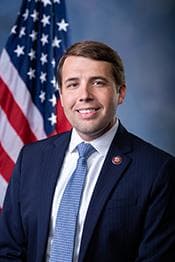
- Introduced
- 5/23/2025
- Last activity
- 5/23/2025 — Referred to the House Committee on the Judiciary.
- Sponsored by
- Chris Pappas
- Cosponsors
- - 2 - 2
- Introduced
- In Committee
What this bill would do
This bill, known as the ``National ACERT Grant Program Authorization Act'', seeks to amend the Omnibus Crime Control and Safe Streets Act of 1968. It aims to establish the Adverse Childhood Experiences Response Team grant program. Through this program, the Attorney General will provide grants to various entities to address childhood trauma. These funds are intended to help respond to and mitigate the effects of adverse childhood experiences. The bill authorizes specific funding for this purpose over several years.
Yes· 3 of 10
Would children be better off under this?+8
The bill specifically targets addressing adverse childhood experiences and supporting children exposed to trauma.
Does this make mental health care easier to get?+7
The bill provides funding to establish referral partnerships with behavioral health providers and integrate mental health services.
Does this make health care easier to get in general?+5
The bill facilitates access to services for children and youth exposed to trauma through new protocols and partnerships.
The opposite
No question was scored the opposite.
Who it would affect, and how
Potential Positive Impacts for People
-
Addressing childhood trauma: The Attorney General will make grants to States, local governments, Indian Tribes, and community organizations to address adverse childhood experiences associated with exposure to trauma (Section 2, SEC. 3051(a)).
-
Improving access to services: Funds can be used to establish protocols that help children and youth who have been exposed to trauma access necessary services (Section 2, SEC. 3051(b)(1)).
-
Connecting families to help: The program allows for the development of referral partnerships with behavioral health providers, substance treatment facilities, and recovery services for family members (Section 2, SEC. 3051(b)(2)).
-
Coordinated crisis response: The bill supports integrating law enforcement, mental health, and crisis services to respond to situations involving children exposed to trauma (Section 2, SEC. 3051(b)(3)).
-
Community support and training: Grants can fund comprehensive programs to support children, identify barriers to care, and provide training in trauma-informed care to various community partners and service providers (Section 2, SEC. 3051(b)(4)-(6)).
-
System-wide collaboration: The bill supports planning and collaboration between different systems, such as law enforcement, court systems, and health care services (Section 2, SEC. 3051(b)(7)).
Potential Negative Impacts for People
- No specific negative impacts are explicitly stated in the provided text.
Groups and Interests Ranking
Every group the model scored this bill for, from -10 to +10. Hover a score for the reason it gave.
- Demographic And Interest Groups
- Good For Children+8Good For Native Americans+4Good For Students+4Good For Low Income Households+3Good For Young Adults+3
- Healthcare
- Improves Mental Health Access+7Improves Healthcare Access+5Improves Opioid Crisis Response+4
- Social Issues And Justice
- Improves Policing Reform+5
- Education And Technology
- Increases Public School Funding+3
- 2/9/2026
- 1 Cosponsor added.
- 6/24/2025
- 1 Cosponsor added.
- 6/5/2025
- 1 Cosponsor added.
- 5/23/2025
- Referred to the House Committee on the Judiciary.
- 1 Cosponsor added.
- Introduced in House
3 bills Congress.gov lists as related to this one — companions in the other chamber, earlier versions, and bills this one absorbed or was folded into.
 Sharice Davids
Democrat · Kansas
 Brian Fitzpatrick
Republican · Pennsylvania
 Josh Gottheimer
Democrat · New Jersey
 John Rutherford
Republican · Florida