Bill · H.R. 9744· House(119-HR-9744)
Family Grocery and Farmer Relief Act
- Introduced
- 7/16/2026
- Last activity
- 7/16/2026 — Referred to the Committee on the Judiciary, and in addition to the Committees on Energy and Commerce, Small Business, and Agriculture, for a period to be subsequently determined by the Speaker, in each case for consideration of such provisions as fall within the jurisdiction of the committee concerned.
- Sponsored by
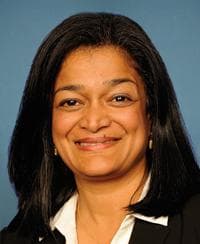
- Pramila Jayapal
- Cosponsors
- - 16 - 0
- Introduced
- In Committee
What this bill would do
This bill aims to fix competition issues in the meatpacking industry by breaking up massive companies and stopping foreign-controlled meatpackers from operating in the United States. It requires large meatpacking enterprises to stick to a single line of protein, like beef, pork, or poultry, instead of controlling multiple types. The Federal Trade Commission and the Small Business Administration are given specific powers to oversee business breakups and help fund new independent competitors and farmers' cooperatives. The legislation also addresses price discrimination and unfair pricing practices at both the wholesale and retail levels to help bring down food costs for American families. Finally, it provides private rights of action and heavy financial penalties for companies that break these new rules.
Yes· 3 of 20
Would farmers be better off under this?+8
Independent cattle producers and farmers gain stronger bargaining power, protections from abusive contracts, and new cooperative opportunities.
Does this make it easier to run a small business?+7
The legislation provides significant support, loans, and technical assistance for small businesses and farmers' cooperatives acquiring divested assets.
Would people in rural areas be better off under this?+6
Rural communities benefit economically from the promotion and funding of local and regional independent meat processing facilities.
The opposite· 3 of 6
Would business owners be better off under this?-4
Large dominant meatpacking enterprises face forced divestitures and strict operational limitations.
Would people with substantial wealth be better off under this?-2
Owners and major investors in consolidated meatpacking conglomerates face negative impacts from structural breakups.
Would the very wealthiest people be better off under this?-2
Major stakeholders in covered foreign-controlled and large domestic meatpackers face asset divestitures.
Who it would affect, and how
Potential Positive Impacts for People
-
Section 101 and Section 102: These sections prohibit large meatpacking enterprises from operating in more than one line of protein and require the Federal Trade Commission to oversee structural breakups or divestitures. This is a positive step because it stops massive corporations from dominating multiple food sectors, which can lower prices for consumers and create a fairer market for workers.
-
Section 203: This section makes it illegal for a beef meatpacking enterprise to slaughter more than 10 percent of the cattle produced by any single large feedlot, and it gives independent feedlot owners the right to sue for triple damages if violations occur. This benefits independent cattle producers by protecting them from unfair pricing and reducing the massive buying power of dominant meatpackers.
-
Section 302: This provision makes it unlawful for covered foreign-controlled meatpacking enterprises to operate in domestic interstate commerce and orders them to divest their United States assets. This protects national security and local food system resilience by removing foreign multinational corporations that have used corruption-derived financing to buy up American agricultural assets.
-
Section 402: This requires the Federal Trade Commission to submit a detailed report on how it is using its authority to address price discrimination and unfair pricing that disadvantages neighborhood and smaller grocery stores. This helps independent grocers stay in business and can lead to fairer food prices for local communities.
-
Section 501: This authorizes the Small Business Administration to provide financial assistance, loans, and technical help to farmers' cooperatives and small businesses acquiring divested meatpacking facilities. This benefits local rural economies by helping new, independent competitors enter the market.
Potential Negative Impacts for People
-
Section 101 and Section 102: Forcing major meatpacking companies to divest assets and split up their businesses could cause short-term operational disruptions in the food supply chain. This might temporarily burden businesses and workers while the industry is being restructured.
-
Section 302: Requiring foreign-controlled meatpacking enterprises to completely divest their United States operations could lead to corporate restructuring pains. This might cause temporary uncertainty for American workers employed by those specific foreign-owned facilities during the transition period.
Groups and Interests Ranking
Every group the model scored this bill for, from -10 to +10. Hover a score for the reason it gave.
- Demographic And Interest Groups
- Good For Farmers+8Good For Rural Residents+6Good For Low Income Households+4Good For Middle Class Households+3Good For Urban Residents+3Good For Children+2Good For Middle Aged+2Good For Retirees+2Good For Seniors+2Good For Young Adults+2Good For Business Owners-4Good For Billionaires-2Good For High Net Worth Individuals-2Good For Ultra High Net Worth Individuals-2Good For Immigrants-1
- Economy And Finance
- Improves Small Business Support+7Improves Consumer Protection+6Reduces Inflation+4Improves Economic Growth+3Increases Job Creation+2
- Governance And Ideology
- Increases Federal Power+6Improves Interstate Commerce+5Improves Government Transparency+4
- Environment Energy And Infrastructure
- Improves Rural Development+6
- National Security And Foreign Policy
- Improves International Trade-2
- Social Issues And Justice
- Improves Poverty Reduction+2
- 8/24/2026
- 1 Cosponsor added.
- 8/10/2026
- 1 Cosponsor added.
- 7/21/2026
- 1 Cosponsor added.
- 7/16/2026
- Referred to the Committee on the Judiciary, and in addition to the Committees on Energy and Commerce, Small Business, and Agriculture, for a period to be subsequently determined by the Speaker, in each case for consideration of such provisions as fall within the jurisdiction of the committee concerned.
- 13 Cosponsors added.
- Introduced in House
One bill Congress.gov lists as related to this one — companions in the other chamber, earlier versions, and bills this one absorbed or was folded into.
 Yassamin Ansari
Democrat · Arizona
 Becca Balint
Democrat · Vermont
 Christopher Deluzio
Democrat · Pennsylvania
 Maxwell Frost
Democrat · Florida
 Valerie Foushee
Democrat · North Carolina
 Jesús García
Democrat · Illinois
 Adelita Grijalva
Democrat · Arizona
 Henry Johnson
Democrat · Georgia
 Susie Lee
Democrat · Nevada
 Summer Lee
Democrat · Pennsylvania
 Grace Meng
Democrat · New York
 Eleanor Norton
Democrat · District of Columbia
 Patrick Ryan
Democrat · New York
 Emily Randall
Democrat · Washington
 Shri Thanedar
Democrat · Michigan
 Bonnie Watson Coleman
Democrat · New Jersey