Bill · H.R. 9702· House(119-HR-9702)
Medicare-X Choice Act of 2026
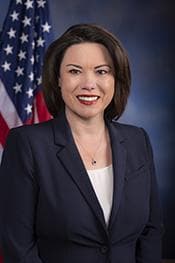
- Introduced
- 7/15/2026
- Last activity
- 7/15/2026 — Referred to the Committee on Energy and Commerce, and in addition to the Committees on Ways and Means, and the Judiciary, for a period to be subsequently determined by the Speaker, in each case for consideration of such provisions as fall within the jurisdiction of the committee concerned.
- Sponsored by
- Angie Craig
- Cosponsors
- - 2 - 0
- Introduced
- In Committee
What this bill would do
The Medicare-X Choice Act of 2026 establishes a coordinated, low-cost public health plan available to qualified individuals and small groups starting in 2028. The plan will be offered through health insurance exchanges and provides primary care services without cost-sharing. It utilizes Medicare fee-for-service rates for provider reimbursement and includes provisions for national reinsurance to lower premiums. The bill also expands tax credits for health insurance and increases funding for antitrust enforcement in health care markets. Additionally, it removes certain limitations on the negotiation of Medicare prescription drug prices.
Yes· 3 of 39
Would households on low incomes be better off under this?+9
Eliminates primary care cost-sharing and provides expanded, uncapped tax credits.
Would people in rural areas be better off under this?+8
Increased rural reimbursement rates and expanded telehealth integration.
Does this strengthen the Affordable Care Act?+8
Integrates with ACA exchanges and expands the premium tax credit system.
The opposite· 3 of 4
Does this leave more decisions to the states?-4
Imposes federal requirements on providers that may override state-level Medicaid or health regulations.
Does this reduce what the federal government spends?-3
Increases federal spending through new health plan funding and antitrust enforcement appropriations.
Does this reduce what the federal government owes?-2
Appropriates billions of dollars for plan reserves, technology funds, and reinsurance.
Who it would affect, and how
Potential Positive Impacts for People
-
Elimination of Primary Care Costs: The health plan will not impose any cost-sharing requirements for primary care services, which may reduce out-of-pocket expenses for patients (Section 2203(c)).
-
Increased Financial Assistance: The bill expands tax credits by removing the 400 percent income cap and adjusting the sliding scale for premium percentages, potentially making insurance more affordable for a wider range of income levels (Section 5(a), 5(b)).
-
Correction of the Family Glitch: The bill amends the tax code so that family members are not treated as eligible for minimum essential coverage if the employee's required contribution for family coverage exceeds 9.5 percent of household income (Section 5(d)).
-
Lower Premiums through Reinsurance: The establishment of a nationwide mechanism to pool costs for the highest-cost patients is intended to reduce premiums for individual health insurance coverage (Section 4(a)).
-
Improved Access in Rural Areas: The Secretary has the authority to increase reimbursement rates by up to 50 percent for services provided in rural areas (Section 2207(a)(2)).
-
Reduced Drug Costs: By striking subsection (i) of section 1860D-11 of the Social Security Act, the bill removes restrictions on negotiating fair prices for Medicare prescription drugs (Section 6).
Potential Negative Impacts for People
-
Provider Participation Pressure: Health care providers may be barred from enrolling in Medicare or participating in State Medicaid plans if they do not also participate in the Medicare Exchange health plan (Section 2208(a), 2208(b)).
-
Limited Plan Options: The Secretary is restricted to making only a silver and gold level version of the plan available, and no more than two versions for each of the four coverage levels (Section 2203(b)).
-
Potential for Provider Exclusion: Providers who place restrictions on which patients they accept for treatment could be excluded from federal health care programs if they do not exempt this plan's enrollees or apply the restrictions equally to everyone (Section 3).
Groups and Interests Ranking
Every group the model scored this bill for, from -10 to +10. Hover a score for the reason it gave.
- Demographic And Interest Groups
- Good For Low Income Households+9Good For Rural Residents+8Good For Middle Aged+7Good For Middle Class Households+7Good For People With Disabilities+7Good For Young Adults+7Good For African Americans+6Good For Asian Americans+6Good For Hispanic Americans+6Good For L G B T Q Community+6Good For Native Americans+6Good For Children+5Good For Farmers+5Good For Retirees+5Good For Students+5Good For Women+5Good For Business Owners+4Good For Men+4Good For Seniors+4Good For Urban Residents+4Good For White Americans+4Good For High Income Households+3
- Healthcare
- Improves Healthcare Access+8Increases Affordable Care Act Support+8Reduces Prescription Drug Costs+7Reduces Private Insurance Premiums+5
- Social Issues And Justice
- Improves Disability Rights+4Improves Poverty Reduction+4Improves Racial Equity+4Improves Gender Equality+3Improves L G B T Q Rights+3Improves Affordable Housing+2Reduces Homelessness+2
- Economy And Finance
- Improves Consumer Protection+6Reduces Middle Class Taxes+5Improves Small Business Support+4Reduces Government Spending-3Improves Fiscal Responsibility-2Reduces National Debt-2
- Environment Energy And Infrastructure
- Improves Rural Development+5
- Education And Technology
- Improves Internet Access+3
- Governance And Ideology
- Increases Federal Power+6Increase States Rights-4
- 7/15/2026
- Referred to the Committee on Energy and Commerce, and in addition to the Committees on Ways and Means, and the Judiciary, for a period to be subsequently determined by the Speaker, in each case for consideration of such provisions as fall within the jurisdiction of the committee concerned.
- 2 Cosponsors added.
- Introduced in House
One bill Congress.gov lists as related to this one — companions in the other chamber, earlier versions, and bills this one absorbed or was folded into.
 Eleanor Norton
Democrat · District of Columbia
 Mike Quigley
Democrat · Illinois