Bill · H.R. 9671· House(119-HR-9671)
Menopausal Workers’ Fairness Act of 2026
- Introduced
- 7/14/2026
- Last activity
- 7/14/2026 — Referred to the Committee on Education and Workforce, and in addition to the Committees on House Administration, Oversight and Government Reform, and the Judiciary, for a period to be subsequently determined by the Speaker, in each case for consideration of such provisions as fall within the jurisdiction of the committee concerned.
- Sponsored by
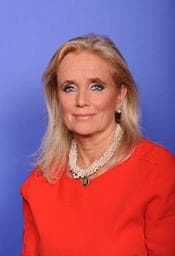
- Debbie Dingell
- Cosponsors
- - 8 - 0
- Introduced
- In Committee
What this bill would do
This bill is known as the Menopausal Workers' Fairness Act of 2026. It aims to provide reasonable accommodations for workers experiencing symptoms related to menopause and the menopause transition. The bill requires employers to make these accommodations unless it causes an undue hardship on the business. It outlines specific low-burden accommodations, such as allowing water consumption or restroom breaks, that generally do not require extensive documentation. Additionally, the legislation prohibits retaliation against employees who request accommodations and sets up enforcement mechanisms through the Equal Employment Opportunity Commission.
Yes· 3 of 21
Would women be better off under this?+9
Specifically designed to eliminate discrimination and provide health accommodations for women experiencing menopause.
Would people in middle age be better off under this?+8
Directly benefits workers aged 45-64 experiencing menopause transition.
Does this narrow the gap between how men and women are treated?+7
Specifically addresses workplace discrimination and health needs related to a biological process experienced primarily by women.
The opposite
Would business owners be better off under this?-3
Increases potential for lawsuits and mandates new workplace accommodation requirements.
Does this leave more decisions to the states?-3
Includes an explicit waiver of 11th Amendment state immunity.
Does this make it easier to run a small business?-2
Increases compliance burdens and potential legal liability for employers with 15 or more employees.
Who it would affect, and how
Potential Positive Impacts for People
-
Access to Simple Accommodations: Section 3(8) establishes predictable assessments for common-sense adjustments—like allowing employees to keep water nearby, take restroom breaks, sit or stand as needed, and eat or drink during breaks. These measures make daily work life manageable without requiring burdensome documentation.
-
Protection Against Forced Leave: Section 4(4) stops employers from forcing qualified employees to take paid or unpaid leave if another reasonable accommodation can be provided instead. This protects workers' economic security and allows them to stay on the job.
-
Confidentiality of Medical Information: Section 4(6) requires employers to treat information regarding an employee's medical condition or history as a confidential medical record kept in separate files. This safeguards workers' personal privacy in the workplace.
-
Protection from Retaliation and Coercion: Section 6(f) makes it illegal for anyone to discriminate, coerce, intimidate, threaten, or harass employees who exercise their rights under this Act or participate in related investigations. This holds bosses accountable and protects workers who speak up.
Potential Negative Impacts for People
-
Potential Business Hardships: Section 4(1) requires employers to make reasonable accommodations unless they can demonstrate that the accommodation would impose an undue hardship on the operation of the business. Smaller businesses might struggle with operational adjustments or staffing coverage during frequent employee breaks.
-
Administrative and Legal Burdens: Section 6 outlines extensive remedies, legal procedures, costs, fees, and damages involving multiple federal acts and courts. This complex legal framework could lead to adversarial disputes and litigation between workers and employers.
Groups and Interests Ranking
Every group the model scored this bill for, from -10 to +10. Hover a score for the reason it gave.
- Demographic And Interest Groups
- Good For Women+9Good For Middle Aged+8Good For Low Income Households+4Good For Middle Class Households+4Good For People With Disabilities+4Good For African Americans+3Good For Asian Americans+3Good For Hispanic Americans+3Good For L G B T Q Community+3Good For Native Americans+3Good For Seniors+3Good For Union Workers+3Good For White Americans+3Good For High Income Households+2Good For Business Owners-3
- Social Issues And Justice
- Improves Gender Equality+7Improves Disability Rights+2Improves Poverty Reduction+2
- Governance And Ideology
- Improves Privacy Rights+4Increases Federal Power+2Increase States Rights-3
- Healthcare
- Improves Healthcare Access+2
- Economy And Finance
- Improves Economic Growth+3Improves Small Business Support-2
- 9/21/2026
- 1 Cosponsor added.
- 8/3/2026
- 1 Cosponsor added.
- 7/27/2026
- 1 Cosponsor added.
- 7/20/2026
- 1 Cosponsor added.
- 7/14/2026
- Referred to the Committee on Education and Workforce, and in addition to the Committees on House Administration, Oversight and Government Reform, and the Judiciary, for a period to be subsequently determined by the Speaker, in each case for consideration of such provisions as fall within the jurisdiction of the committee concerned.
- 4 Cosponsors added.
- Introduced in House
 Yvette Clarke
Democrat · New York
 Adelita Grijalva
Democrat · Arizona
 Seth Moulton
Democrat · Massachusetts
 Eleanor Norton
Democrat · District of Columbia
 Deborah Ross
Democrat · North Carolina
 Emily Randall
Democrat · Washington
 Rashida Tlaib
Democrat · Michigan
 Frederica Wilson
Democrat · Florida