Bill · H.R. 9667· House(119-HR-9667)
Securing Healthcare and Income Entitlements for Lawfully Domiciled Citizens (SHIELD Citizens) Act
- Introduced
- 7/14/2026
- Last activity
- 7/14/2026 — Referred to the Committee on Ways and Means, and in addition to the Committees on Energy and Commerce, Financial Services, Education and Workforce, and Agriculture, for a period to be subsequently determined by the Speaker, in each case for consideration of such provisions as fall within the jurisdiction of the committee concerned.
- Sponsored by
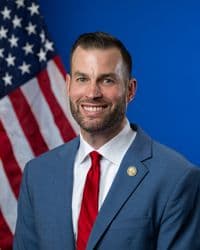
- Clay Fuller
- Cosponsors
- - 6 - 0
- Introduced
- In Committee
What this bill would do
The SHIELD Citizens Act intends to restrict eligibility for Federal welfare programs to United States citizens and nationals. It amends the Personal Responsibility and Work Opportunity Reconciliation Act of 1996 to ensure noncitizens cannot access these resources. The bill defines "Federal welfare program" to include assistance for food, housing, medical, energy, and cash needs. Some exceptions remain for emergency medical treatment, disaster relief, and certain community services. Current noncitizen recipients would have a transition period of no more than 180 days after the Act takes effect.
Yes· 3 of 5
Does this reduce what the federal government spends?+5
The bill explicitly removes noncitizens from multiple federal welfare programs, reducing total expenditures.
Does this make the government pay for what it commits to?+3
The bill aims to limit public resource dependency to citizens, reflecting a policy of fiscal restriction.
Does this tighten control of the border?+2
The bill intends to remove public benefit incentives for immigration, which may indirectly support border security goals.
The opposite· 3 of 20
Would immigrants be better off under this?-10
The bill explicitly removes almost all federal welfare benefits for noncitizens.
Is this likely to lift people out of poverty?-8
The bill removes essential food, cash, and housing assistance for a significant population of noncitizens.
Does this make health care easier to get in general?-8
Noncitizens lose access to Medicaid and other federally funded medical assistance.
Who it would affect, and how
Potential Positive Impacts for People
- Restricting Resources to Citizens: The bill aims to ensure that Federal welfare programs are available only to citizens of the United States, which Congress finds prevents public benefits from being an incentive for immigration (Sec. 2).
Potential Negative Impacts for People
- Loss of Benefits for Noncitizens: Noncitizens will lose eligibility for various Federal welfare programs, including Medicaid, SNAP, Supplemental Security Income, and Federal housing assistance (Sec. 3 and Sec. 4).
- Limited Transition Period: Individuals who are qualified aliens lawfully receiving benefits before the effective date are only eligible to continue receiving those benefits for no more than 180 days (Sec. 5(b)).
Groups and Interests Ranking
Every group the model scored this bill for, from -10 to +10. Hover a score for the reason it gave.
- Demographic And Interest Groups
- Good For Middle Class Households+1Good For Immigrants-10Good For Low Income Households-7Good For Children-6Good For Hispanic Americans-5Good For People With Disabilities-5Good For Middle Aged-4Good For Seniors-4Good For Women-4Good For Young Adults-4Good For Asian Americans-3Good For Retirees-3
- Social Issues And Justice
- Improves Border Security+2Improves Poverty Reduction-8Improves Affordable Housing-7Reduces Homelessness-7Improves Childcare Affordability-6Improves Pathway To Citizenship-5Improves Disability Rights-3
- Healthcare
- Improves Healthcare Access-8Improves Mental Health Access-5Increases Medicaid Funding-5
- Economy And Finance
- Reduces Government Spending+5Improves Fiscal Responsibility+3Reduces National Debt+2
- 7/16/2026
- 4 Cosponsors added.
- 7/14/2026
- Referred to the Committee on Ways and Means, and in addition to the Committees on Energy and Commerce, Financial Services, Education and Workforce, and Agriculture, for a period to be subsequently determined by the Speaker, in each case for consideration of such provisions as fall within the jurisdiction of the committee concerned.
- 2 Cosponsors added.
- Introduced in House
 Rick Allen
Republican · Georgia
 Jack Bergman
Republican · Michigan
 Earl Carter
Republican · Georgia
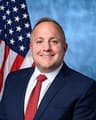 Russell Fry
Republican · South Carolina
 Barry Loudermilk
Republican · Georgia
 Richard McCormick
Republican · Georgia