Bill · H.R. 9625· House(119-HR-9625)
Freedom to Build Act
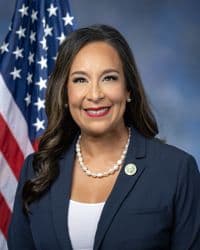
- Introduced
- 7/9/2026
- Last activity
- 7/9/2026 — Referred to the House Committee on Financial Services.
- Sponsored by
- Monica De La Cruz
- Cosponsors
- - 1 - 0
- Introduced
- In Committee
What this bill would do
This bill requires the Secretary of Housing and Urban Development to create a Freedom to Build designation for local communities that voluntarily qualify. Localities can qualify either by adopting specific local reforms that remove housing construction barriers or by meeting a housing supply growth target based on affordability. The Secretary must publish a list of designated communities and give them priority for certain competitive federal housing grants. Designations last for five years and can be renewed if the community continues to meet the qualifications. Communities can also lose their designation if they reverse their reforms or fail to meet supply growth targets.
Yes· 3 of 22
Does this make housing cost less?+5
The bill is designed to increase housing supply and reduce regulatory barriers to make housing more accessible and affordable overall.
Would people in their twenties and thirties be better off under this?+4
Young adults and first-time homebuyers can benefit from increased housing availability and potentially lower purchase costs.
Would middle-income households be better off under this?+4
Middle-class families gain from expanded housing options, streamlined approvals, and protection from restrictive local mandates.
The opposite· 3 of 5
Does this leave more decisions to the states?-3
The bill preempts certain local zoning, energy, and rent control authorities, effectively overriding local municipal control.
Would union members be better off under this?-2
The bill prohibits local wage, residency, or workforce-composition mandates on housing projects beyond state law, which may concern labor unions.
Does this cut the pollution that drives climate change?-2
The bill prohibits local mandates for electric-vehicle charging infrastructure or on-site renewable energy, which may slow green building adoption.
Who it would affect, and how
Potential Positive Impacts for People
-
Encouraging the use of modern construction methods: Section 2(b)(2)(A) includes reforms that remove regulatory barriers to modern construction technologies like modular, pre-fabricated, and off-site building techniques. This could benefit individuals by potentially lowering construction costs and increasing the availability of housing.
-
Speeding up the building approval process: Section 2(b)(2)(B) outlines reforms that reduce the time, cost, and uncertainty of development approvals, such as binding maximum timelines for permit decisions and allowing qualified third-party inspectors. This could benefit builders and home buyers by reducing delays and red tape in getting homes built.
-
Protecting property owners and building choice: Section 2(b)(2)(C) contains provisions that protect property owners from certain local mandates, such as local bans on specific residential energy sources or restrictions on property use. This could benefit individuals by giving them more personal freedom and choices regarding their own property.
-
Prioritizing federal grants for pro-building communities: Section 3(b) requires the Secretary of Housing and Urban Development to give priority to applicants located in designated Freedom to Build communities for competitive housing and community development grants. This could benefit people living in those communities by driving federal investments toward local infrastructure and housing projects.
Potential Negative Impacts for People
-
Limits on rent control and tenant protections: Section 2(b)(2)(C)(i) and Section 2(b)(2)(C)(ii) mention reforms that prohibit rent control or rent stabilization on certain dwelling units and protect the ability of property owners to promptly address nonpayment and lease violations. This could negatively impact tenants by removing local rent caps and making it easier for landlords to address lease issues or evict occupants.
-
Restrictions on local energy and environmental mandates: Section 2(b)(2)(C)(vi) authorizes builders to comply with a federally recognized energy rating index as an alternative to prescriptive energy efficiency codes, and prohibits mandates for electric-vehicle charging infrastructure or on-site renewable energy generation. This could burden individuals who prefer or rely on local environmental mandates or specific green building requirements in their communities.
Groups and Interests Ranking
Every group the model scored this bill for, from -10 to +10. Hover a score for the reason it gave.
- Demographic And Interest Groups
- Good For Business Owners+4Good For Middle Class Households+4Good For Young Adults+4Good For High Income Households+3Good For High Net Worth Individuals+3Good For Middle Aged+3Good For Urban Residents+3Good For Farmers+2Good For Low Income Households+2Good For Rural Residents+2Good For Ultra High Net Worth Individuals+2Good For Union Workers-2
- Economy And Finance
- Improves Small Business Support+4Increases Job Creation+4Improves Economic Growth+3Reduces Inflation+3Improves Consumer Protection+2
- Social Issues And Justice
- Improves Affordable Housing+5Reduces Homelessness+2
- Governance And Ideology
- Improves Due Process+3Improves Government Transparency+3Increases Federal Power+3Increase States Rights-3
- Environment Energy And Infrastructure
- Improves Rural Development+3Improves Environmental Protections-2Increases Renewable Energy Investment-2Reduces Carbon Emissions-2
- 9/8/2026
- 1 Cosponsor added.
- 7/9/2026
- Referred to the House Committee on Financial Services.
- Introduced in House
One bill Congress.gov lists as related to this one — companions in the other chamber, earlier versions, and bills this one absorbed or was folded into.
 Michael Lawler
Republican · New York