Bill · H.R. 9591· House(119-HR-9591)
Extreme Temperatures Injustice in Prisons Act of 2026
- Introduced
- 7/6/2026
- Last activity
- 7/6/2026 — Referred to the Committee on the Judiciary, and in addition to the Committee on Energy and Commerce, for a period to be subsequently determined by the Speaker, in each case for consideration of such provisions as fall within the jurisdiction of the committee concerned.
- Sponsored by
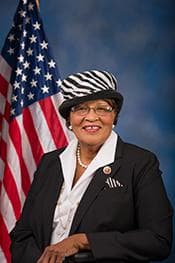
- Alma Adams
- Cosponsors
- - 19 - 0
- Introduced
- In Committee
What this bill would do
This bill is called the Extreme Temperatures Injustice in Prisons Act of 2026. It requires the Bureau of Prisons to install or update heating, ventilation, and air conditioning systems in all federal correctional facilities within five years. It also requires the installation of temperature reading devices in all human-occupied spaces, including prison cells. Facilities must provide interim temperature monitoring until the new devices are installed. The bill orders the creation of mandatory temperature standards, mitigation options, studies, and regular reports to hold officials accountable.
Yes· 3 of 11
Would people over 65 be better off under this?+4
The bill specifically protects elderly incarcerated individuals from extreme temperatures.
Would people with disabilities be better off under this?+4
The bill provides protections for individuals with compromised thermoregulatory systems and medical vulnerabilities.
Does this make what the government does easier for the public to see?+4
The bill increases transparency by requiring regular reporting to Congress and annual oversight inspections by the Inspector General.
The opposite
Does this reduce what the federal government spends?-2
The bill authorizes new appropriations for upgrading HVAC systems in federal prisons.
Who it would affect, and how
Potential Positive Impacts for People
-
Section 2: This section requires the Bureau of Prisons to install or update heating, ventilation, and air conditioning systems and temperature reading devices in every human-occupied space in federal prisons. This is positive because it ensures that temperatures are properly tracked and controlled in living and working areas.
-
Section 5: This section orders a study by the Centers for Disease Control and Prevention and the creation of mandatory rules to protect medically vulnerable populations. This is positive because it specifically looks out for the health and safety of elderly people, pregnant people, and those with compromised immune systems.
-
Section 7: This section requires the facility to provide free heat and cold mitigation options, such as cold-water bottles, cooling fans, winter clothing, and blankets upon request when internal temperatures reach dangerous levels. This is positive because it gives incarcerated individuals direct tools to stay safe from extreme weather without having to pay for them at the commissary.
Potential Negative Impacts for People
Based on the provided text, there are no specific sections or provisions identified that create negative consequences or burdens for individuals or groups of people in the United States.
Groups and Interests Ranking
Every group the model scored this bill for, from -10 to +10. Hover a score for the reason it gave.
- Demographic And Interest Groups
- Good For People With Disabilities+4Good For Seniors+4Good For Women+3Good For African Americans+2Good For Hispanic Americans+2
- Governance And Ideology
- Improves Government Transparency+4Increases Federal Power+2
- Healthcare
- Improves Healthcare Access+3Increases Research Funding+2
- Social Issues And Justice
- Improves Disability Rights+2Improves Racial Equity+2
- Economy And Finance
- Reduces Government Spending-2
- 8/10/2026
- 1 Cosponsor added.
- 8/3/2026
- 1 Cosponsor added.
- 7/16/2026
- 2 Cosponsors added.
- 7/9/2026
- 7 Cosponsors added.
- 7/6/2026
- Referred to the Committee on the Judiciary, and in addition to the Committee on Energy and Commerce, for a period to be subsequently determined by the Speaker, in each case for consideration of such provisions as fall within the jurisdiction of the committee concerned.
- 8 Cosponsors added.
- Introduced in House
 André Carson
Democrat · Indiana
 Judy Chu
Democrat · California
 Jasmine Crockett
Democrat · Texas
 Dwight Evans
Democrat · Pennsylvania
 Maxwell Frost
Democrat · Florida
 Valerie Foushee
Democrat · North Carolina
 Henry Johnson
Democrat · Georgia
 Jonathan Jackson
Democrat · Illinois
 Lucy McBath
Democrat · Georgia
 LaMonica McIver
Democrat · New Jersey
 Analilia Mejia
Democrat · New Jersey
 Eleanor Norton
Democrat · District of Columbia
 Lateefah Simon
Democrat · California
 Rashida Tlaib
Democrat · Michigan
 Lauren Underwood
Democrat · Illinois
 Nydia Velázquez
Democrat · New York
 Nikema Williams
Democrat · Georgia
 Frederica Wilson
Democrat · Florida
 Bonnie Watson Coleman
Democrat · New Jersey