Bill · H.R. 9571· House(119-HR-9571)
Living Wage for Federal Contractors Act
- Introduced
- 7/2/2026
- Last activity
- 7/2/2026 — Referred to the Committee on Education and Workforce, and in addition to the Committee on Oversight and Government Reform, for a period to be subsequently determined by the Speaker, in each case for consideration of such provisions as fall within the jurisdiction of the committee concerned.
- Sponsored by
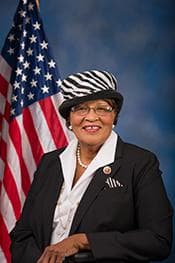
- Alma Adams
- Cosponsors
- - 8 - 0
- Introduced
- In Committee
What this bill would do
This bill establishes a minimum wage for all federal contractors and subcontractors. The required wage starts at $17.00 per hour and incrementally increases over several years until reaching $25.00 per hour, after which it will adjust based on inflation. Tipped workers covered under the bill will also see their minimum wage increase incrementally, starting at $13.00 per hour and reaching $25.00 per hour. The legislation includes enforcement measures, allowing the government to terminate contracts, penalize repeated violators, and blacklist contractors who fail to pay the required wages. Certain contracts under the Indian Self-Determination and Education Assistance Act are exempt from these requirements. The bill also updates existing laws to ensure the new minimum wage standards apply to Davis-Bacon, Service Contract Act, and procurement contracts.
Yes· 3 of 27
Would households on low incomes be better off under this?+9
Directly increases wages for low-income federal contractor and service workers up to $25 per hour.
Does this raise the lowest wage an employer may pay?+8
Establishes a mandatory escalating minimum wage starting at $17 and reaching $25 per hour for federal contractor employees and tipped workers.
Is this likely to lift people out of poverty?+7
Significantly raises incomes for low-wage workers, directly alleviating poverty for contractor households.
The opposite
Would business owners be better off under this?-4
Imposes higher labor costs, civil penalties, and strict compliance burdens on federal contracting businesses.
Is this likely to slow the rise in prices?-2
Who it would affect, and how
Potential Positive Impacts for People
-
Higher Wages for Workers: Section 2(a) establishes a baseline hourly rate for federal contractor employees starting at $17.00 per hour and scaling up to $25.00 per hour over time, which puts more money directly into the pockets of everyday working people.
-
Protection for Tipped Employees: Section 2(c) sets specific, increasing wage floors for tipped workers employed by federal contractors, beginning at $13.00 per hour and eventually reaching $25.00 per hour, helping service workers earn a more reliable income.
-
Inflation Adjustments: Section 2(b) ensures that after the initial wage increases take effect, the minimum wage will be adjusted for inflation using the Consumer Price Index for Urban Wage Earners and Clerical Workers, helping wages keep pace with the rising cost of living.
-
Direct Financial Recovery for Underpaid Workers: Section 2(d)(2)(A) requires violators to pay workers twice the sum of any unpaid wages due, and allows the government or workers to recover those funds directly, holding bad actors accountable and ensuring workers get what they earned.
-
Accountability for Bad Contractors: Section 2(d)(2)(B) mandates that the Comptroller General maintain and distribute a list of contractors who disregard their wage obligations, banning them from receiving new federal contracts for three years to protect workers from repeat offenders.
Potential Negative Impacts for People
- Potential Business Penalties and Project Delays: Section 2(d)(1) and Section 2(d)(2)(C) allow the government to terminate a contractor's right to proceed with work if they fail to pay the required wages, and impose civil penalties of up to $1,100 for repeated or willful violations, which could potentially cause disruptions or delays in project completions.
Groups and Interests Ranking
Every group the model scored this bill for, from -10 to +10. Hover a score for the reason it gave.
- Demographic And Interest Groups
- Good For Low Income Households+9Good For Young Adults+6Good For Middle Class Households+5Good For Middle Aged+4Good For Women+4Good For African Americans+3Good For Children+3Good For Hispanic Americans+3Good For Immigrants+3Good For People With Disabilities+3Good For Students+3Good For Union Workers+3Good For Men+2Good For Seniors+2Good For Urban Residents+2Good For Asian Americans+1Good For L G B T Q Community+1Good For Rural Residents+1Good For White Americans+1Good For Business Owners-4
- Social Issues And Justice
- Improves Poverty Reduction+7Improves Disability Rights+2Improves Gender Equality+2Improves Racial Equity+2Reduces Homelessness+2
- Economy And Finance
- Increases Minimum Wage+8Improves Economic Growth+3Reduces Inflation-2
- Governance And Ideology
- Increases Federal Power+4
- 8/17/2026
- 1 Cosponsor added.
- 7/6/2026
- 1 Cosponsor added.
- 7/2/2026
- Referred to the Committee on Education and Workforce, and in addition to the Committee on Oversight and Government Reform, for a period to be subsequently determined by the Speaker, in each case for consideration of such provisions as fall within the jurisdiction of the committee concerned.
- 6 Cosponsors added.
- Introduced in House
 Emanuel Cleaver
Democrat · Missouri
 Steve Cohen
Democrat · Tennessee
 Adelita Grijalva
Democrat · Arizona
 James McGovern
Democrat · Massachusetts
 LaMonica McIver
Democrat · New Jersey
 Eleanor Norton
Democrat · District of Columbia
 Dina Titus
Democrat · Nevada
 Debbie Wasserman Schultz
Democrat · Florida