Bill · H.R. 9544· House(119-HR-9544)
Save MEDICARE Act of 2026
- Introduced
- 6/30/2026
- Last activity
- 7/17/2026 — Referred to the Subcommittee on Health.
- Sponsored by
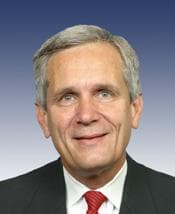
- Lloyd Doggett
- Cosponsors
- - 52 - 0
- Introduced
- In Committee
What this bill would do
- This legislation is officially known as the Save MEDICARE Act of 2026.
- It makes several changes to how Medicare Advantage and prescription drug plans are managed and paid.
- The bill stops using certain methods like chart reviews and health risk assessments to adjust plan payments starting in 2028.
- It changes how benchmark payments are calculated by removing the county quartile system and adjusting for favorable selection.
- The bill speeds up audits and appeals for Medicare Advantage plans and lets states enforce plan requirements.
- It also requires Medicare Advantage and prescription drug plans to reimburse the Department of Veterans Affairs for certain health care items and services provided to veterans.
Yes· 3 of 13
Would veterans be better off under this, taking everything together?+7
Strengthens VA funding collections by requiring third-party Medicare plans to reimburse the VA for veteran care.
Does this help veterans get medical care?+7
Requires Medicare Advantage and prescription drug plans to reimburse the VA for care provided to veterans, securing additional resources for veterans' healthcare.
Does this increase the pay, pensions or support veterans receive?+7
Ensures the VA receives proper cost-recovery reimbursements for healthcare services delivered to veterans enrolled in Medicare plans.
The opposite
No question was scored the opposite.
Who it would affect, and how
Potential Positive Impacts for People
- Section 2: Stops the use of diagnoses collected from chart reviews and health risk assessments when figuring out health status payments, which helps ensure payments are based on actual care rather than paperwork tricks.
- Section 4: Requires the government to adjust base payment amounts for favorable selection, making sure taxpayer dollars are spent more fairly compared to traditional fee-for-service Medicare.
- Section 5: Speeds up audit and appeal timelines under the Risk Adjustment Data Validation program and allows the use of recovery audit contractors to find and claw back overpayments with penalties.
- Section 7: Allows individual states to require Medicare Advantage organizations to meet federal standards, giving local authorities more power to protect consumers.
- Section 8: Bans Medicare Advantage contracts from using percentage of premium contracts or financial incentives that reward providers for coding specific items and services.
Potential Negative Impacts for People
- Section 5: Imposes a user fee by reducing payments to Medicare Advantage organizations by 0.02 percent to pay for audits, which companies might try to pass down to plan participants.
- Section 5: Blocks any judicial review of determinations made by the Administrator of the Centers for Medicare and Medicaid Services under the Risk Adjustment Data Validation audit program.
Groups and Interests Ranking
Every group the model scored this bill for, from -10 to +10. Hover a score for the reason it gave.
- Demographic And Interest Groups
- Good For Veterans+7Good For Retirees+6Good For Seniors+6Good For Low Income Households+2Good For Middle Class Households+2
- Economy And Finance
- Improves Consumer Protection+6Improves Fiscal Responsibility+4Reduces Government Spending+3Reduces National Debt+2
- Governance And Ideology
- Increase States Rights+5Improves Government Transparency+4
- Healthcare
- Improves Veterans Healthcare+7
- National Security And Foreign Policy
- Improves Veterans Benefits+7
- 7/20/2026
- 1 Cosponsor added.
- 7/17/2026
- Referred to the Subcommittee on Health.
- 7/15/2026
- 1 Cosponsor added.
- 7/14/2026
- 2 Cosponsors added.
- 7/6/2026
- 2 Cosponsors added.
- 7/2/2026
- 3 Cosponsors added.
- 6/30/2026
- Referred to the Committee on Ways and Means, and in addition to the Committees on Energy and Commerce, and Veterans' Affairs, for a period to be subsequently determined by the Speaker, in each case for consideration of such provisions as fall within the jurisdiction of the committee concerned.
- 43 Cosponsors added.
- Introduced in House
 Alma Adams
Democrat · North Carolina
 Yassamin Ansari
Democrat · Arizona
 Becca Balint
Democrat · Vermont
 Emanuel Cleaver
Democrat · Missouri
 Yvette Clarke
Democrat · New York
 Steve Cohen
Democrat · Tennessee
 André Carson
Democrat · Indiana
 Judy Chu
Democrat · California
 Greg Casar
Democrat · Texas
 Danny Davis
Democrat · Illinois
 Rosa DeLauro
Democrat · Connecticut
 Christopher Deluzio
Democrat · Pennsylvania
 Mark DeSaulnier
Democrat · California
 Debbie Dingell
Democrat · Michigan
 Maxine Dexter
Democrat · Oregon
 Al Green
Democrat · Texas
 John Garamendi
Democrat · California
 Jesús García
Democrat · Illinois
 Robert Garcia
Democrat · California
 Adelita Grijalva
Democrat · Arizona
 Jared Huffman
Democrat · California
 Val Hoyle
Democrat · Oregon
 Henry Johnson
Democrat · Georgia
 Pramila Jayapal
Democrat · Washington
 Jonathan Jackson
Democrat · Illinois
 Ro Khanna
Democrat · California
 Raja Krishnamoorthi
Democrat · Illinois
 George Latimer
Democrat · New York
 James McGovern
Democrat · Massachusetts
 Kweisi Mfume
Democrat · Maryland
 Grace Meng
Democrat · New York
 Christian Menefee
Democrat · Texas
 Jerrold Nadler
Democrat · New York
 Eleanor Norton
Democrat · District of Columbia
 Alexandria Ocasio-Cortez
Democrat · New York
 Ilhan Omar
Democrat · Minnesota
 Chellie Pingree
Democrat · Maine
 Mark Pocan
Democrat · Wisconsin
 Delia Ramirez
Democrat · Illinois
 Emily Randall
Democrat · Washington
 Robert Scott
Democrat · Virginia
 Adam Smith
Democrat · Washington
 Janice Schakowsky
Democrat · Illinois
 Bennie Thompson
Democrat · Mississippi
 Mark Takano
Democrat · California
 Rashida Tlaib
Democrat · Michigan
 Jill Tokuda
Democrat · Hawaii
 Shri Thanedar
Democrat · Michigan
 Nydia Velázquez
Democrat · New York
 Maxine Waters
Democrat · California
 Nikema Williams
Democrat · Georgia
 Bonnie Watson Coleman
Democrat · New Jersey