Bill · H.R. 9469· House(119-HR-9469)
Outcomes-Based Financing (OBF) for Students Act
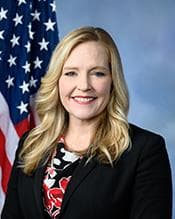
- Introduced
- 6/25/2026
- Last activity
- 6/25/2026 — Referred to the Committee on Financial Services, and in addition to the Committees on Ways and Means, Education and Workforce, and the Judiciary, for a period to be subsequently determined by the Speaker, in each case for consideration of such provisions as fall within the jurisdiction of the committee concerned.
- Sponsored by
- Erin Houchin
- Cosponsors
- - 0 - 1
- Introduced
- In Committee
What this bill would do
This bill, known as the Outcomes-Based Financing (OBF) for Students Act, establishes a consumer protection framework for outcomes-based student financing tools. These tools are designed to support workforce training, postsecondary education, and economic development. The legislation includes specific tax treatments for OBF products and their providers. It also mandates strict disclosure requirements for OBF products to ensure recipients understand their obligations. Additionally, the bill provides consumer protections, such as limits on monthly payment obligations and protections against debt acceleration. Finally, it offers clarifications regarding bankruptcy treatment and the use of taxpayer information.
Yes· 3 of 8
Does this give people more protection from unfair business practices?+7
The bill mandates strict disclosure requirements and caps monthly payment obligations at 20 percent of income for OBF products.
Would students be better off under this?+6
The bill protects students through debt discharge upon disability or death and limits monthly payment burdens.
Would households on low incomes be better off under this?+5
The bill provides protections like $0 obligations when income falls below a set threshold and termination upon disability.
The opposite
Does this protect people from being watched or searched?-2
The bill facilitates the release of taxpayer information to OBF providers via continuing consent.
Who it would affect, and how
Potential Positive Impacts for People
-
Tax Relief on Debt Discharge: Individuals will not have income included in their gross income due to the discharge or alteration of an outcomes-based loan or payment agreement (Section 101).
-
Tax Deductions for Education: Payments made under an outcomes-based payment agreement will be treated similarly to interest paid on a qualified education loan (Section 102).
-
Enhanced Disclosure and Transparency: OBF providers must disclose key terms like "payment calculation method," "income threshold," and "completion mechanisms" more conspicuously to help recipients understand the transaction (Section 201).
-
Protection Against High Debt Burdens: An OBF provider cannot enter into an agreement if the recipient would be committing to pay more than 20 percent of their income (Section 301).
-
Automatic Relief for Disability or Death: Obligations under an OBF product will terminate if the recipient becomes totally and permanently disabled or upon their death (Section 301).
-
Lower Income Protections: The income threshold for an OBF product must be at least 250 percent of the Federal poverty guidelines for a single person (Section 301).
-
Bankruptcy Protections: OBF products are treated such that they are dischargeable in bankruptcy in the same manner as other standard loans (Section 301/Section 302).
Potential Negative Impacts for People
-
Restrictions on Debt Acceleration: While designed as a protection, the prohibition on accelerating debt during delinquency or default may limit certain legal avenues for providers (Section 301).
-
Limited Use of Personal Information: The requirement for continuing consent to release taxpayer information may create hurdles in the process of carrying out the terms of the OBF product (Section 401).
-
Requirement to Provide Income Documentation: OBF providers may require recipients to provide specific documentation, such as pay stubs or tax transcripts, to verify income (Section 301).
Groups and Interests Ranking
Every group the model scored this bill for, from -10 to +10. Hover a score for the reason it gave.
- Demographic And Interest Groups
- Good For Students+6Good For Low Income Households+5Good For Middle Class Households+3
- Economy And Finance
- Improves Consumer Protection+7Reduces Middle Class Taxes+3
- Education And Technology
- Improves College Affordability+5
- Social Issues And Justice
- Improves Poverty Reduction+3
- Governance And Ideology
- Improves Government Transparency+4Improves Privacy Rights-2
- 6/25/2026
- Referred to the Committee on Financial Services, and in addition to the Committees on Ways and Means, Education and Workforce, and the Judiciary, for a period to be subsequently determined by the Speaker, in each case for consideration of such provisions as fall within the jurisdiction of the committee concerned.
- 1 Cosponsor added.
- Introduced in House
One bill Congress.gov lists as related to this one — companions in the other chamber, earlier versions, and bills this one absorbed or was folded into.
 Ritchie Torres
Democrat · New York