Bill · H.R. 9453· House(119-HR-9453)
End EPA Abuse Act of 2026
- Introduced
- 6/25/2026
- Last activity
- 6/25/2026 — Referred to the House Committee on Energy and Commerce.
- Sponsored by
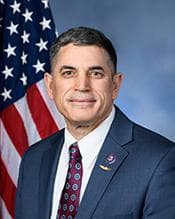
- Andrew Clyde
- Cosponsors
- - 25 - 0
- Introduced
- In Committee
What this bill would do
This bill, titled the "End EPA Abuse Act of 2026," aims to amend the Clean Air Act. It seeks to preserve consumer vehicle choice and protect the electric grid while placing specific limits on the EPA Administrator's regulatory authority. The legislation proposes restrictions on the Administrator's ability to prescribe regulations or grant certain waivers. These limitations cover areas such as vehicle sales, fuel-switching at power plants, and the reliability of the electric grid. It also addresses the requirement of specific technologies based on availability, cost, and feasibility.
Yes· 3 of 8
Would business owners be better off under this?+4
The bill prevents the government from mandating technologies that are commercially unavailable or economically unfeasible.
Would people in rural areas be better off under this?+3
The bill prevents mandates based on geographic or infrastructure factors that often disproportionately affect rural areas.
Is this likely to grow the economy?+3
The bill limits regulatory costs by preventing the mandate of unachievable or cost-prohibitive technologies.
The opposite· 3 of 4
Does this give the federal government more power?-6
The bill explicitly limits the regulatory authority of the federal EPA Administrator.
Does this cut the pollution that drives climate change?-5
The bill restricts the EPA's ability to regulate vehicle sales and fuel-switching, which are key tools for reducing emissions.
Does this better protect air, water and wildlife?-4
The bill limits the EPA's authority to prescribe regulations that could protect air quality.
Who it would affect, and how
Potential Positive Impacts for People
-
Preserving Vehicle Choice: The bill aims to prevent regulations that restrict the sale or use of any type of vehicle or engine, including new motor vehicles with internal combustion engines (Section 2, subsection (a)(3)(A)).
-
Protecting the Electric Grid: It prohibits regulations that would reduce the reliability of the electric grid (Section 2, subsection (a)(3)(C)).
-
Preventing Costly Technology Requirements: The act limits regulations that require technologies that are cost-prohibitive or unachievable without subsidies (Section 2, subsection (a)(3)(D)(ii)).
-
Ensuring Practicality and Feasibility: It stops the requirement of technologies that are commercially unavailable or infeasible due to factors like geography, geology, climate, or a lack of infrastructure (Section 2, subsection (a)(3)(D)(i-iii)).
Potential Negative Impacts for People
-
Restricting Regulatory Authority: The bill limits the Administrator's ability to prescribe any regulations or grant waivers if they meet certain criteria (Section 2, subsection (a)(3)).
-
Impact on Power Plant Operations: It prohibits regulations that require or necessitate fuel-switching at a power plant (Section 2, subsection (a)(3)(B)).
-
Limiting Agency Oversight: The bill prevents the Administrator from using regulations that significantly expand their authority beyond what Congress intended (Section 2, subsection (a)(3)(E)).
Groups and Interests Ranking
Every group the model scored this bill for, from -10 to +10. Hover a score for the reason it gave.
- Environment Energy And Infrastructure
- Reduces Carbon Emissions-5Improves Environmental Protections-4Reduces Fossil Fuel Production-3
- Demographic And Interest Groups
- Good For Business Owners+4Good For Rural Residents+3Good For Middle Class Households+2Good For Low Income Households+1
- Economy And Finance
- Improves Economic Growth+3Improves Small Business Support+2
- Governance And Ideology
- Increase States Rights+2Improves Government Transparency+1Increases Federal Power-6
- 7/14/2026
- 1 Cosponsor added.
- 7/13/2026
- 1 Cosponsor added.
- 6/29/2026
- 1 Cosponsor added.
- 6/25/2026
- Referred to the House Committee on Energy and Commerce.
- 22 Cosponsors added.
- Introduced in House
One bill Congress.gov lists as related to this one — companions in the other chamber, earlier versions, and bills this one absorbed or was folded into.
 Rick Allen
Republican · Georgia
 Mike Bost
Republican · Illinois
 Michael Cloud
Republican · Texas
 Ben Cline
Republican · Virginia
 Mike Collins
Republican · Georgia
 Mike Ezell
Republican · Mississippi
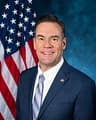 Russ Fulcher
Republican · Idaho
 Randy Fine
Republican · Florida
 Clay Fuller
Republican · Georgia
 Paul Gosar
Republican · Arizona
 Clay Higgins
Republican · Louisiana
 Pat Harrigan
Republican · North Carolina
 Mark Harris
Republican · North Carolina
 Brian Jack
Republican · Georgia
 Mary Miller
Republican · Illinois
 Barry Moore
Republican · Alabama
 Richard McCormick
Republican · Georgia
 Scott Perry
Republican · Pennsylvania
 Gary Palmer
Republican · Alabama
 John Rose
Republican · Tennessee
 Chip Roy
Republican · Texas
 Michael Rulli
Republican · Ohio
 David Schweikert
Republican · Arizona
 W. Steube
Republican · Florida
 Derrick Van Orden
Republican · Wisconsin