Bill · H.R. 9386· House(119-HR-9386)
United States Commission on an Open Society with Security Act of 2026
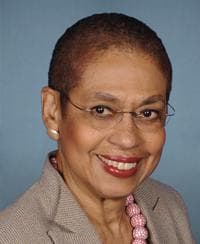
- Introduced
- 6/22/2026
- Last activity
- 7/7/2026 — Referred to the Subcommittee on Oversight, Investigations, and Accountability.
- Sponsored by
- Eleanor Norton
- Cosponsors
- None
- Introduced
- In Committee
What this bill would do
This bill establishes the United States Commission on an Open Society with Security. The Commission is tasked with studying how the government can balance security needs with public access to Federal buildings and property. It consists of 21 members from diverse professional backgrounds, including experts in architecture, law, and technology. The group will examine various factors such as counterterrorism, free speech, and the use of new technology. After its studies, the Commission will submit a final report containing findings and recommendations to the President.
Yes· 3 of 6
Would people in cities be better off under this?+1
The Commission examines the impact of federal facility security and design on traffic and congestion, which directly affects those living near federal sites.
Does this give people more control over their personal data?+1
The Commission's mandate includes studying the use of technology in security practices, which inherently involves assessing data and privacy implications.
Does this repair or build roads and bridges?+1
The Commission will examine building design and the refurbishment of existing Federal facilities as part of its study on public access and security.
The opposite
Does this reduce what the federal government spends?-1
The bill authorizes $10 million in new spending over two fiscal years to fund the Commission's operations.
Who it would affect, and how
Potential Positive Impacts for People
-
Balanced Security and Access: The Commission aims to find ways to provide security for public facilities while still maintaining free and open access to the public (Section 2, Section 4(a)).
-
Protection of Constitutional Rights: The study specifically looks at how access to public spaces affects free speech, the right to petition the Government, and other civil liberties (Section 4(b)(2)(B)).
-
Expert Oversight: The Commission brings together a broad base of experts from fields like architecture, technology, and civil liberties to address challenges to public safety (Section 2, Section 3(b)).
Potential Negative Impacts for People
-
Security Requirements for Information: To access classified materials, members must execute security agreements and hold specific security clearances, which places restrictions on how they interact with agency records (Section 5(c)(2)).
-
Restrictions on Information Use: Members and staff are prohibited from using any information they acquire during their official duties for nonofficial purposes (Section 5(c)(3)).
Groups and Interests Ranking
Every group the model scored this bill for, from -10 to +10. Hover a score for the reason it gave.
- Demographic And Interest Groups
- Good For Urban Residents+1
- Economy And Finance
- Reduces Government Spending-1
- Education And Technology
- Improves Data Privacy+1
- Environment Energy And Infrastructure
- Improves Roads And Bridges+1
- Governance And Ideology
- Improves Government Transparency+1
- National Security And Foreign Policy
- Improves Cybersecurity Defense+1
- Social Issues And Justice
- Improves Voting Rights+1
- 7/7/2026
- Referred to the Subcommittee on Oversight, Investigations, and Accountability.
- 6/22/2026
- Sponsor introductory remarks on measure. (CR E594)
- Referred to the Committee on Transportation and Infrastructure, and in addition to the Committee on Homeland Security, for a period to be subsequently determined by the Speaker, in each case for consideration of such provisions as fall within the jurisdiction of the committee concerned.
- Introduced in House
2 bills Congress.gov lists as related to this one — companions in the other chamber, earlier versions, and bills this one absorbed or was folded into.