Bill · H.R. 9322· House(119-HR-9322)
Abraham Accords Defense Cooperation Act of 2026
- Introduced
- 6/15/2026
- Last activity
- 6/15/2026 — Referred to the Committee on Foreign Affairs, and in addition to the Committee on Armed Services, for a period to be subsequently determined by the Speaker, in each case for consideration of such provisions as fall within the jurisdiction of the committee concerned.
- Sponsored by
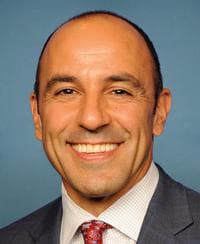
- Jimmy Panetta
- Cosponsors
- - 2 - 4
- Introduced
- In Committee
What this bill would do
The Abraham Accords Defense Cooperation Act of 2026 requires the Secretary of Defense to create the United States-Abraham Accords Defense Cooperation Initiative. This initiative aims to increase defense cooperation between the U.S. and Abraham Accords countries. Goals include deterring aggression from Iran and its proxies and improving regional military planning. The Secretary must report a strategy and necessary funding to Congress within 60 days. Additionally, Congress suggests that participating countries should provide matching funds.
Yes· 3 of 7
Does this strengthen ties with allied countries?+8
The bill explicitly bolsters defense cooperation with Abraham Accords countries.
Does this favour talking over confrontation abroad?+7
It fosters strategic partnerships between the US, Israel, and Arab/Muslim-majority nations.
Does this put more money into stopping terrorism?+5
The initiative aims to deter aggression from Iran and its proxies.
The opposite
Does this reduce what is spent on the military?-2
The bill establishes a new defense initiative that will require funding.
Does this reduce what the federal government owes?-1
The bill requires the Secretary to determine necessary funding, which may increase government spending.
Does this reduce what the federal government spends?-1
The establishment of a new defense initiative likely requires new budgetary allocations.
Who it would affect, and how
Potential Positive Impacts for People
-
Deterring Aggression: Section 3(c)(1) aims to deter aggression by Iran and its proxies in the Middle East, which could lead to increased regional stability.
-
Enhanced Military Capabilities: Section 3(c)(3) focuses on improving regional planning for critical systems like ground-based air defenses, counter-unmanned aircraft systems, and intelligence, surveillance, and reconnaissance, which can improve security coordination.
-
Shared Financial Burden: Section 3(e) expresses the sense of Congress that participating countries should provide matching funds, which may reduce the sole financial burden on the United States.
Potential Negative Impacts for People
- Funding Requirements: Section 3(d)(2) requires the Secretary to determine the amount of funding necessary to carry out the Initiative, which could lead to new government expenditures.
Groups and Interests Ranking
Every group the model scored this bill for, from -10 to +10. Hover a score for the reason it gave.
- National Security And Foreign Policy
- Improves International Alliances+8Improves Diplomatic Engagement+7Increases Counter Terrorism Funding+5Increases Foreign Aid+2Reduces Military Spending-2
- Governance And Ideology
- Improves Government Transparency+1Increases Federal Power+1
- Economy And Finance
- Improves Fiscal Responsibility+1Reduces Government Spending-1Reduces National Debt-1
- 6/15/2026
- Referred to the Committee on Foreign Affairs, and in addition to the Committee on Armed Services, for a period to be subsequently determined by the Speaker, in each case for consideration of such provisions as fall within the jurisdiction of the committee concerned.
- 6 Cosponsors added.
- Introduced in House
2 bills Congress.gov lists as related to this one — companions in the other chamber, earlier versions, and bills this one absorbed or was folded into.
 Daniel Goldman
Democrat · New York
 Craig Goldman
Republican · Texas
 Pat Harrigan
Republican · North Carolina
 Michael Lawler
Republican · New York
 Bradley Schneider
Democrat · Illinois
 Claudia Tenney
Republican · New York