Bill · H.R. 9281· House(119-HR-9281)
DASH Act
- Introduced
- 6/11/2026
- Last activity
- 6/11/2026 — Referred to the Committee on Ways and Means, and in addition to the Committee on Financial Services, for a period to be subsequently determined by the Speaker, in each case for consideration of such provisions as fall within the jurisdiction of the committee concerned.
- Sponsored by
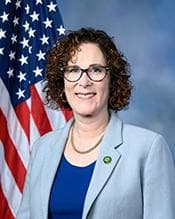
- Val Hoyle
- Cosponsors
- - 8 - 0
- Introduced
- In Committee
What this bill would do
The DASH Act aims to provide rental vouchers specifically for individuals and families experiencing or at risk of homelessness. It establishes a massive funding framework for rental assistance, land acquisition, and the construction of affordable housing. The bill introduces several programs, including a modular construction pilot and a grant program to encourage pro-housing zoning changes. Additionally, it includes various tax credits and revenue provisions to support low-income and extremely low-income households. The legislation also sets up state accountability benchmarks to track the reduction of homelessness. Finally, the bill introduces several new tax credits aimed at expanding housing options, including a Middle-Income Housing Credit and a Neighborhood Homes Credit.
Yes· 3 of 24
Is this likely to reduce homelessness?+10
The bill provides substantial resources specifically for rental vouchers and support for individuals experiencing homelessness.
Does this make housing cost less?+9
The bill establishes massive funding for rental vouchers, land acquisition, construction, and a neighborhood homes credit to increase housing supply.
Would children be better off under this?+8
The bill prioritizes vouchers for families with minor children experiencing homelessness.
The opposite
No question was scored the opposite.
Who it would affect, and how
Potential Positive Impacts for People
-
Rental Assistance for the Homeless: The bill provides rental vouchers to help individuals and families experiencing homelessness or those at risk of becoming homeless with incomes below 50 percent of the area median income (Sec. 101(a)(B)(i)).
-
Supportive Services: Public housing agencies can provide or facilitate supportive services, such as healthcare referrals, substance use disorder treatment, and educational assistance, to help stabilize housing (Sec. 101(a)(D)(iii)).
-
Help with Moving and Security: The Secretary provides administrative fees to help recipients cover security deposits, application fees, and moving costs (Sec. 101(a)(B)(ii)).
-
Priority for Vulnerable Groups: The bill instructs agencies to prioritize the first vouchers for unaccompanied homeless youth, youth with minor children, and families with minor children experiencing homelessness (Sec. 101(a)(B)(viii)(II)).
-
Increased Housing Supply through Construction: The bill authorizes significant funding for land acquisition and the development of rental housing for very low-income and extremely low-income households (Sec. 102(b)(1)).
-
Incentives for New Housing Methods: A pilot program is established to encourage the use of modular construction to help reduce construction costs (Sec. 103(b)(1)).
-
Support for Small-Scale Housing: Through a grant program, jurisdictions are encouraged to adopt zoning methods that allow for duplexes, triplexes, and accessory dwelling units (Sec. 104(d)(4)).
-
Middle-Income Housing Opportunities: The creation of a Middle-Income Housing Credit provides incentives for developing rental projects that are rent-restricted and occupied by individuals earning 100 percent or less of the area median gross income (Section 212(a)).
-
Homeownership Support in Distressed Communities: The Neighborhood Homes Credit is designed to increase housing development and rehabilitation in distressed communities, helping to close the "value gap" between development costs and sale prices (Section 213(a)(1)).
-
Increased Housing Supply: By providing credits for new buildings and substantial rehabilitations, the bill aims to address the national housing shortage (Section 213(a)(1)).
-
Support for Homeowners via Rehabilitation: The Neighborhood Homes Credit includes specific provisions for owner-occupied rehabilitations, allowing for tax benefits when homeowners improve their qualified residences (Section s 213(i)).
-
Protection for Renters: The middle-income housing project requirements include an extended middle-income housing commitment that protects tenants and prohibits certain rent increases for a set period (Section 212(g)(5)).
-
First-Time Homebuyer Assistance: The bill allows for a refundable credit of 20 percent of a residence's purchase price, capped at $15,000, to help individuals acquire a principal residence (Section 214(a)).
-
Down Payment Flexibility: Through an election, a taxpayer can have their credit transferred to an "eligible entity" to reduce the required down payment at the time of purchase (Section 214(g)(1) and (2)(A)(i)(V)).
-
Support for Homeowners facing Foundation Issues: The requirement for certain documentation is waived for qualified rehabilitations where an engineer's report shows a foundation is adversely impacted by pyrrhotite or other iron sulfide minerals (Section 213(i)(8)).
-
Loss Recovery for Homeowners: Homeowners may be able to claim a "qualified principal residence loss" for losses incurred from the sale or exchange of a residence they owned and used as a principal residence for at least 2 years (Section 215(a)(1)(A)).
-
Energy Subsidy Benefits: State energy subsidies provided for energy improvements to a qualified residence are excluded from a taxpayer's gross income (Section 139M).
-
Relief from Debt Discharge Taxes: The exclusion from gross income for the discharge of qualified principal residence indebtedness is made permanent (Section 108(a)(1)(E)).
-
Casualty Loss Relief: The bill repeals the limitation on personal casualty loss deductions (Section 165(h)(5)).
Potential Negative Impacts for People
-
Restrictions Based on Criminal History: While the bill generally prohibits denying vouchers due to criminal convictions, it specifically prohibits receipt of a voucher by individuals subject to a lifetime registration requirement under a State sex offender registration program (Sec. 101(a)(B)(v)(II)).
-
State Financial Penalties: States that fail to meet specific benchmarks for reducing homelessness may face a reduction in Federal highway funds (Sec. 101(a)(B)(F)(iii)).
-
Zoning Restrictions on Grants: Jurisdictions that continue to use certain prohibited zoning methods, such as prohibiting accessory dwelling units or requiring high parking minimums, are ineligible to receive grants under the pro-housing program (Sec. 104(c)).
-
Additional Costs for Taxpayers: Rental reduction credit agencies of a State are permitted to impose fees to cover their costs or levy fees on taxpayers applying for or receiving credits (Section 211(d)).
-
Income Inclusion Requirements: The amount of the renters credit and certain payments in lieu of the credit must be included in the taxpayer's gross income (Section 211(c)(1)).
-
Potential Repayment Burdens for Homeowners: Under the Neighborhood Homes Credit, if a qualified residence is sold during a specific 5-year period, the seller may be required to pay a repayment amount to the credit agency (Section 213(g)(1)).
-
Restrictions on Property Use: To receive the Neighborhood Homes Credit, a residence must be used as the owner's principal residence; failure to do so may result in the denial of certain deductions (Section 213(j)(10)).
-
Income-Based Credit Reductions: The first-time homebuyer credit is subject to reductions based on the taxpayer's modified adjusted gross income (Section 214(b)(3)).
-
Homebuyer Credit Reductions based on Home Price: The amount of the first-time homebuyer credit can be reduced if the purchase price of the residence exceeds a specific ratio related to the conforming loan limit (Section 214(b)(2)).
-
Recapture of Tax Credits: If a person sells their residence or it ceases to be their principal residence within 6 years, they may have to pay back some or all of the credit through a "phased-out recapture" process (Section 214(d)).
-
Restrictions on Credit Eligibility: The first-time homebuyer credit is not available to nonresident aliens or individuals who have not attained age 18 (Section 214(b)(4)).
-
Losses on Home Sales subject to Income Limits: The ability to claim a "qualified principal residence loss" is reduced based on the taxpayer's modified adjusted gross income (Section 215(a)(3)(A)).
-
Losses subject to Dollar Caps: The amount of a qualified principal residence loss is capped at $100,000, or $50,000 for certain married individuals (Section 215(a)(2)).
Groups and Interests Ranking
Every group the model scored this bill for, from -10 to +10. Hover a score for the reason it gave.
- Demographic And Interest Groups
- Good For Children+8Good For Low Income Households+8Good For Middle Class Households+6Good For Native Americans+6Good For Women+6Good For Rural Residents+5Good For Urban Residents+5Good For Young Adults+5Good For African Americans+4Good For Business Owners+4Good For Seniors+4Good For Hispanic Americans+2
- Social Issues And Justice
- Reduces Homelessness+10Improves Affordable Housing+9Improves Poverty Reduction+5Improves Racial Equity+4
- Economy And Finance
- Reduces Middle Class Taxes+5Increases Job Creation+4Improves Economic Growth+3Reduces Small Business Taxes+3Improves Small Business Support+2
- Environment Energy And Infrastructure
- Improves Rural Development+4
- Governance And Ideology
- Improves Government Transparency+3
- Healthcare
- Improves Mental Health Access+3
- 8/20/2026
- 1 Cosponsor added.
- 8/10/2026
- 1 Cosponsor added.
- 7/15/2026
- 1 Cosponsor added.
- 7/13/2026
- 1 Cosponsor added.
- 7/2/2026
- 1 Cosponsor added.
- 6/25/2026
- 2 Cosponsors added.
- 6/11/2026
- Referred to the Committee on Ways and Means, and in addition to the Committee on Financial Services, for a period to be subsequently determined by the Speaker, in each case for consideration of such provisions as fall within the jurisdiction of the committee concerned.
- 1 Cosponsor added.
- Introduced in House
One bill Congress.gov lists as related to this one — companions in the other chamber, earlier versions, and bills this one absorbed or was folded into.
 Becca Balint
Democrat · Vermont
 Salud Carbajal
Democrat · California
 Jesús García
Democrat · Illinois
 Eleanor Norton
Democrat · District of Columbia
 Emily Randall
Democrat · Washington
 Andrea Salinas
Democrat · Oregon
 Shri Thanedar
Democrat · Michigan
 Bonnie Watson Coleman
Democrat · New Jersey