Bill · H.R. 9198· House(119-HR-9198)
National Commission to Combat Workplace Sexual Harassment Act
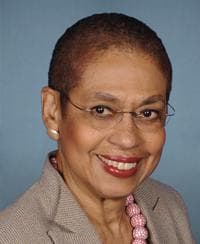
- Introduced
- 6/8/2026
- Last activity
- 6/8/2026 — Referred to the House Committee on Education and Workforce.
- Sponsored by
- Eleanor Norton
- Cosponsors
- None
- Introduced
- In Committee
What this bill would do
This bill establishes the National Commission to Combat Workplace Sexual Harassment. The Commission is tasked with conducting a comprehensive study and investigation into workplace sexual harassment, assault, and misconduct across various industries in the United States. It will collect testimony from workers, employers, experts, and the public to analyze the causes, effects, and efficacy of current reporting mechanisms. After its study, the Commission must submit a final report with recommendations to the President and Congress. The Commission will consist of 11 appointed members and will terminate 60 days after submitting its report.
Yes· 3 of 19
Would women be better off under this?+7
The bill focuses on combating sexual harassment and requires women to be the majority on the commission.
Does this narrow the gap between how men and women are treated?+6
The bill establishes a national commission to combat workplace sexual harassment with a requirement that at least 6 members be women.
Would households on low incomes be better off under this?+4
The bill specifically investigates how low income renders individuals more vulnerable to harassment.
The opposite
No question was scored the opposite.
Who it would affect, and how
Potential Positive Impacts for People
-
Broad Inclusion of Voices: The bill allows for testimony from a wide range of people, including workers and contractors in industries like hospitality, factories, agriculture, and technology, ensuring different workplace experiences are heard (Section 3(1)(A)(i)).
-
Focus on Vulnerable Groups: The Commission will specifically evaluate if personal characteristics, such as race, gender identity, sexual orientation, age, and income, or employment types, such as "gig" economy or seasonal work, make individuals more vulnerable to misconduct (Section 3(1)(B)(iii)).
-
Analysis of Modern Communication: The bill requires an evaluation of how new forms of communication, such as social media, affect workplace sexual harassment (Section 3(1)(B)(iv)).
-
Improving Accountability: By evaluating the efficacy of current reporting mechanisms and reviewing successful private and public sector policies, the bill aims to find better ways to prevent misconduct and enforce prohibitions (Section 3(1)(B)(vii) and (ix)).
Potential Negative Impacts for People
-
Lack of Immediate Action: The bill focuses on investigation and reporting rather than providing immediate legal remedies or protections for victims, as the Commission's primary duty is to study and recommend (Section 3).
-
Potential for Political Influence: The membership of the Commission is determined by appointments from the President and the leadership of the House and Senate, which could influence the direction of the findings (Section 4(a)).
Groups and Interests Ranking
Every group the model scored this bill for, from -10 to +10. Hover a score for the reason it gave.
- Demographic And Interest Groups
- Good For Women+7Good For L G B T Q Community+4Good For Low Income Households+4Good For African Americans+3Good For Asian Americans+3Good For Farmers+3Good For Hispanic Americans+3Good For Men+3Good For Middle Aged+3Good For Middle Class Households+3Good For Native Americans+3Good For Union Workers+3Good For White Americans+3Good For Young Adults+3
- Social Issues And Justice
- Improves Gender Equality+6Improves L G B T Q Rights+3Improves Racial Equity+3
- Governance And Ideology
- Improves Government Transparency+2Increases Federal Power+2
- 6/8/2026
- Referred to the House Committee on Education and Workforce.
- Introduced in House
2 bills Congress.gov lists as related to this one — companions in the other chamber, earlier versions, and bills this one absorbed or was folded into.