Bill · H.R. 9183· House(119-HR-9183)
Artificial Intelligence Environmental Impacts Act of 2026
- Introduced
- 6/8/2026
- Last activity
- 6/8/2026 — Referred to the Committee on Science, Space, and Technology, and in addition to the Committee on Energy and Commerce, for a period to be subsequently determined by the Speaker, in each case for consideration of such provisions as fall within the jurisdiction of the committee concerned.
- Sponsored by
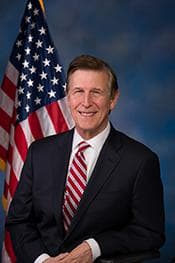
- Donald Beyer
- Cosponsors
- - 22 - 0
- Introduced
- In Committee
What this bill would do
The Artificial Intelligence Environmental Impacts Act of 2026 requires the EPA to study the environmental and energy effects of AI data centers and related infrastructure. It mandates the creation of a consortium by the National Institute of Standards and Technology to develop measurement standards and reporting methods. AI data center operators must submit annual reports to the EPA regarding their resource consumption and pollution. The bill also requires public hearings and the solicitation of public comments during the study process. Finally, the government must provide a joint report to Congress with recommendations to mitigate negative AI impacts.
Yes· 3 of 22
Does this make what the government does easier for the public to see?+7
Requires the public availability of AI environmental impact data on a government website.
Does this better protect air, water and wildlife?+6
Requires reporting on air/water pollution and creates a system to mitigate negative AI impacts.
Does this put more rules on large technology companies?+6
Imposes annual environmental reporting and potential penalties on large AI data center operators.
The opposite
Would business owners be better off under this?-3
Increases compliance costs and reporting burdens for AI data center operators.
Would billionaires be better off under this?-2
Increases regulatory oversight on the hyperscale facilities often owned by the wealthiest tech figures.
Who it would affect, and how
Potential Positive Impacts for People
-
Increased Transparency: The bill requires the EPA to make reported environmental impact information available on a public website, allowing people to see the effects of AI data centers (Section 6(d)).
-
Environmental Protection: The study examines impacts on air and water quality, local ecosystems, and the protection of scenic, historical, and cultural landscapes (Section 4(b)(1)).
-
Promotion of Green AI: The act seeks to identify and deploy positive AI use-cases, such as optimizing energy efficiency, developing renewable energy, and monitoring environmental changes (Section 4(b)(4) and Section 7(4)).
-
Community Representation: The consortium must include representatives from Indian Tribes, local governments, and civil society to ensure diverse perspectives on environmental needs (Section 5(a)).
-
Accountability for Polluters: The EPA is authorized to seek corrective action and issue administrative penalties for covered entities that fail to comply with reporting requirements (Section 6(e)).
Potential Negative Impacts for People
-
Rising Electricity Costs: The bill's findings note that electricity prices have already risen significantly due to data center growth and are projected to continue rising rapidly (Section 2(7)).
-
Increased Resource Strain: The text highlights that data center infrastructure can contribute to water scarcity and increased energy demand (Section 2(4)).
-
Health and Environmental Risks: The bill identifies that increasing electronic waste from outdated AI hardware poses risks to human health and the environment (Section 2(10)).
-
Disparate Community Burdens: Low-income, Black, Brown, Indigenous, and rural communities are identified as being at greater risk from cumulative negative impacts and higher energy costs (Section 2(12)).
Groups and Interests Ranking
Every group the model scored this bill for, from -10 to +10. Hover a score for the reason it gave.
- Demographic And Interest Groups
- Good For Native Americans+5Good For African Americans+4Good For Hispanic Americans+4Good For Low Income Households+4Good For Rural Residents+4Good For Children+2Good For Farmers+2Good For Urban Residents+2Good For Young Adults+2Good For Business Owners-3Good For Billionaires-2
- Environment Energy And Infrastructure
- Improves Environmental Protections+6Improves Public Land Management+4Reduces Carbon Emissions+4Improves Disaster Relief And F E M A+3Increases Renewable Energy Investment+3Improves Rural Development+2Reduces Fossil Fuel Production+2
- Governance And Ideology
- Improves Government Transparency+7Increases Federal Power+4
- Education And Technology
- Increases Big Tech Regulation+6Increases Scientific Research Funding+4
- Social Issues And Justice
- Improves Racial Equity+3
- Economy And Finance
- Improves Consumer Protection+2
- 10/5/2026
- 1 Cosponsor added.
- 9/3/2026
- 1 Cosponsor added.
- 8/20/2026
- 1 Cosponsor added.
- 7/21/2026
- 1 Cosponsor added.
- 7/9/2026
- 1 Cosponsor added.
- 7/6/2026
- 1 Cosponsor added.
- 6/29/2026
- 1 Cosponsor added.
- 6/25/2026
- 1 Cosponsor added.
- 6/24/2026
- 2 Cosponsors added.
- 6/23/2026
- 7 Cosponsors added.
- 6/15/2026
- 4 Cosponsors added.
- 6/8/2026
- Referred to the Committee on Science, Space, and Technology, and in addition to the Committee on Energy and Commerce, for a period to be subsequently determined by the Speaker, in each case for consideration of such provisions as fall within the jurisdiction of the committee concerned.
- 1 Cosponsor added.
- Introduced in House
One bill Congress.gov lists as related to this one — companions in the other chamber, earlier versions, and bills this one absorbed or was folded into.
 Alma Adams
Democrat · North Carolina
 Suzanne Bonamici
Democrat · Oregon
 Nanette Barragán
Democrat · California
 Steve Cohen
Democrat · Tennessee
 Sean Casten
Democrat · Illinois
 Jasmine Crockett
Democrat · Texas
 Madeleine Dean
Democrat · Pennsylvania
 Adriano Espaillat
Democrat · New York
 John Garamendi
Democrat · California
 Daniel Goldman
Democrat · New York
 Adelita Grijalva
Democrat · Arizona
 Jared Huffman
Democrat · California
 Mike Levin
Democrat · California
 James McGovern
Democrat · Massachusetts
 Eleanor Norton
Democrat · District of Columbia
 Mike Quigley
Democrat · Illinois
 Bradley Schneider
Democrat · Illinois
 Mary Gay Scanlon
Democrat · Pennsylvania
 Hillary Scholten
Democrat · Michigan
 Andrea Salinas
Democrat · Oregon
 Suhas Subramanyam
Democrat · Virginia
 Rashida Tlaib
Democrat · Michigan