Bill · H.R. 9179· House(119-HR-9179)
Cost of Living Tax Cut Act
- Introduced
- 6/8/2026
- Last activity
- 6/8/2026 — Referred to the House Committee on Ways and Means.
- Sponsored by
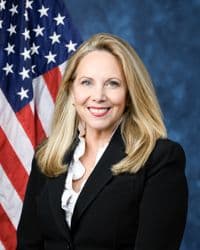
- Laura Gillen
- Cosponsors
- - 0 - 1
- Introduced
- In Committee
What this bill would do
The "Cost of Living Tax Cut Act" proposes to change how individual income tax rates are calculated. Starting after 2026, tax rate brackets would be adjusted based on the cost-of-living in the area where a person lives. The Secretary of Commerce would determine a cost-of-living index for different statistical areas. These indexes would be used to create multipliers that adjust the minimum and maximum dollar amounts of tax brackets.
Yes· 3 of 9
Would people in cities be better off under this?+7
Urban residents are more likely to live in high-cost statistical areas that trigger the multiplier adjustments.
Would middle-income households be better off under this?+6
Middle-class households in high-cost areas will see a significant relative tax reduction by expanding the lower tax brackets.
Would high-income households be better off under this?+4
High-income earners in high-cost areas benefit from higher thresholds before hitting the top tax brackets.
The opposite· 3 of 5
Would people in rural areas be better off under this?-3
Rural residents are likely to fall under the 97 percent threshold, receiving no benefit while others receive tax cuts.
Does this reduce what the federal government owes?-3
Expanding tax brackets for a portion of the population likely reduces overall federal tax revenue, potentially increasing the deficit.
Would farmers be better off under this?-2
Farmers often live in rural areas where cost-of-living differentials are lower, meaning they are less likely to receive the tax benefits.
Who it would affect, and how
Potential Positive Impacts for People
- Regional Tax Adjustments: Under Section 2(a)(9)(B)(i), the dollar amounts for tax brackets are multiplied by a regional multiplier based on where a person's primary home is. This could benefit people in high-cost areas by adjusting their tax brackets to reflect the local cost of living.
Potential Negative Impacts for People
- No Benefit for Some Areas: According to Section 2(a)(10)(B)(iii), if the cost-of-living differential for a statistical area does not exceed 97 percent, the multiplier is 1. This means people in those areas, as well as those outside the United States, would see no adjustment to their tax brackets.
Groups and Interests Ranking
Every group the model scored this bill for, from -10 to +10. Hover a score for the reason it gave.
- Demographic And Interest Groups
- Good For Urban Residents+7Good For Middle Class Households+6Good For Billionaires+4Good For High Income Households+4Good For High Net Worth Individuals+4Good For Ultra High Net Worth Individuals+4Good For Low Income Households+2Good For Rural Residents-3Good For Farmers-2
- Economy And Finance
- Reduces Middle Class Taxes+4Improves Economic Growth+2Reduces National Debt-3Improves Fiscal Responsibility-2Increases Wealthy Taxes-2
- 6/8/2026
- Referred to the House Committee on Ways and Means.
- 1 Cosponsor added.
- Introduced in House
 Michael Lawler
Republican · New York