Bill · H.R. 9157· House(119-HR-9157)
American White-Collar Worker Jobs Act of 2026
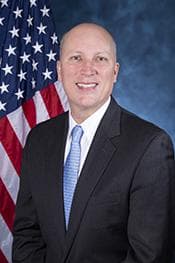
- Introduced
- 6/4/2026
- Last activity
- 6/4/2026 — Referred to the House Committee on the Judiciary.
- Sponsored by
- Chip Roy
- Cosponsors
- - 1 - 0
- Introduced
- In Committee
What this bill would do
The American White-Collar Worker Jobs Act of 2026 aims to reform the H-1B visa process. It seeks to reassert Congressional authority over immigration and tighten the requirements for nonimmigrants. The bill introduces stricter labor condition applications, including specific wage requirements and employer certifications. It also implements limits on the number of nonimmigrants from any single country and shortens the duration of stay. Additionally, the Act grants the Secretary of Labor increased enforcement and investigative powers.
Yes· 3 of 5
Would union members be better off under this?+5
The bill requires employers to provide notice to bargaining representatives and protects against worker displacement.
Does this raise the lowest wage an employer may pay?+5
The bill requires H-1B workers to be paid at least the 75th percentile of the wage for their occupation and location.
Does this give the federal government more power?+4
The bill expands the enforcement, investigative, and subpoena powers of the Secretary of Labor regarding H-1B visas.
The opposite· 3 of 4
Would immigrants be better off under this?-7
The bill imposes stricter residence requirements, shorter stay durations, and strict country-based caps on H-1B visas.
Would business owners be better off under this?-6
The bill imposes strict workforce caps, higher wage requirements, and significant financial penalties on employers.
Does this make it easier for immigrants already here to become citizens?-5
The bill shortens the duration of H-1B stay to two years and adds more stringent requirements for status adjustment.
Who it would affect, and how
Potential Positive Impacts for People
-
Higher Wage Protections: Employers must pay H-1B workers the higher of the actual wage paid to similar employees or the 75th percentile wage for that occupation and location (Section 3(b)(1)(a)(vii)(I)). This could increase earnings for nonimmigrants.
-
Protection Against Job Displacement: The bill prohibits the employment of an H-1B nonimmigrant if it results in the displacement of a United States worker (Section 3(b)(1)(a)(vii)(VI)). It also gives displaced United States workers the right to take legal action in Federal courts against employers (Section 3(c)(D)).
-
Job Security for US Workers: Employers are prohibited from laying off United States workers in the same classification within one year of making an H-H1B application (Section 3(b)(1)(a)(vii)(VII)).
-
Increased Transparency: The Secretary of Labor is required to make information received in visa applications available to the public, excluding personal identifying information (Section 3(b)(1)(B)).
-
Ban on Unfair Fees: The bill prohibits employers from requiring nonimmigrants to pay for visa fees, expenses, or services such as housing (Section 3(b)(1)(a)(vii)(XII-XIII)).
Potential Negative Impacts for People
-
Increased Barriers for Nonimmigrants: The bill requires nonimmigrants to prove they have a residence in a foreign country that they have no intention of abandoning (Section 3(a)(1)).
-
Shorter Duration of Stay: The duration for H-1B status is changed from 6 years to 2 calendar years (Section 3(g)(3)).
-
Strict Employment Caps: The number of nonimmigrants from any one country cannot exceed 7 percent of the total allotment (Section 3(g)(4)). Additionally, the percentage of an employer's total workforce that can be nonimmigrants is capped at 5 percent (Section 3(b)(1)(a)(vii)(X)).
-
Restrictions on Employment during Economic Downturns: The Secretary of Labor is prohibited from approving applications for occupational classifications where the unemployment rate exceeds 2 percent (Section 3(b)(1)(B)).
-
Heavy Penalties for Employers: The Secretary of Labor can charge employers up to $100,000 per violation and can ban employers from employing H-1B workers for up to 10 years (Section 3(c)(C)).
Groups and Interests Ranking
Every group the model scored this bill for, from -10 to +10. Hover a score for the reason it gave.
- Demographic And Interest Groups
- Good For Union Workers+5Good For Low Income Households+2Good For Immigrants-7Good For Business Owners-6
- Governance And Ideology
- Increases Federal Power+4
- Social Issues And Justice
- Improves Border Security+2Improves Pathway To Citizenship-5
- Economy And Finance
- Increases Minimum Wage+5Improves Consumer Protection-3
- 6/4/2026
- Referred to the House Committee on the Judiciary.
- 1 Cosponsor added.
- Introduced in House
 Elijah Crane
Republican · Arizona