Bill · H.R. 9034· House(119-HR-9034)
Offshore Leasing Standards and Accountability Act of 2026
- Introduced
- 5/26/2026
- Last activity
- 5/26/2026 — Referred to the House Committee on Natural Resources.
- Sponsored by
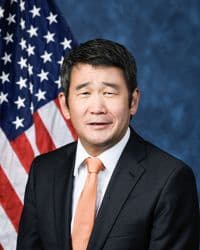
- Dave Min
- Cosponsors
- - 18 - 0
- Introduced
- In Committee
What this bill would do
The Offshore Leasing Standards and Accountability Act of 2026 changes how oil and gas operations are handled on the outer Continental Shelf. It requires companies to be certified as "fit to operate" based on their safety record and financial health before they can get or transfer leases. The bill also creates mandatory interest-bearing escrow accounts to ensure funds are available for decommissioning infrastructure. Additionally, it limits how long oil wells can be placed in temporary abandonment status. The Secretary of the Interior is tasked with overseeing these standards and reporting compliance to Congress.
Yes· 3 of 12
Does this better protect air, water and wildlife?+8
Imposes strict safety records and mandatory funding for decommissioning to prevent pollution and abandoned wells.
Does this better protect public land such as parks and forests?+7
Establishes rigorous standards for the management and reclamation of the outer Continental Shelf.
Does this make what the government does easier for the public to see?+6
Requires annual reports to Congress detailing compliance failures and enforcement actions.
The opposite
Does this make it easier to run a small business?-6
Strict credit ratings and bankruptcy history requirements create significant barriers for smaller operators.
Would business owners be better off under this?-4
Increases compliance costs and financial requirements for energy business owners.
Is this likely to lower the price at the pump?-2
Increased operational costs for oil companies could potentially lead to higher energy costs.
Who it would affect, and how
Potential Positive Impacts for People
-
Increased Safety and Environmental Protection: The Secretary cannot approve leases unless a party is certified as fit to operate, which requires a 10-year history of complying with environmental and safety laws and taking effective action on oil spills and worker safety incidents (Section 2, subsection (b)(2)).
-
Financial Accountability for Cleanup: The bill requires leaseholders to pay into escrow accounts to fully cover the cost of decommissioning infrastructure, ensuring funds exist to plug wells and return areas to required environmental conditions (Section 3, subsection (k)(1)).
-
Stricter Oversight of Abandoned Wells: To prevent long-term neglect, the bill generally limits the temporary abandonment of wells to 3 years, and only if an economic analysis shows it improves stability or mitigates environmental impacts (Section 4, subsection (l)(1)).
-
Transparency through Reporting: The Secretary must provide an annual report to Congress listing persons who failed to meet operating standards and the enforcement actions taken against them (Section 2, subsection (c)(1)).
Potential Negative Impacts for People
-
Higher Barriers to Entry for Operators: The strict "minimum qualifications," such as requiring an investment-grade credit rating and no bankruptcies for 10 years, may prevent smaller companies from obtaining leases (Section 2, subsection (b)(2)(A)(vi-vii)).
-
Increased Costs for Companies: Operators must make significant initial payments into escrow accounts, at least 25 percent of average or proposed decommissioning costs, which could create a financial burden (Section 3, subsection (k)(3)(D)).
-
Strict Penalties for Payment Delays: If escrow payments are more than 60 days late, the government can raise royalty rates or suspend the lease entirely (Section 3, subsection (k)(5)).
Groups and Interests Ranking
Every group the model scored this bill for, from -10 to +10. Hover a score for the reason it gave.
- Environment Energy And Infrastructure
- Improves Environmental Protections+8Improves Public Land Management+7Reduces Fossil Fuel Production+2Reduces Gas Prices-2
- Governance And Ideology
- Improves Government Transparency+6Increases Federal Power+5
- Demographic And Interest Groups
- Good For Children+3Good For Young Adults+3Good For Low Income Households+2Good For Middle Class Households+2Good For Business Owners-4
- Economy And Finance
- Improves Fiscal Responsibility+5Reduces Government Spending+2Reduces National Debt+2Improves Small Business Support-6
- 9/3/2026
- 1 Cosponsor added.
- 7/27/2026
- 1 Cosponsor added.
- 7/21/2026
- 1 Cosponsor added.
- 7/15/2026
- 1 Cosponsor added.
- 7/13/2026
- 2 Cosponsors added.
- 6/25/2026
- 2 Cosponsors added.
- 6/10/2026
- 2 Cosponsors added.
- 6/2/2026
- 4 Cosponsors added.
- 5/26/2026
- Referred to the House Committee on Natural Resources.
- 4 Cosponsors added.
- Introduced in House
One bill Congress.gov lists as related to this one — companions in the other chamber, earlier versions, and bills this one absorbed or was folded into.
 Yassamin Ansari
Democrat · Arizona
 Suzanne Bonamici
Democrat · Oregon
 Julia Brownley
Democrat · California
 André Carson
Democrat · Indiana
 Judy Chu
Democrat · California
 Salud Carbajal
Democrat · California
 Sean Casten
Democrat · Illinois
 Maxine Dexter
Democrat · Oregon
 Robert Garcia
Democrat · California
 Adelita Grijalva
Democrat · Arizona
 Jared Huffman
Democrat · California
 Zoe Lofgren
Democrat · California
 Ted Lieu
Democrat · California
 Mike Levin
Democrat · California
 Kevin Mullin
Democrat · California
 Frank Pallone
Democrat · New Jersey
 Rashida Tlaib
Democrat · Michigan
 Juan Vargas
Democrat · California