Bill · H.R. 9007· House(119-HR-9007)
Constance C. McDaniel Medically Necessary Infant Formula and Donor Milk Act
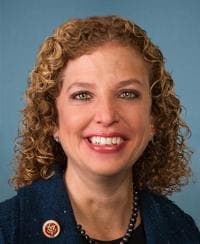
- Introduced
- 5/21/2026
- Last activity
- 5/21/2026 — Referred to the House Committee on Energy and Commerce.
- Sponsored by
- Debbie Wasserman Schultz
- Cosponsors
- - 1 - 2
- Introduced
- In Committee
What this bill would do
This bill directs the Secretary of Health and Human Services to establish a three-year pilot program called the Medically Necessary Infant Formula Pilot Program. The program aims to provide financial assistance to certain eligible individuals to help them purchase covered infant formula or donor milk. Financial assistance may be provided through vouchers, reimbursements, or grants to local governmental or nonprofit entities. The Secretary is tasked with educating families about the program and conducting annual evaluations of its performance. Results of these evaluations must be reported to Congress annually. The act authorizes up to $15,000,000 for each fiscal year from 2027 through 2031.
Yes· 3 of 7
Would children be better off under this?+5
The bill helps ensure infants have access to necessary nutrition through formula or donor milk.
Does this make health care easier to get in general?+5
The bill provides financial assistance to help families access medically necessary infant formula and donor milk.
Would households on low incomes be better off under this?+4
The program provides financial assistance to families to cover the costs of medically necessary infant nutrition.
The opposite
Does this reduce what the federal government spends?-1
The bill authorizes up to $15,000,000 in new annual spending for the pilot program.
Who it would affect, and how
Potential Positive Impacts for People
-
Financial Assistance for Formula and Milk: The program provides financial help to specific individuals for purchasing covered infant formula or donor milk (Section 2(a)).
-
Flexible Assistance Methods: The Secretary can use various methods to get help to people, such as vouchers, reimbursements, or through local nonprofit and government grants (Section 2(b)).
-
Support for Specific Medical Needs: The bill targets individuals facing various challenges, such as postpartum women with an inability to breastfeed due to physical factors, chronic disease, or mental health issues, as well as children with feeding tubes, digestive issues, or allergies (Section 2(e)(4)).
-
Program Accessibility: The Secretary is required to take steps to ensure families are informed about the program through consultation with health care providers (Section 2(c)).
Potential Negative Impacts for People
-
Limited Duration: The authority for this program is set to terminate three years after the act is enacted, which acts as a sunset provision (Section 2(g)).
-
Eligibility Restrictions: To be considered an "eligible individual," one must not be eligible to participate in the special supplemental nutrition program for women, infants, and children (Section 2(e)(4)(A)).
Groups and Interests Ranking
Every group the model scored this bill for, from -10 to +10. Hover a score for the reason it gave.
- Demographic And Interest Groups
- Good For Children+5Good For Low Income Households+4Good For Women+4Good For People With Disabilities+3
- Healthcare
- Improves Healthcare Access+5
- Social Issues And Justice
- Improves Gender Equality+3Improves Poverty Reduction+2
- Economy And Finance
- Reduces Government Spending-1
- 10/9/2026
- 1 Cosponsor added.
- 9/2/2026
- 1 Cosponsor added.
- 5/21/2026
- Referred to the House Committee on Energy and Commerce.
- 1 Cosponsor added.
- Introduced in House
 Ashley Hinson
Republican · Iowa
 Michael Lawler
Republican · New York
 Darren Soto
Democrat · Florida