Bill · H.R. 8976· House(119-HR-8976)
Women in Criminal Justice Reform Act
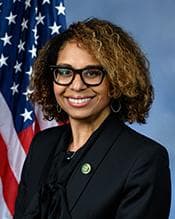
- Introduced
- 5/21/2026
- Last activity
- 5/21/2026 — Referred to the Committee on the Judiciary, and in addition to the Committees on Ways and Means, and Energy and Commerce, for a period to be subsequently determined by the Speaker, in each case for consideration of such provisions as fall within the jurisdiction of the committee concerned.
- Sponsored by
- Sydney Kamlager-Dove
- Cosponsors
- - 7 - 0
- Introduced
- In Committee
What this bill would do
The Women in Criminal Justice Reform Act aims to improve how women are treated throughout the legal system. It establishes gender-informed practices for law enforcement arrests, training, and recruitment. The bill introduces reforms for bail, sentencing, and drug conspiracy penalties to reduce unnecessary incarceration. It mandates comprehensive, gender-responsive healthcare and trauma-informed care within the Bureau of Prisons. Additionally, it expands programs for incarcerated mothers and improves reentry services to support family reunification.
Yes· 3 of 35
Would women be better off under this?+10
The entire bill is dedicated to improving the treatment, health, and legal rights of women.
Does this narrow the gap between how men and women are treated?+9
Specifically targets systemic gender disparities in the criminal justice system.
Does this make health care easier to get in general?+9
Ensures incarcerated women have access to specialized OB/GYN care and cancer screenings.
The opposite
Does this reduce what the federal government spends?-1
Authorizes new grant funding for law enforcement training and prison reforms.
Who it would affect, and how
Potential Positive Impacts for People
-
Protection of Children: Federal officers must allow custodial parents to make childcare arrangements during an arrest and cannot refer children to welfare agencies unless the parent cannot find care or there is suspected abuse or neglect (Section 101).
-
Law Enforcement Training: Provides grants for officers to receive evidence-based training on trauma, domestic violence, and the specific needs of pregnant persons (Section 102).
-
Family Preservation: Prevents the state from terminating parental rights based principally on a parent's incarceration or detention by the Department of Homeland Security (Section 203).
-
Diversion Options: Creates a federal pretrial diversion program that offers alternatives to prosecution, including assistance with housing, employment, and mental health treatment (Section 301).
-
Sentencing Reform: Limits penalties for drug conspiracy to a maximum of 5 years or the penalty of the underlying offense, whichever is lower, to address the "girlfriend problem" (Section 401).
-
Healthcare Access: Mandates that incarcerated women have access to specialized obstetric and gynecological care, including screenings for breast and cervical cancer (Section 601).
-
Trauma Support: Requires the implementation of trauma-informed therapy and counseling programs for those who have experienced abuse or PTSD (Section 602).
-
Maternal Support: Expands eligibility for the Residential Parenting Program and the Mothers and Infants Nurturing Together Program for incarcerated persons who have given birth (Section 610).
Potential Negative Impacts for People
- Waiver of Rights: To participate in the federal pretrial diversion program, individuals must sign a waiver of their right to a speedy trial (Section 301(c)(2)).
Groups and Interests Ranking
Every group the model scored this bill for, from -10 to +10. Hover a score for the reason it gave.
- Demographic And Interest Groups
- Good For Women+10Good For Children+8Good For Hispanic Americans+6Good For Low Income Households+6Good For African Americans+5Good For Asian Americans+5Good For Middle Aged+5Good For Native Americans+5Good For White Americans+5Good For Young Adults+5Good For Immigrants+4Good For People With Disabilities+4Good For Seniors+3Good For Students+3
- Social Issues And Justice
- Improves Gender Equality+9Improves Criminal Sentencing Reform+8Improves Policing Reform+7Improves Racial Equity+5Improves Childcare Affordability+4Improves Affordable Housing+3Improves Disability Rights+3Improves Poverty Reduction+3Reduces Homelessness+3Improves Voting Access+2Improves Voting Rights+2
- Healthcare
- Improves Healthcare Access+9Improves Mental Health Access+8Improves Opioid Crisis Response+4
- Governance And Ideology
- Improves Privacy Rights+5Improves Due Process+4Improves Government Transparency+4Increases Federal Power+2
- Education And Technology
- Improves College Affordability+3Improves Internet Access+2
- Economy And Finance
- Increases Job Creation+2Reduces Government Spending-1
- 7/15/2026
- 1 Cosponsor added.
- 5/21/2026
- Referred to the Committee on the Judiciary, and in addition to the Committees on Ways and Means, and Energy and Commerce, for a period to be subsequently determined by the Speaker, in each case for consideration of such provisions as fall within the jurisdiction of the committee concerned.
- 6 Cosponsors added.
- Introduced in House
2 bills Congress.gov lists as related to this one — companions in the other chamber, earlier versions, and bills this one absorbed or was folded into.
 Joyce Beatty
Democrat · Ohio
 Henry Johnson
Democrat · Georgia
 Summer Lee
Democrat · Pennsylvania
 Jennifer McClellan
Democrat · Virginia
 Eleanor Norton
Democrat · District of Columbia
 Lateefah Simon
Democrat · California
 Bonnie Watson Coleman
Democrat · New Jersey