Bill · H.R. 897· House(119-HR-897)
Aviation-Impacted Communities Act
- Introduced
- 1/31/2025
- Last activity
- 2/1/2025 — Referred to the Subcommittee on Aviation.
- Sponsored by
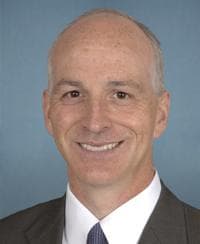
- Adam Smith
- Cosponsors
- - 17 - 0
- Introduced
- In Committee
What this bill would do
The Aviation-Impacted Communities Act requires the FAA to provide funding and support for noise mitigation in communities affected by aircraft. It allows communities outside the standard 65 DNL noise level to be eligible for funds and to establish community boards. The bill mandates a National Academy of Sciences study to create a framework for assessing aviation impacts, including noise and emissions. Designated communities can work with the FAA to develop action plans for reducing impacts, such as changing flight paths or installing sound insulation. It also establishes an appeals process for communities if the FAA refuses to implement suggested changes. Funding is authorized from the Airport and Airway Trust Fund for these efforts.
Yes· 3 of 34
Would households on low incomes be better off under this?+7
Low-income communities are often disproportionately located near airports and benefit from expanded grant eligibility.
Would people in cities be better off under this?+7
Primary target of the bill, as most large hub airports are in urban metroplexes.
Would children be better off under this?+6
Reduces noise pollution in schools and daycare centers, improving learning environments.
The opposite
Does this reduce what the federal government spends?-2
The bill increases federal spending via new grants and the commissioning of a National Academy of Sciences study.
Does this reduce what the federal government owes?-1
The bill authorizes $750 million in spending from the Airport and Airway Trust Fund.
Who it would affect, and how
Potential Positive Impacts for People
-
Expanded Funding Eligibility: Communities not currently within the 65 DNL standard can now be eligible for Airport Improvement Program noise mitigation funds and grants (Section 2).
-
Community Representation: Residents can form community boards that include impacted residents and public health and environment representatives to address airport noise (Section 5).
-
Comprehensive Research: A National Academy of Sciences study will examine not just noise, but also emissions and the impacts on communities with unique geography or those surrounded by multiple airports (Section 3).
-
Direct Mitigation Grants: Grants will be available for sound insulation and noise barriers for residences, schools, hospitals, nursing homes, adult or child day care centers, and places of worship (Section 7).
-
Accountability via Appeals: Community boards can appeal the FAA's decision not to implement flight changes to an independent panel of health, environmental, and aviation experts (Section 6).
-
Improved Flight Operations: The FAA must consider changing flight paths, operations, and vertical guidance if assessments show it would decrease impacts on a community (Section 6).
Potential Negative Impacts for People
-
Limited Assessment Frequency: Community boards are generally limited to petitioning for only one community assessment every three years, unless there is a specific exception (Section 5).
-
Administrative Funding Cap: Up to 5 percent of the appropriated funds may be used for FAA administrative expenditures rather than direct grants to communities (Section 8).
Groups and Interests Ranking
Every group the model scored this bill for, from -10 to +10. Hover a score for the reason it gave.
- Demographic And Interest Groups
- Good For Low Income Households+7Good For Urban Residents+7Good For Children+6Good For Seniors+6Good For Students+6Good For African Americans+5Good For Asian Americans+5Good For Hispanic Americans+5Good For Immigrants+5Good For Middle Class Households+5Good For Retirees+5Good For People With Disabilities+4Good For Middle Aged+3Good For Union Workers+3Good For White Americans+3Good For Young Adults+3Good For Business Owners+2Good For High Income Households+2
- Governance And Ideology
- Improves Government Transparency+5Improves Due Process+4Increases Federal Power+2
- Social Issues And Justice
- Improves Racial Equity+4Improves Affordable Housing+3Improves Childcare Affordability+2Improves Poverty Reduction+1
- Education And Technology
- Increases Scientific Research Funding+5Increases Public School Funding+2
- Environment Energy And Infrastructure
- Improves Environmental Protections+6Reduces Carbon Emissions+1
- Healthcare
- Increases Research Funding+4Improves Mental Health Access+2Improves Healthcare Access+1
- Economy And Finance
- Increases Job Creation+2Improves Economic Growth+1Reduces Government Spending-2Reduces National Debt-1
- 9/14/2026
- 1 Cosponsor added.
- 2/27/2025
- 1 Cosponsor added.
- 2/24/2025
- 1 Cosponsor added.
- 2/12/2025
- 1 Cosponsor added.
- 2/10/2025
- 3 Cosponsors added.
- 2/4/2025
- 1 Cosponsor added.
- 2/1/2025
- Referred to the Subcommittee on Aviation.
- 1/31/2025
- Referred to the House Committee on Transportation and Infrastructure.
- 9 Cosponsors added.
- Introduced in House
 Julia Brownley
Democrat · California
 Donald Beyer
Democrat · Virginia
 Judy Chu
Democrat · California
 Henry Johnson
Democrat · Georgia
 Pramila Jayapal
Democrat · Washington
 Ro Khanna
Democrat · California
 Mike Levin
Democrat · California
 Sarah McBride
Democrat · Delaware
 Jerrold Nadler
Democrat · New York
 Eleanor Norton
Democrat · District of Columbia
 Joe Neguse
Democrat · Colorado
 Mike Quigley
Democrat · Illinois
 Raul Ruiz
Democrat · California
 Jamie Raskin
Democrat · Maryland
 Janice Schakowsky
Democrat · Illinois
 Thomas Suozzi
Democrat · New York
 Rashida Tlaib
Democrat · Michigan