Bill · H.R. 8937· House(119-HR-8937)
Early Childhood Workforce Advancement Act of 2026
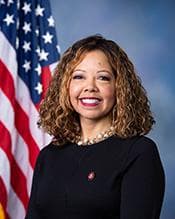
- Introduced
- 5/20/2026
- Last activity
- 5/20/2026 — Referred to the House Committee on Education and Workforce.
- Sponsored by
- Lucy McBath
- Cosponsors
- - 2 - 3
- Introduced
- In Committee
What this bill would do
The Early Childhood Workforce Advancement Act of 2026 directs the Secretary of Education, working with the Secretary of Health and Human Services, to award competitive grants. These grants are intended for eligible partnerships to create, support, or expand career and technical education programs focused on early childhood education. The bill establishes specific application requirements and priority guidelines for awarding these funds. It also outlines how the money can be used, such as for educational materials, recruiting, and training. Recipients are required to undergo independent evaluations and submit annual reports. Grants are generally limited to a five-year period, with the possibility of a two-year extension.
Yes· 3 of 10
Would students be better off under this?+6
The bill provides direct financial assistance, tutoring, and professional development for students in the field.
Would children be better off under this?+5
The bill enhances the quality of early childhood education and care for infants and toddlers.
Would people with disabilities be better off under this?+5
The bill prioritizes training for the developmental needs of infants and toddlers with disabilities.
The opposite
No question was scored the opposite.
Who it would affect, and how
Potential Positive Impacts for People
-
Support for Students and Special Populations: The bill requires grant applications to describe how the program will directly benefit students, including special populations (Section 2(b)(4)). Additionally, funds can be used for wrap-around services like tutoring, child care assistance, and financial assistance to help students complete degrees or credentials (Section 2(d)(3)(B)).
-
Expansion of Specialized Training: The act encourages programs to include training for infant and toddler development, including the specific needs of infants or toddlers with a disability (Section 2(b)(9)).
-
Workforce Development and Recruitment: The bill allows funds to support the recruiting, hiring, and training of effective educators, including those using alternative routes to certification (Section 2(d)(2)). It also supports the development of industry credentials like the Child Development Associate (Section 2(d)(1)).
-
Increased Teacher Support and Compensation: The bill provides for the creation of professional development and mentoring for educators (Section 2(d)(4)(A)). It also includes initiatives to increase compensation for educators who earn specific credentials or degrees (Section 2(d)(4)(E)).
-
Community and Geographic Focus: The Secretary is directed to ensure an equitable geographic distribution, including serving both rural and urban areas (Section 2(c)(1-2)). Priority is also given to areas facing a documented shortage of childcare providers (Section 2(c)(3)).
Potential Negative Impacts for People
-
Reporting and Evaluation Burdens: Organizations receiving these grants must provide information for evaluations requested by the Secretary (Section 2(b)(8)(A)) and must conduct independent evaluations of their activities (Section 2(e)). They are also required to submit annual reports that include performance indicators and quantitative analyses (Section 2(e)).
-
Data Privacy Considerations: While the bill mentions that data can be made available to third parties for validation, it must be done in accordance with applicable data privacy laws, such as the Family Educational Rights and Privacy Act (Section 2(b)(8)(B)).
Groups and Interests Ranking
Every group the model scored this bill for, from -10 to +10. Hover a score for the reason it gave.
- Demographic And Interest Groups
- Good For Students+6Good For Children+5Good For People With Disabilities+5Good For Low Income Households+4Good For Rural Residents+3Good For Urban Residents+3
- Economy And Finance
- Increases Job Creation+5
- Education And Technology
- Improves College Affordability+5
- Social Issues And Justice
- Improves Childcare Affordability+4
- Healthcare
- Improves Healthcare Access+3
- 5/20/2026
- Referred to the House Committee on Education and Workforce.
- 5 Cosponsors added.
- Introduced in House
One bill Congress.gov lists as related to this one — companions in the other chamber, earlier versions, and bills this one absorbed or was folded into.
 Suzanne Bonamici
Democrat · Oregon
 Jennifer Kiggans
Republican · Virginia
 Michael Lawler
Republican · New York
 John Mannion
Democrat · New York
 Glenn Thompson
Republican · Pennsylvania